15 Beginner Painting Ideas to Kickstart Your Creativity
Discover 15 easy beginner painting ideas perfect for newbies. From abstract art to simple landscapes, start your creative journey today!
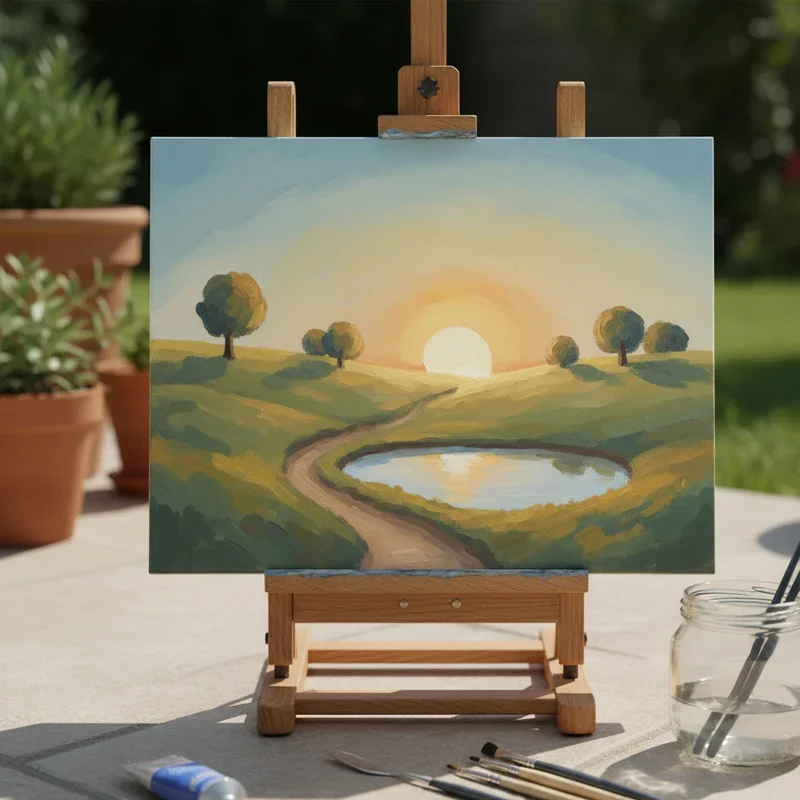
Ever stared at a blank canvas feeling completely paralyzed, wondering where on earth to begin? You're definitely not alone in this artistic anxiety! Starting your painting journey can feel like standing at the edge of a creative cliff, unsure whether you'll soar or splat. But here's the secret: every master painter once held a brush for the first time, probably making what looked like colorful chaos. The beauty of being a beginner lies in the freedom to experiment without expectations. Whether you've just bought your first paint set or you're dusting off supplies from that ambitious New Year's resolution, these painting ideas will transform intimidation into inspiration. Think of painting as learning a new language where colors are your words and brushstrokes your accent. Ready to speak fluent art? Let's dive into projects that'll make you wonder why you waited so long to start!
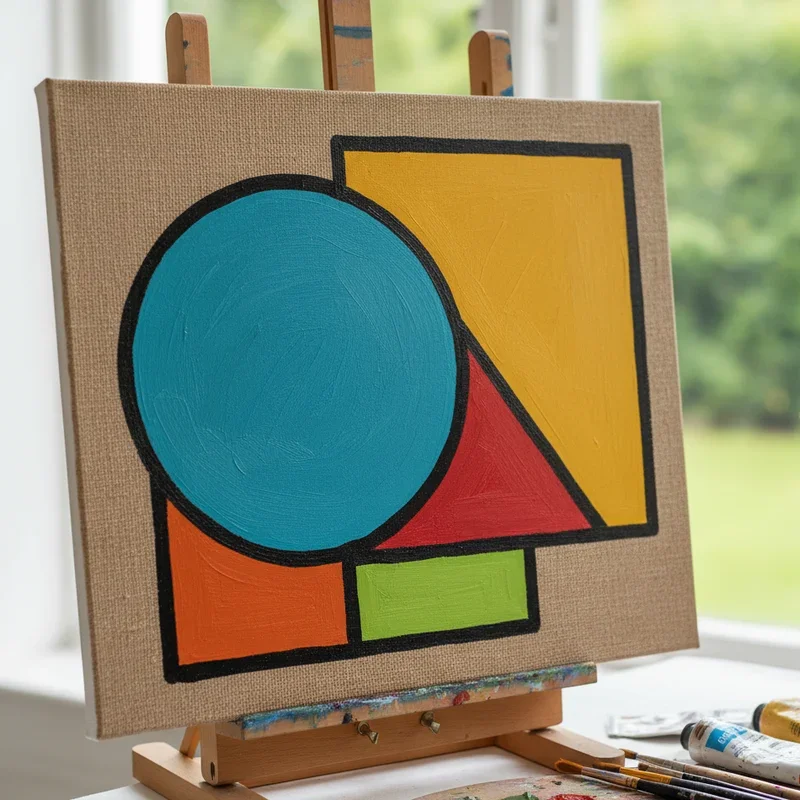
1. Paint Simple Geometric Shapes with Bold Colors
Who says you need to paint the Mona Lisa on day one? Geometric shapes offer the perfect starting point because they're forgiving, familiar, and surprisingly sophisticated when done right. Grab your ruler, pencil, and masking tape to create triangles, squares, circles, and hexagons across your canvas. The magic happens when you fill each shape with different colors, creating a modern art piece that looks intentionally designed. Try complementary colors for pop, or stick to a monochromatic scheme for elegance. Don't stress about perfect lines; slight imperfections add character and prove it's handmade. Experiment with overlapping shapes to create new forms and color combinations where they meet. This project teaches brush control, color relationships, and composition without the pressure of realistic representation. Your geometric masterpiece might just become the perfect wall art that guests assume you bought from a trendy gallery!
2. Create an Abstract Color Wash Background
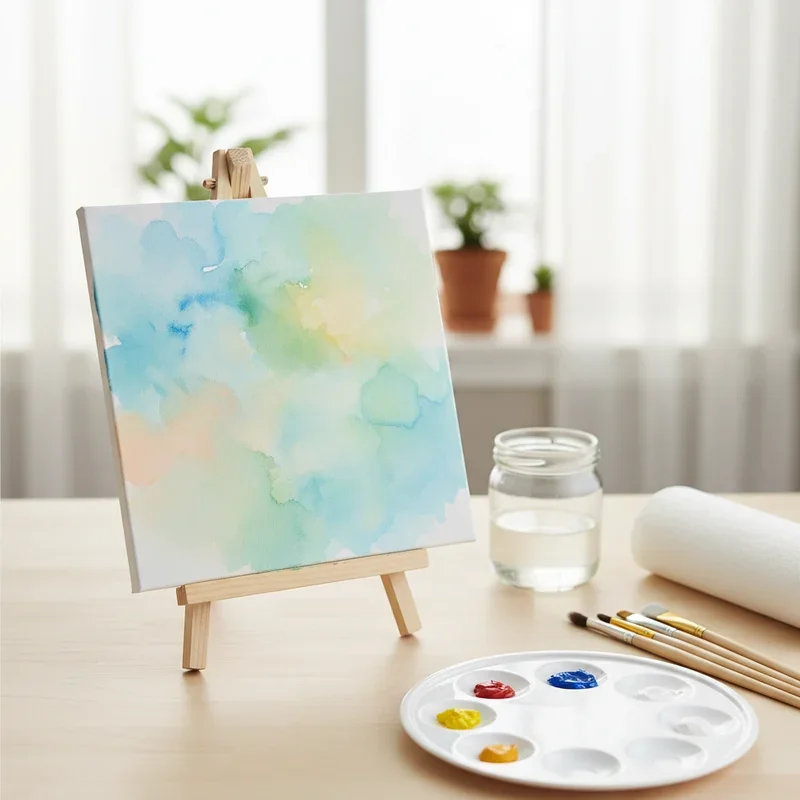
Think of color washing as painting's equivalent of a gentle warm-up stretch before exercise. This technique involves diluting acrylic or watercolor paint with water to create translucent layers that flow and blend naturally. Start by wetting your canvas or paper, then drop different colors and watch them dance together like old friends at a reunion. Tilt your canvas to guide the paint's journey, creating organic patterns that could never be replicated exactly. The unpredictability becomes your collaborator, removing the pressure of perfection. Layer washes once dry for depth, or leave single washes for ethereal effects. This technique builds confidence in paint handling while producing surprisingly sophisticated results. Use these backgrounds for future projects, add details on top, or frame them as is. Every wash tells its own story through color, making each piece uniquely yours without requiring advanced skills.
3. Try Your Hand at Basic Flower Petals
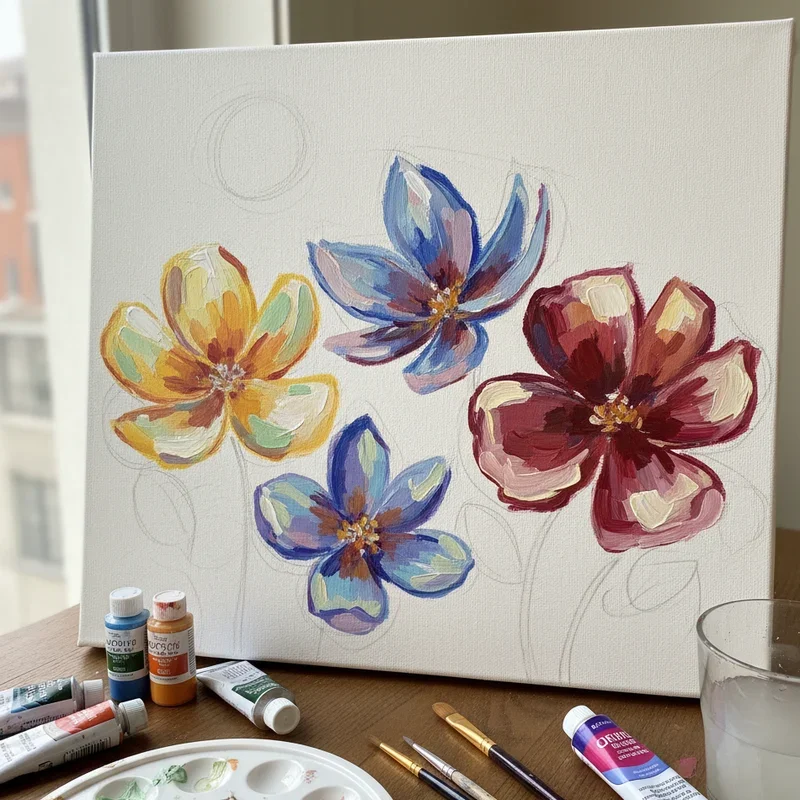
Flowers forgive all artistic sins while teaching essential brush techniques that'll serve you throughout your painting journey. Start with simple five-petal flowers using a flat brush loaded with paint. Press down and lift to create each petal shape, no detailed drawing required! The beauty lies in variety; make some petals longer, others rounder, creating natural-looking blooms through happy accidents. Use a different color for centers, adding simple dots or circles that bring flowers to life. Don't obsess over botanical accuracy; think of these as impression flowers that capture feeling over photographic detail. Practice different petal shapes: pointed for daisies, rounded for roses, or elongated for sunflowers. Add simple stem lines and basic leaves using the same press-and-lift technique. This project develops brush control and confidence while creating cheerful art perfect for cards, gifts, or brightening your own space.
4. Paint a Sunset Silhouette Scene
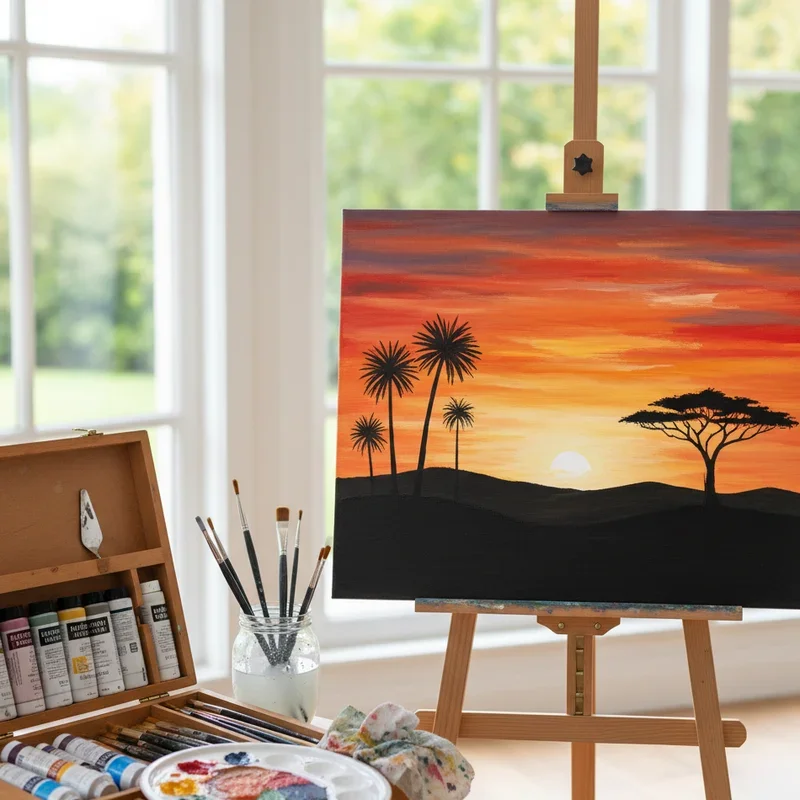
Sunsets offer beginners the perfect combination of dramatic impact and technical forgiveness, like nature's own painting tutorial. Start by creating horizontal bands of color: yellow at the horizon, blending to orange, pink, purple, and finally deep blue at the top. Blend while wet using horizontal brush strokes, embracing any streaks as realistic cloud effects. Once your sunset dries, add black silhouettes using any solid shape: trees, buildings, birds, or people. These silhouettes require no detail, just recognizable outlines that tell a story against your glowing sky. The contrast between the vibrant background and dark foreground creates instant visual impact. Try different silhouette subjects: city skylines for urban vibes, palm trees for tropical feels, or mountains for majestic scenes. This project teaches color blending, composition, and how simple shapes can convey complex meanings. Your sunset becomes a daily reminder that endings can be beautiful.
5. Design Colorful Dot Mandala Patterns
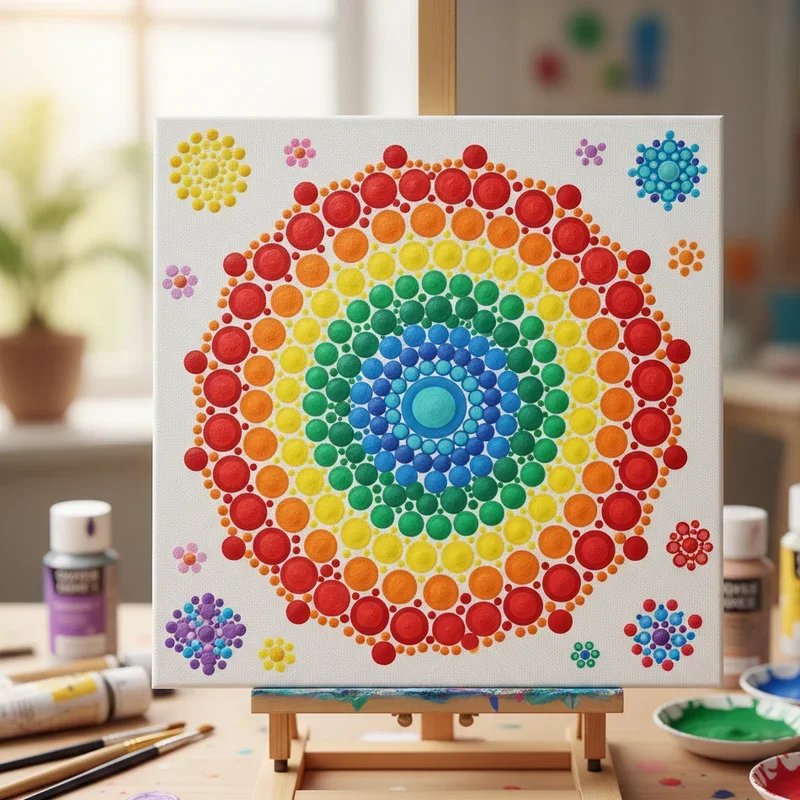
Channel your inner zen by creating mandalas using nothing but dots, proving that meditation and art can beautifully coexist. Start with a central dot, then work outward in circular patterns, using different sized tools for variety: cotton swabs, pencil erasers, or specialized dotting tools. The repetitive nature becomes almost hypnotic, allowing your mind to relax while your hands create. Choose a color scheme beforehand or let intuition guide you, adding colors as the mandala grows. The key is maintaining consistent spacing and size within each ring while varying patterns between rings. This technique requires no drawing skills, just patience and steady dabbing. Each dot contributes to the larger pattern, teaching how small, simple marks create complex beauty. Mandalas look intricate but are essentially just organized dots, making them perfect for beginners who want impressive results. Display your mandala as a meditation focal point or gift to someone needing peace.
6. Create Ocean Waves with Simple Strokes
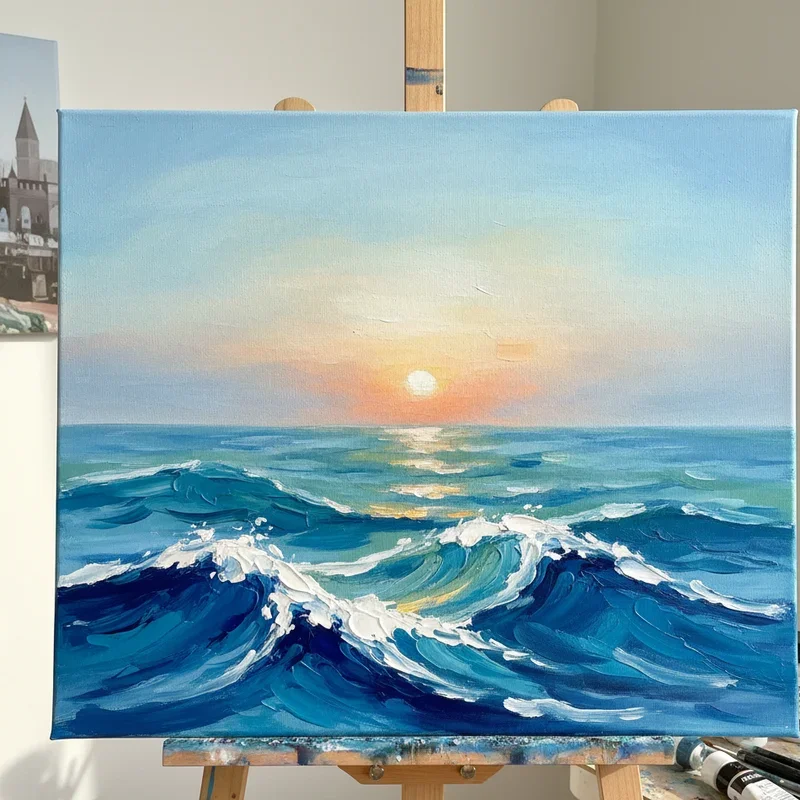
Capturing the ocean's movement might seem daunting, but basic wave painting uses surprisingly simple techniques that beginners master quickly. Start with horizontal bands of blue, darker at bottom for depth, lighter toward the horizon. While paint's still wet, use a fan brush or flat brush to create wave crests with white paint mixed with a tiny bit of blue. Pull the brush horizontally with slight upward curves, letting bristles create foam texture naturally. Add smaller waves in the distance using thinner lines and less paint. The secret lies in suggesting movement rather than depicting every water droplet. Layer waves for depth, with larger waves in foreground and smaller ones receding toward horizon. Include white foam trails and splashes using quick, light touches. This project teaches brush techniques and how to convey movement in a static medium. Your ocean scene brings coastal calm to any room.
7. Paint a Galaxy Night Sky
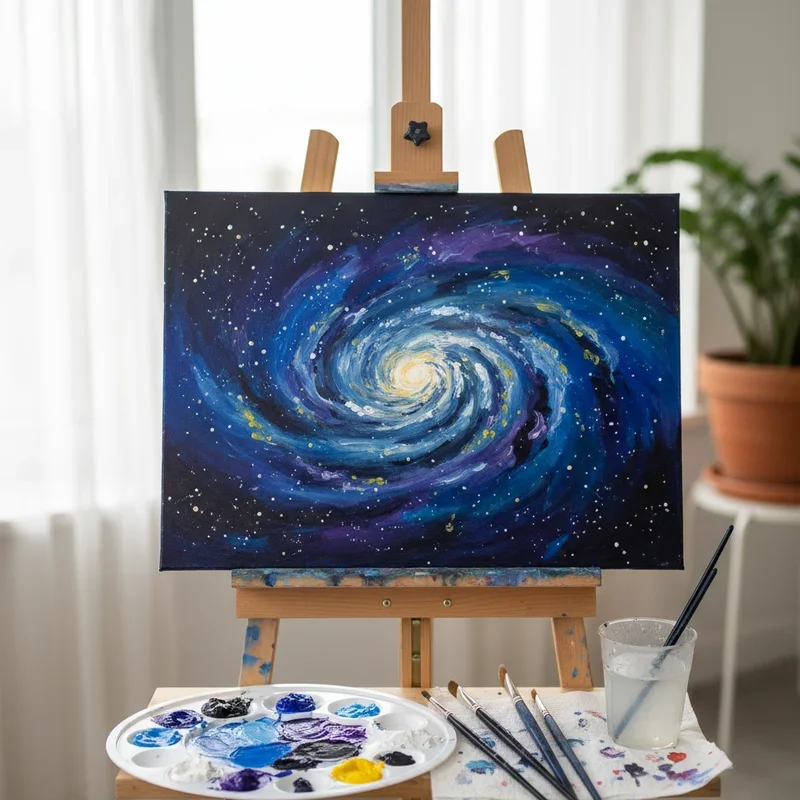
Transform your canvas into a cosmic playground where mistakes become distant planets and accidents create new constellations. Start with a black or dark blue background, then sponge on purple, pink, and blue paint in cloudy patches for nebulae. While slightly wet, sprinkle salt or rubbing alcohol drops for interesting texture effects that mimic cosmic dust. Add stars using various techniques: toothbrush splatters for dense star fields, white pen dots for bright stars, or small brush dabs for controlled placement. Create planets by tracing circular objects, filling with swirled colors that suggest alien worlds. A wash of white or light blue creates the Milky Way's ethereal band. Don't aim for scientific accuracy; this is your universe to design! Add shooting stars with quick brush strokes or spacecraft if feeling playful. This project removes pressure for realism while teaching blending, layering, and special effects techniques. Your galaxy becomes a nightly escape to infinite possibilities.
8. Try Color Mixing with Rainbow Art
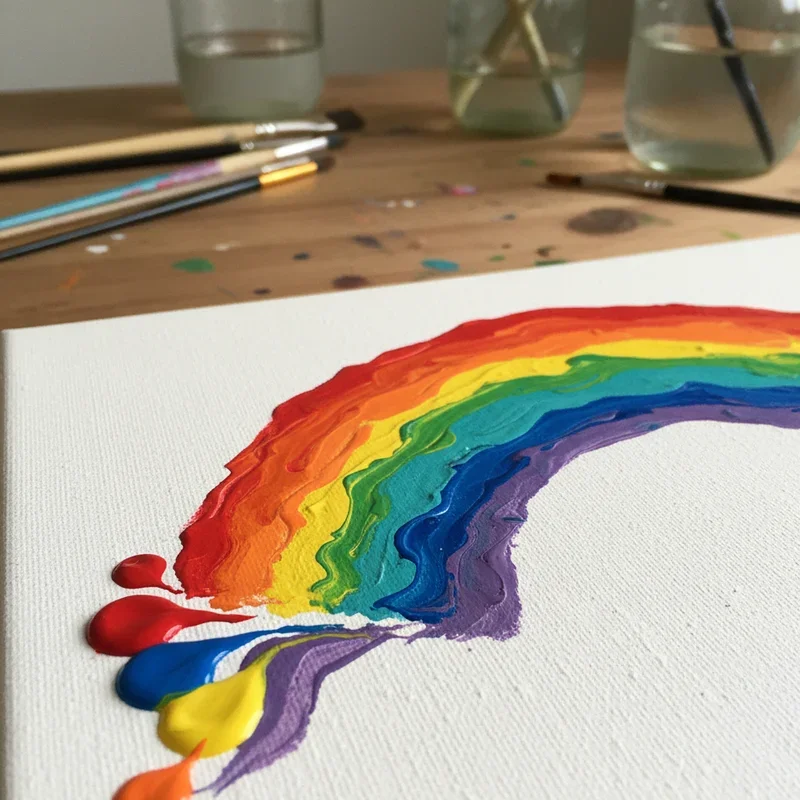
Become a color scientist by creating rainbow art that teaches color theory while producing vibrant, joy-inducing artwork. Start with primary colors (red, blue, yellow) and create a rainbow by mixing secondary colors right on your canvas. Paint red, leave space, add yellow, then blend where they meet to create orange. Continue with blue, blending edges to create green and purple. This hands-on approach makes color relationships tangible and memorable. Try different rainbow formats: traditional arcs, abstract swirls, or geometric patterns. Experiment with tints by adding white or shades by adding black, creating rainbow variations from pastel to jewel-toned. Paint rainbow backgrounds with silhouettes on top, or create rainbow animals where each body part showcases different colors. This fundamental exercise builds color confidence while producing happy art that brightens any space. Understanding color mixing opens infinite possibilities for future paintings. Your rainbow becomes a reference chart disguised as cheerful decor.
9. Create Simple Tree Landscapes
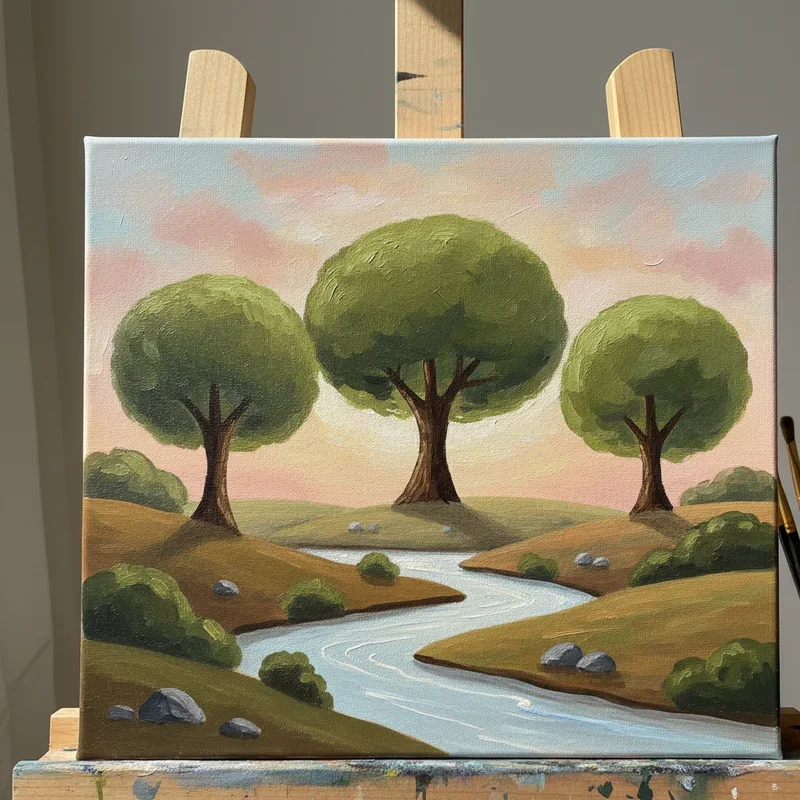
Trees offer the perfect subject for beginners because nature never creates two identical specimens, meaning your unique interpretation is always correct. Start with basic trunk shapes using vertical brush strokes, adding character through slight curves or lean. For foliage, try different techniques: dabbing with sponges for leafy texture, fan brushes for evergreens, or round brushes for flowering trees. Don't paint individual leaves; suggest foliage through texture and color variation. Add depth by painting distant trees lighter and smaller, creating atmospheric perspective without complex techniques. Include simple ground elements like grass with upward strokes or paths with perspective lines. Each season offers different color palettes: spring's fresh greens, summer's deep emeralds, autumn's warm spectrum, or winter's bare branches. This versatile subject adapts to any skill level while teaching fundamental landscape concepts. Your tree painting connects you to nature while developing essential brushwork skills.
10. Paint Basic Fruit Still Life
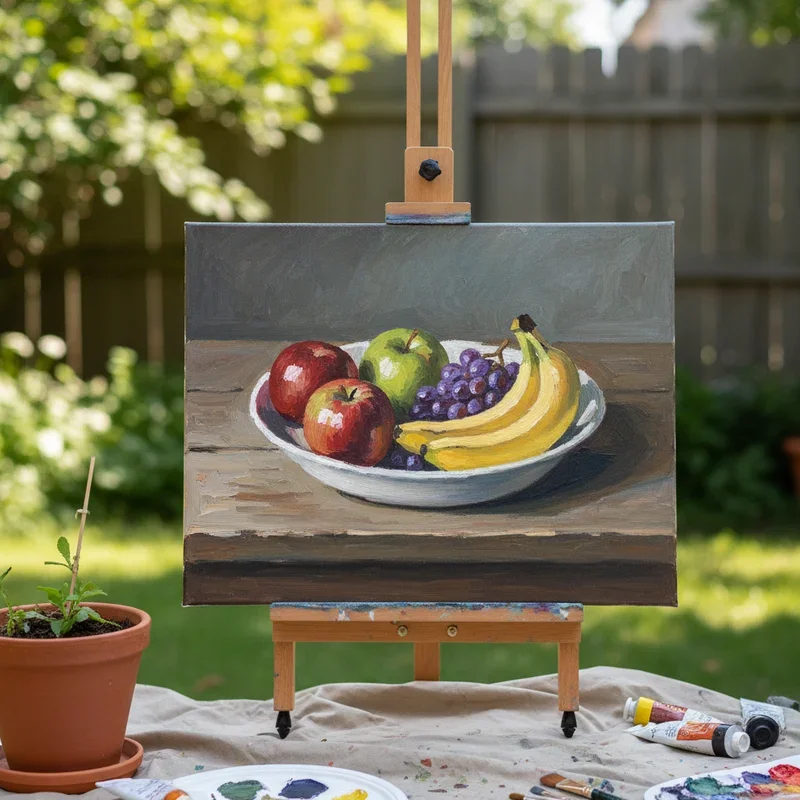
Still life painting might sound old-fashioned, but fruit offers beginners the perfect introduction to form, light, and shadow. Choose simple fruits like apples, oranges, or pears with basic shapes you can confidently outline. Start with the fruit's base color, then add highlights where imaginary light hits and shadows on the opposite side. Don't overthink; even basic light-medium-dark values create dimension. Add surface details like apple stems or orange texture using simple marks. The tablecloth or surface beneath teaches how objects relate to their environment. Try different arrangements: single fruit for focus, groups for composition practice, or cut fruit for interior detail challenges. Each fruit teaches something new: grapes about clustering, bananas about curves, strawberries about texture. This classic exercise builds observation skills and color mixing abilities while producing art suitable for kitchen display. Your fruit bowl becomes a training ground for tackling more complex subjects later.
11. Design Abstract Emotion Paintings
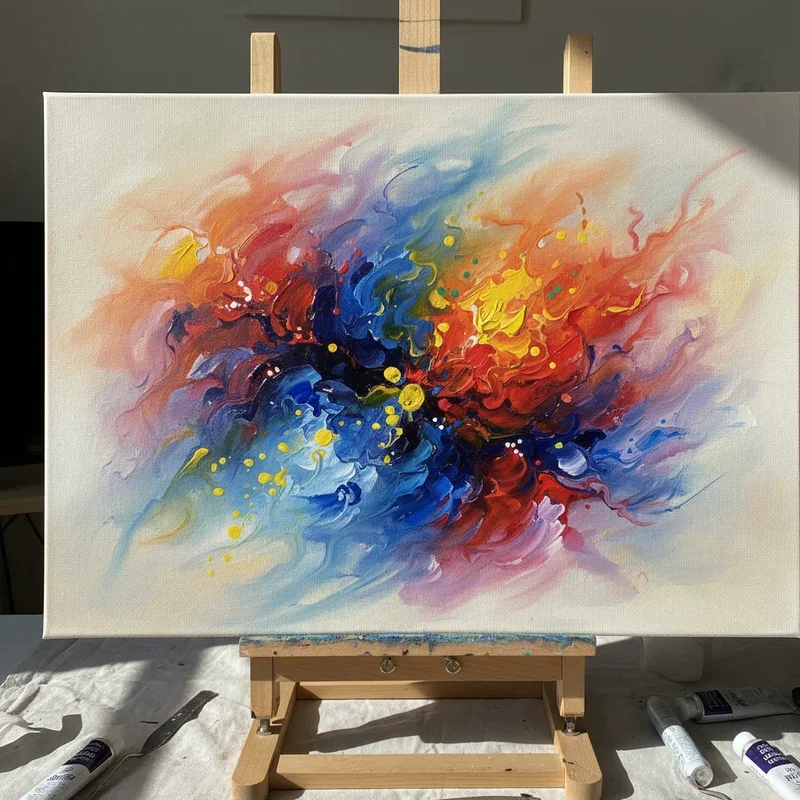
Forget representation and dive into painting pure feelings, where every brushstroke expresses what words cannot capture. Choose an emotion like joy, anger, peace, or excitement, then select colors that embody that feeling to you. Joy might explode in yellows and oranges with upward strokes, while sadness flows in blues with dripping effects. Use brushstrokes that match the emotion's energy: sharp, angular marks for anger; soft, flowing curves for calm; chaotic splatters for confusion. Layer colors and textures to add complexity, just like emotions themselves have multiple facets. Don't plan too much; let the emotion guide your hand, making this exercise part therapy, part art. Abstract emotion paintings can't be wrong because feelings are personal and subjective. This project frees you from representation pressure while developing intuitive color and movement understanding. Your emotional artwork becomes a visual diary entry, capturing moments beyond photographs.
12. Create Textured Art with Sponges
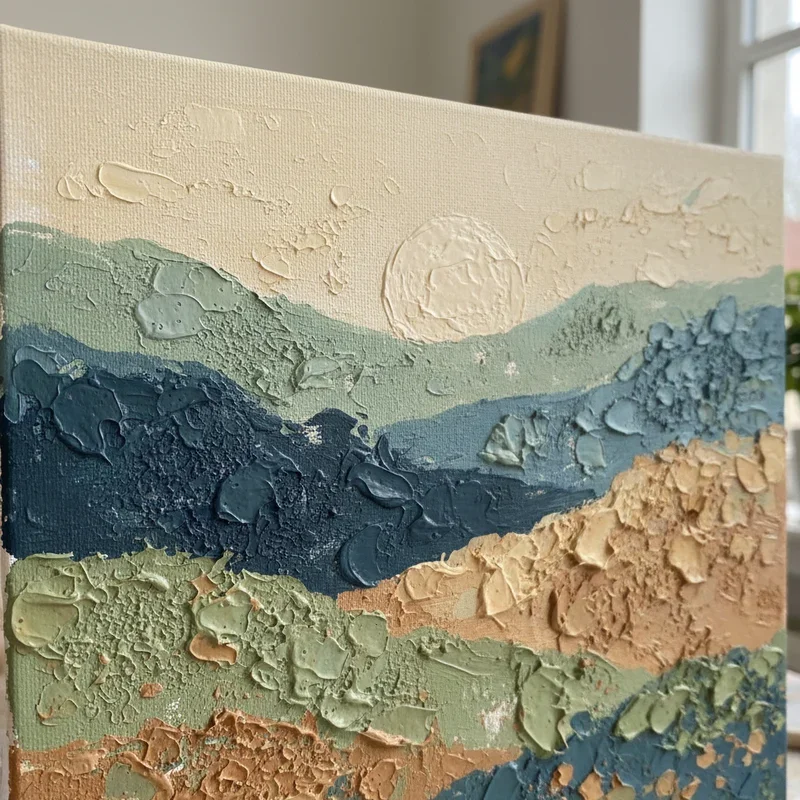
Put down the brushes and discover how household sponges create stunning textures that brushes could never achieve. Natural sponges produce organic, irregular patterns perfect for foliage, clouds, or abstract backgrounds. Kitchen sponges cut into shapes become stamps for repetitive patterns or building textures. Dab, twist, or drag sponges across canvas for different effects. Layer colors by sponging one over another once dry, creating depth through texture rather than traditional techniques. Create entire paintings using only sponges: landscapes with sponged trees, seascapes with foam textures, or abstract pieces with various sponge patterns. Mix paint consistency for different results; thick paint creates bold texture while thin paint produces subtle effects. This technique proves expensive tools aren't necessary for impressive art. Sponge painting removes precision pressure, making it perfect for beginners who struggle with brush control. Your textured creation adds dimensional interest to any wall.
13. Paint Simple Cloud Formations
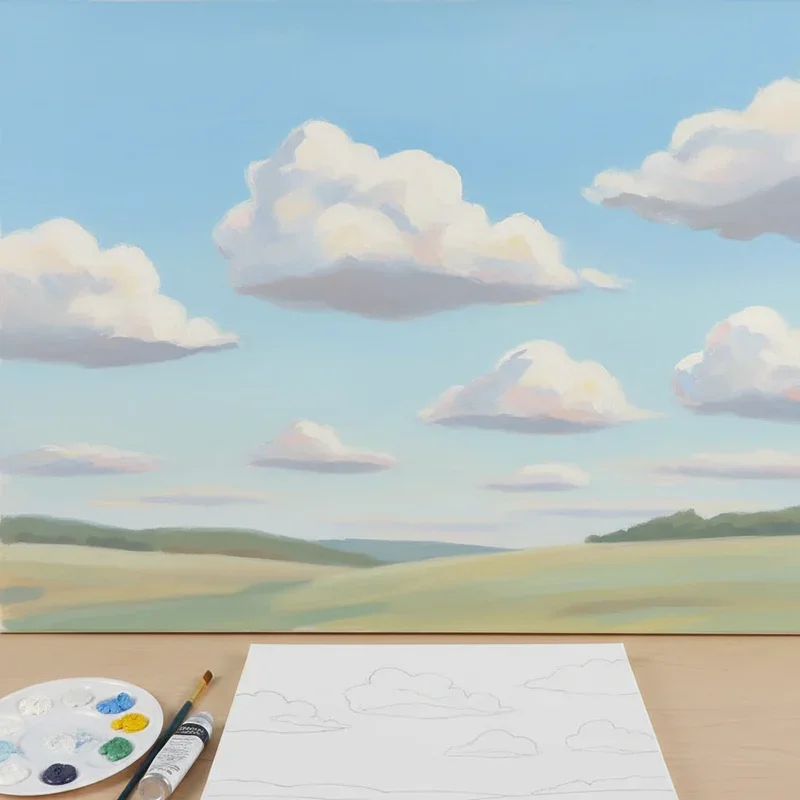
Clouds offer the ultimate beginner-friendly subject because no two are identical and imperfection looks completely natural. Start with a blue sky background, then load a brush with white paint, using circular motions to build fluffy cumulus clouds. Blend edges softly into the sky for that ethereal quality clouds possess. Add subtle gray or purple shadows to cloud undersides for dimension. Wispy cirrus clouds need just light, horizontal brush strokes pulled across the sky. Storm clouds combine dark grays and purples with dramatic brushwork. The key lies in keeping edges soft and shapes irregular; perfect circles or sharp edges look unnatural. Practice different cloud types and weather conditions, each teaching different techniques. Clouds can be the main subject or supporting players in larger compositions. This project develops blending skills and understanding of light and shadow without requiring perfect accuracy. Your cloud study becomes a piece of sky you can keep forever.
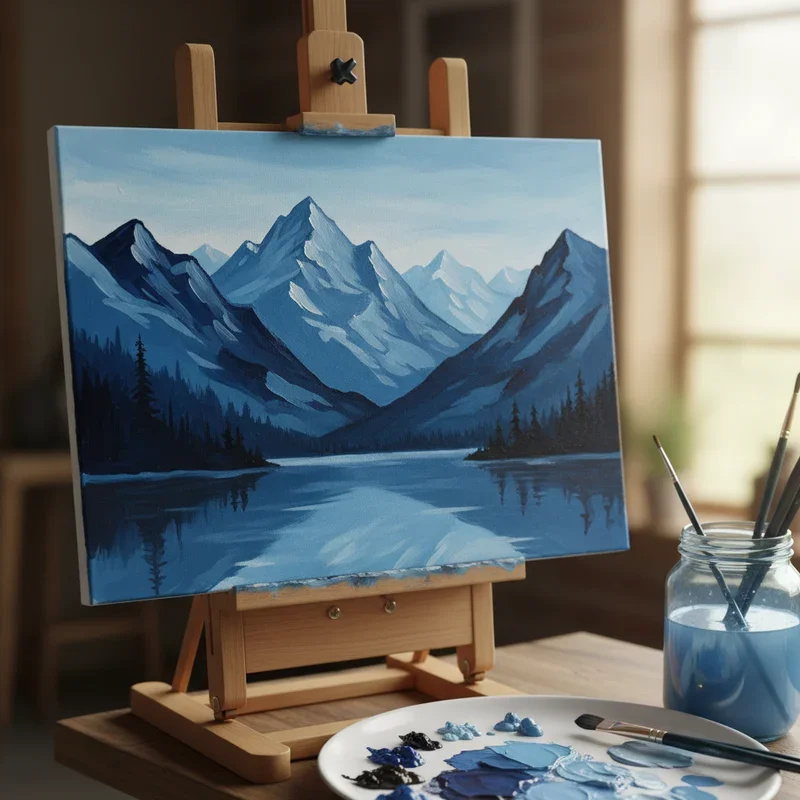
14. Try Monochromatic Mountain Scenes
Simplify your learning curve by using just one color in various shades, proving that limitation sparks creativity. Choose any color you love, then mix it with white for tints and black for shades, creating at least five different values. Paint distant mountains in the lightest tint, gradually using darker values for closer ranges. This automatically creates atmospheric perspective, making mountains appear to recede naturally. Add simple details like snow caps with pure white or tree lines with your darkest shade. The monochromatic approach removes color-mixing complexity, letting you focus on values and composition. Try different color moods: blues for serene scenes, purples for mystical mountains, or oranges for desert landscapes. Each color tells a different story while teaching the same valuable lessons about depth and form. Your monochromatic mountain scene proves that sometimes less really is more in art.
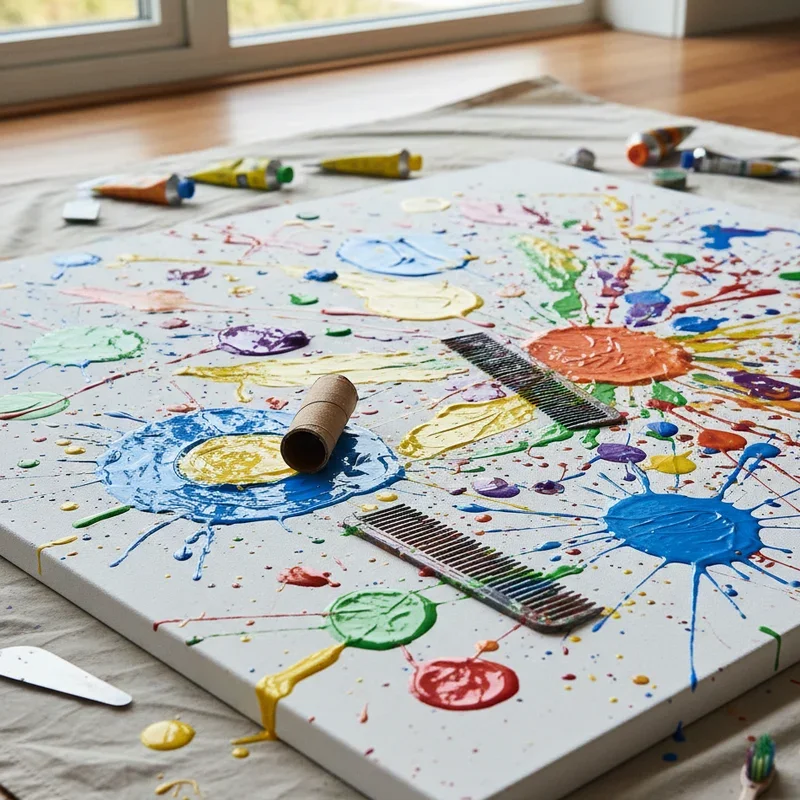
15. Create Fun Splatter Art Compositions
Embrace your inner Jackson Pollock by creating energetic splatter paintings that celebrate spontaneity and pure creative joy. Protect your workspace thoroughly, wear old clothes, and prepare to get messy! Thin your paints to throwing consistency, then experiment with different techniques: flicking brushes, dripping from sticks, or tapping loaded brushes against your hand. Each method creates different splatter patterns and sizes. Layer colors, allowing some to dry between sessions for depth. Create controlled chaos by masking areas to leave white space or geometric shapes within splatters. Try action painting by moving around your canvas, letting your whole body participate in creation. This technique removes all precision pressure, making it impossible to fail. Every splatter contributes to the overall energy, teaching you about movement, color interaction, and compositional balance through pure experimentation. Your splatter masterpiece captures creative freedom that planned paintings can't achieve.
Conclusion
Beginning your painting journey doesn't require perfection, just the courage to start somewhere. These 15 beginner-friendly ideas prove that impressive art comes from practice, not innate talent. Each project builds different skills while keeping the process enjoyable and pressure-free. Remember, every professional artist created terrible paintings before creating great ones. So grab those brushes, embrace the mess, and start painting your way to creative confidence today!
Read next: 15 Painting Ideas for Beginners to Boost Creativity
Frequently Asked Questions
Q1: What type of paint should beginners start with?
A: Acrylics are most beginner-friendly because they dry quickly, mix easily, and clean with water.
Q2: Do I need expensive supplies to start painting?
A: No, basic student-grade supplies work perfectly fine while you're learning fundamental techniques.
Q3: How long does it take to become good at painting?
A: With regular practice, you'll see noticeable improvement within a few weeks or months.
Q4: Should I take classes or learn painting independently?
A: Both work well; online tutorials offer flexibility while classes provide structured learning and feedback.
Q5: What if my paintings don't look like I imagined?
A: That's normal! Every "mistake" teaches valuable lessons and develops your unique artistic style.
Stay up to date with our latest ideas!