15 Grass Painting Ideas for Beautiful Nature Artwork
Explore 15 grass painting ideas for beautiful nature artwork that teach you to render fields, meadows, and lawns with stunning realism.
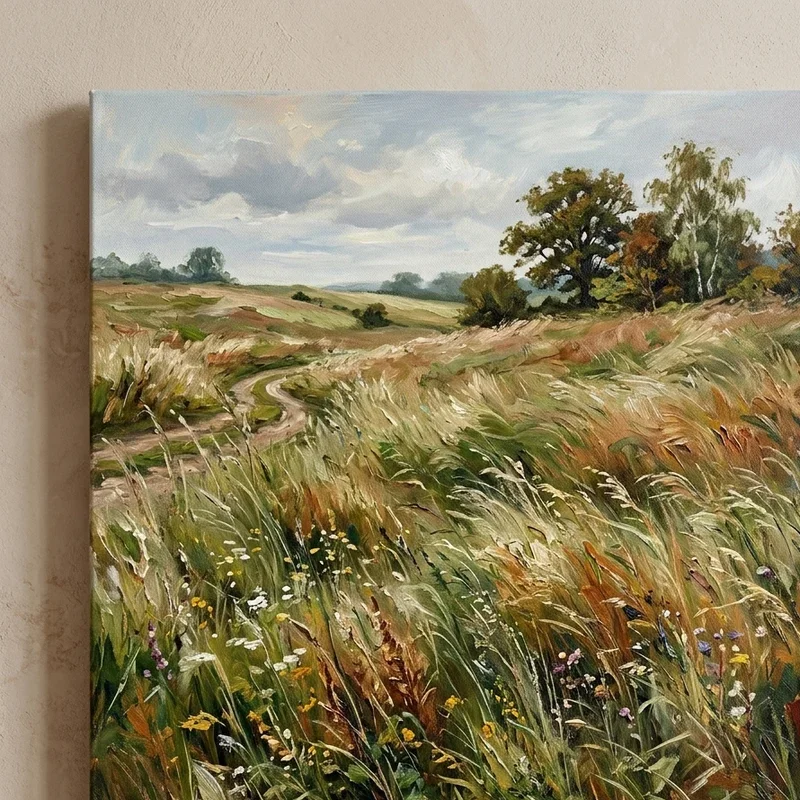
Grass painting challenges artists more than almost any other natural element because that seemingly simple green carpet covering every landscape actually contains millions of individual blades catching light at different angles, bending in different directions, and displaying color variations most painters completely overlook until they sit down and really study what grows beneath their feet. Have you ever tried painting a grassy field and ended up with something resembling a flat green rectangle rather than a living, breathing meadow? That frustrating gap between intention and result closes with the right techniques. Think of grass painting as learning the choreography of a thousand tiny dancers all swaying in the same wind. These fifteen ideas transform flat green into living landscapes.
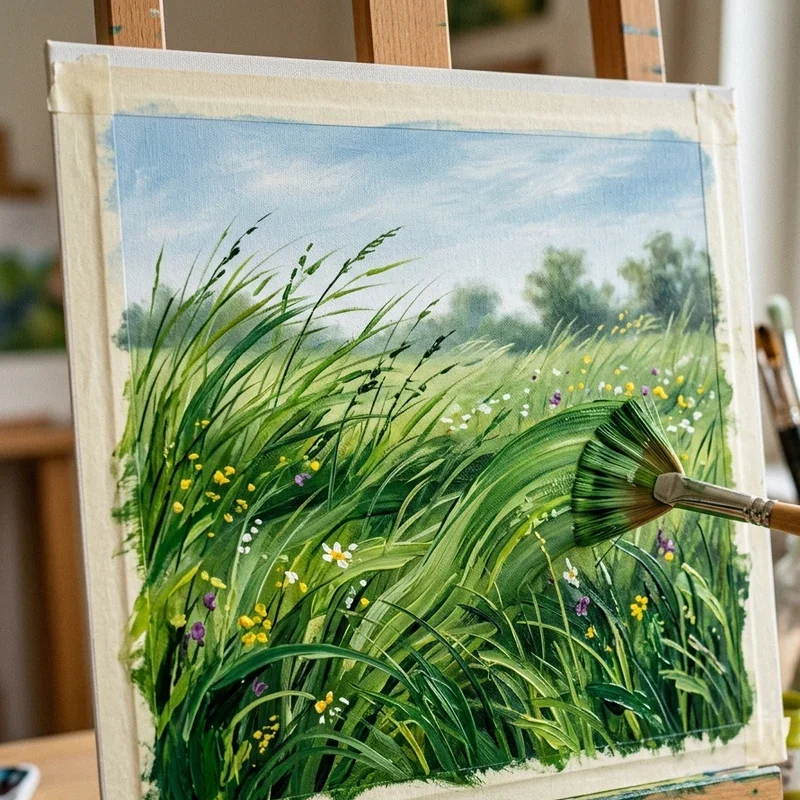
1. Fan Brush Meadow Sweep Technique
A fan brush meadow sweep technique loads a dry fan brush with multiple green tones simultaneously, then drags upward strokes across the canvas creating clusters of grass blades that emerge from the surface naturally, the splayed bristle tips producing dozens of individual blade impressions with every single stroke across the meadow composition. Fan brush meadows work like discovering that one overlooked brush in your collection secretly paints entire fields faster and more convincingly than any round brush could achieve through individual blade-by-blade application, the efficiency transforming hours of tedious work into minutes of satisfying sweeping motion. Load the brush tips with light green and the base with dark green simultaneously. Vary stroke pressure creating thick clumps beside thinner, sparser areas mimicking the natural density variation that real grass displays across any genuine meadow surface.
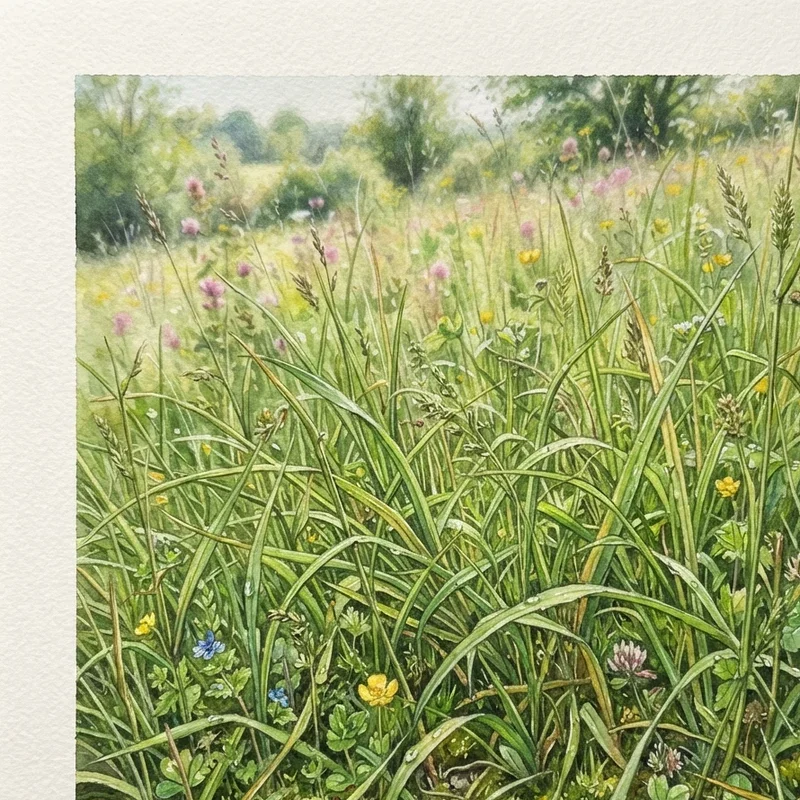
2. Individual Blade Detail Foreground Grass
Individual blade detail foreground grass paints precise, identifiable grass blades in the painting's lowest foreground area using a fine liner brush or rigger brush, creating sharp botanical accuracy where viewers feel close enough to touch individual stems before the detail gradually dissolves into impressionistic suggestion as the grassland recedes toward the distant background horizon. Foreground blade detail works like adjusting the focus ring on a camera lens where the nearest objects appear razor sharp while everything behind them softens progressively into atmospheric blur, the selective detail creating convincing spatial depth across the entire grassy landscape composition. Paint foreground blades at full height extending from the canvas bottom edge. Vary individual blade angles, widths, and green tones preventing the uniform repetition that makes painted grass look artificial rather than organically grown and naturally random.
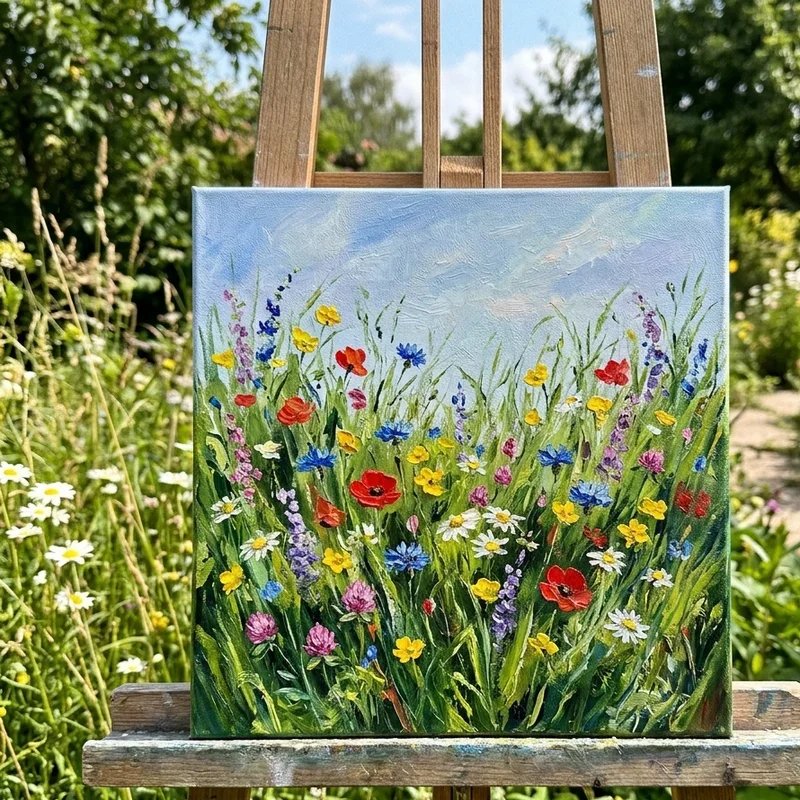
3. Impressionist Wildflower Meadow Scene
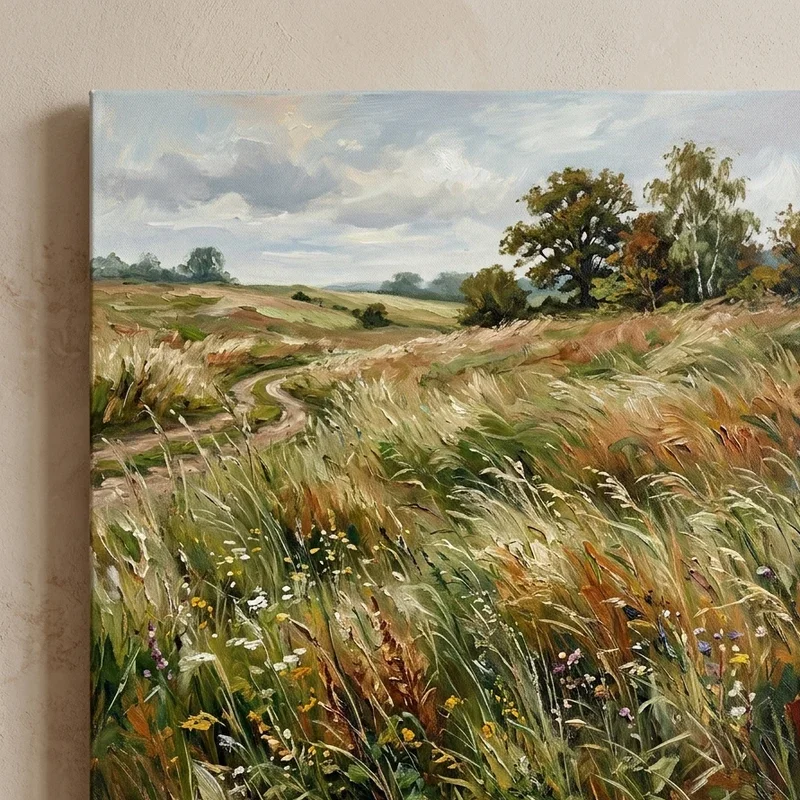
An impressionist wildflower meadow scene applies loose, visible brushstrokes in varied greens punctuated by small dots and dashes of red, purple, yellow, and white representing wildflowers scattered throughout tall grass, creating a vibrant landscape that captures the feeling of standing in a blooming meadow without rendering any single element in precise botanical detail. Impressionist meadows work like painting the emotional experience of walking through wildflowers rather than documenting the botanical inventory, the loose technique capturing atmosphere and sensory impression more effectively than photographic accuracy could achieve through careful reproduction. Apply grass strokes first establishing the green foundation before adding flower color accents. Place flower dots in natural-looking clusters rather than uniform distribution, concentrating color groups in certain areas while leaving other sections as pure green grass creating compositional variety.
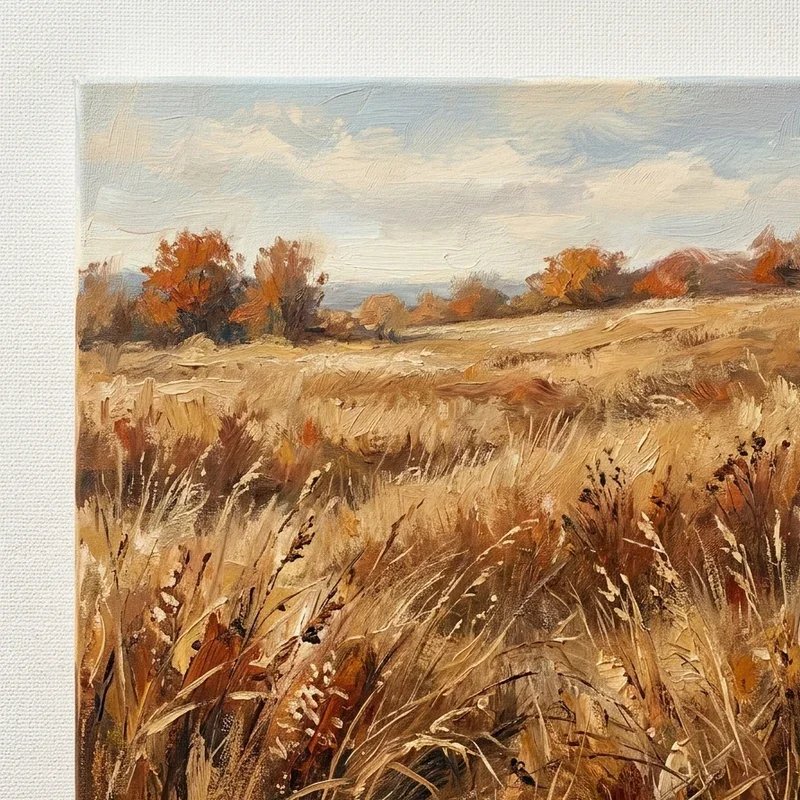
4. Dry Brush Texture Autumn Grass Field
A dry brush texture autumn grass field uses a nearly paint-depleted brush dragged lightly across textured canvas creating broken, scratchy marks that perfectly replicate the dried, brittle appearance of late-season grass transitioning from golden yellows through warm ambers to pale straw tones that define autumn landscapes beautifully. Dry brush autumn grass works like letting the canvas texture itself become a co-artist in your painting, the rough surface catching minimal paint only on raised weave points while valleys remain untouched, the resulting broken texture mimicking dried grass stalks naturally. Load minimal paint onto a flat brush then wipe most of it off on a paper towel before stroking. Mix burnt sienna, yellow ochre, and raw umber creating the warm tonal range that autumn grasslands display before winter eventually bleaches remaining stalks completely white.
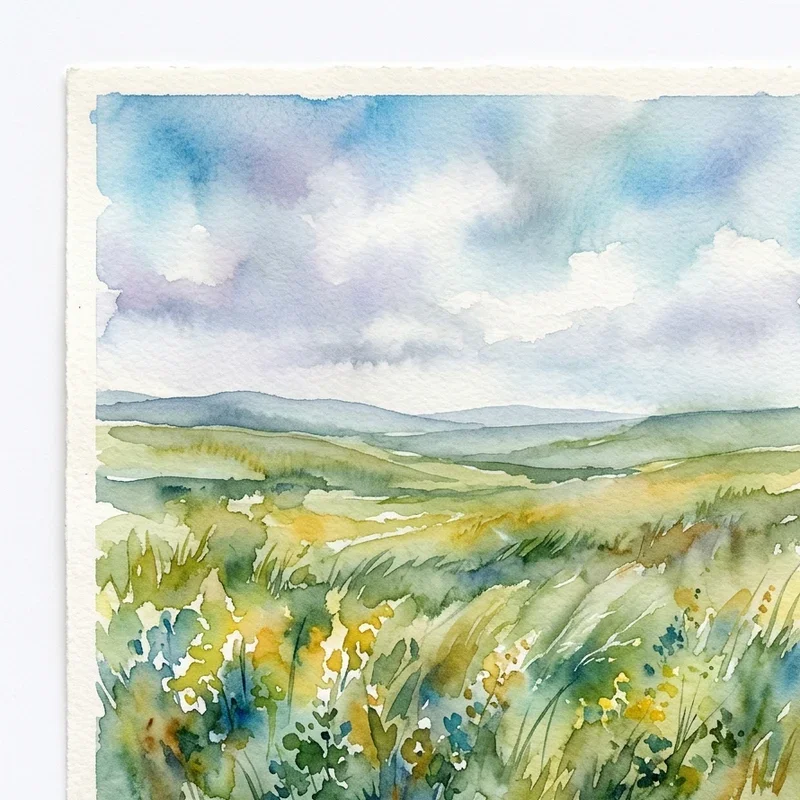
5. Watercolor Wet Wash Prairie Landscape
A watercolor wet wash prairie landscape applies diluted green and gold washes across pre-wetted watercolor paper allowing colors to bleed, merge, and flow organically creating soft atmospheric grassland backgrounds where the water itself directs color placement producing the hazy, distant prairie effect that controlled brushwork alone struggles to replicate convincingly. Wet wash prairies work like surrendering control to the water and watching the painting make itself, the uncontrollable bleeding becoming exactly the atmospheric softness that distant grasslands display when viewed across miles of open landscape stretching toward the horizon. Wet the entire paper surface evenly before applying any pigment. Drop concentrated color at the horizon line allowing it to spread downward naturally, adding darker values at the foreground base while the wash remains active and receptive to additional pigment drops.
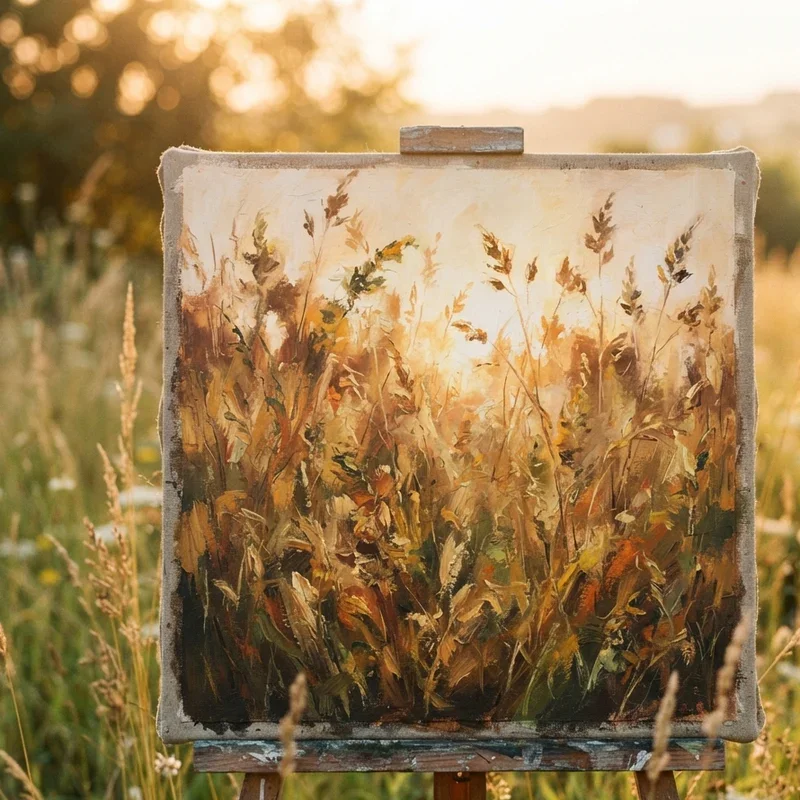
6. Backlit Golden Hour Grass Painting
A backlit golden hour grass painting captures the magical illumination effect when late afternoon sunlight shines through translucent grass blades from behind, transforming ordinary green fields into glowing golden curtains of light where each blade becomes a luminous fiber transmitting warm sunshine directly toward the viewer's perspective position. Backlit grass paintings work like capturing the moment when sunlight turns ordinary grass into stained glass windows laid flat across the earth's surface, the translucent glow requiring you to think about light passing through objects rather than simply bouncing off their surfaces. Paint the light source first establishing the warm golden sky behind the grass horizon. Render grass blades using warm yellows and light greens rather than typical darker greens, adding bright highlights along blade edges where sunlight penetrates the translucent plant material most intensely.
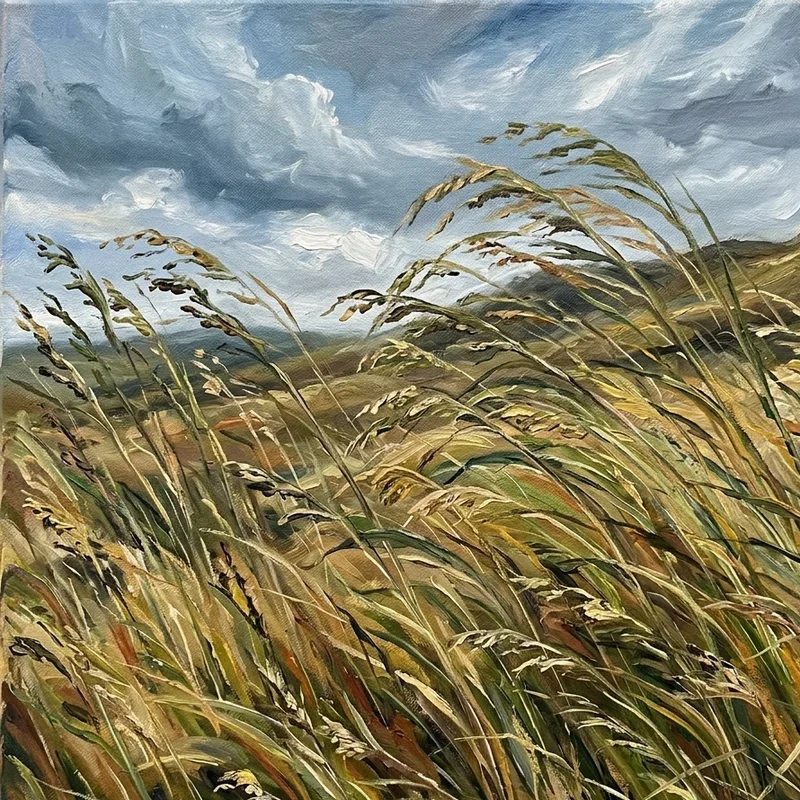
7. Wind Blown Tall Grass Movement Study
A wind blown tall grass movement study captures the dynamic sweeping motion of tall grass bending uniformly under wind pressure, using curved brush strokes that all lean in the same directional flow while varying the bend intensity from gently swaying foreground stalks to dramatically flattened background grasses creating convincing atmospheric movement across the composition. Wind blown grass works like painting a frozen frame from a nature documentary where you can almost hear the rushing air and feel the breeze simply by observing the directional lean of every rendered stalk, the visible motion transforming a static painting into something that genuinely feels alive. Establish the dominant wind direction before painting any strokes. Curve every grass blade consistently toward the same direction while varying the degree of bend, creating visual rhythm that communicates wind speed through the uniformity of the collective lean pattern.
8. Dewy Morning Grass Close Up Painting
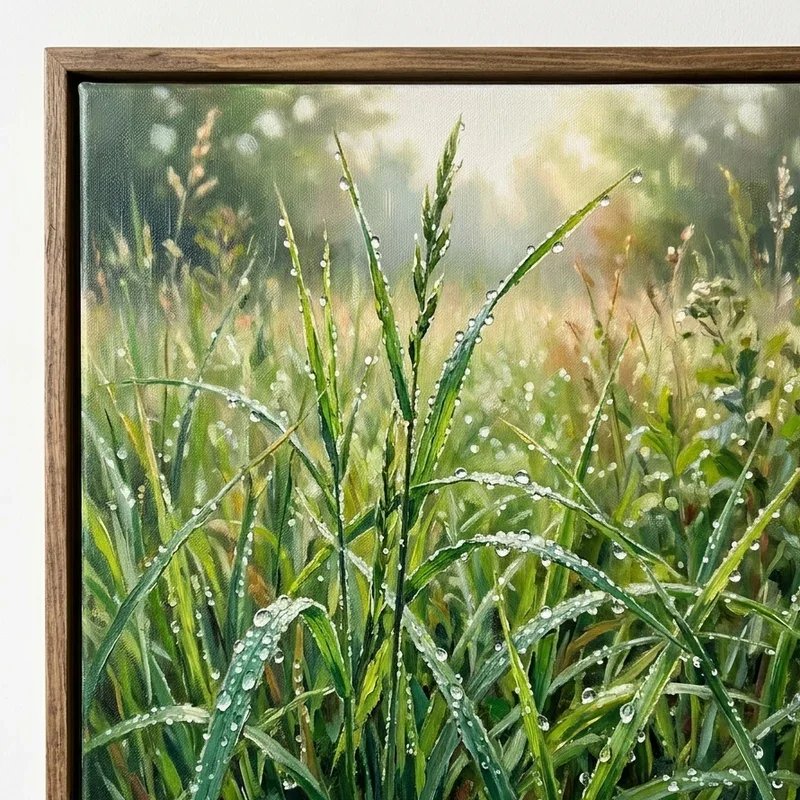
A dewy morning grass close up painting renders individual grass blades at extreme magnification with water droplets clinging to their surfaces, the tiny transparent spheres refracting the blade's green color while catching bright morning light creating pinpoint highlights that scatter like diamonds across a intimate botanical composition most viewers have never observed this closely. Dewy grass paintings work like pressing your face directly into a wet lawn and painting exactly what your eyes encounter at ground level, the extreme perspective revealing a microscopic world of light, water, and chlorophyll that people walk across daily without ever truly seeing what exists beneath their shoes. Paint each blade as a wide, detailed ribbon filling significant canvas area at this magnified scale. Add water droplets using the same technique as glass sphere rendering, preserving white highlights and adding tiny shadow crescents beneath each drop creating dimensional presence.
9. Palette Knife Thick Texture Grass Field
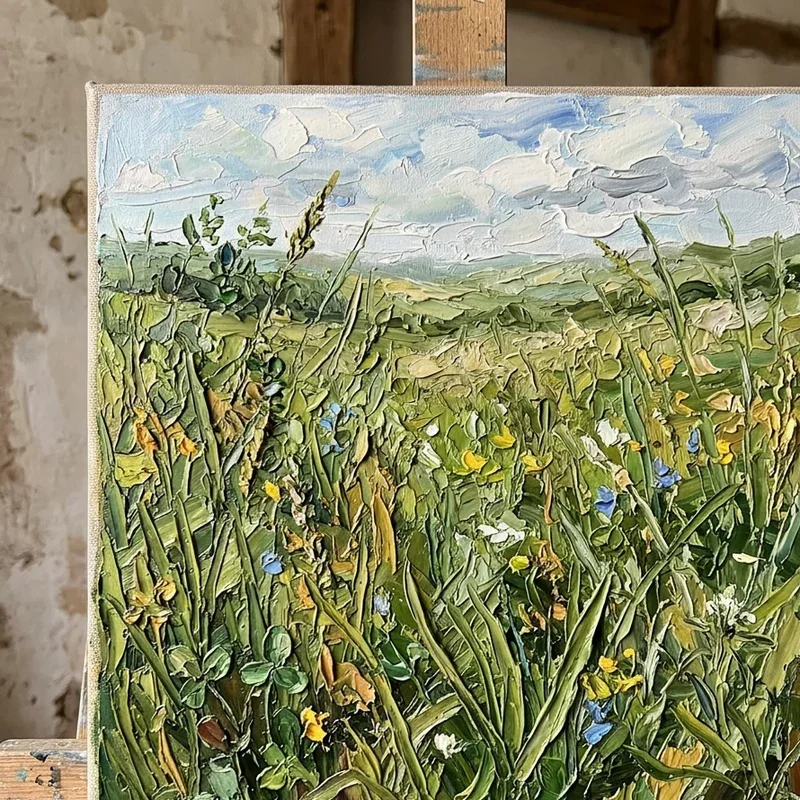
A palette knife thick texture grass field applies undiluted acrylic or oil paint in thick impasto strokes using a small palette knife, building up three-dimensional surface relief where actual paint ridges cast real shadows across the canvas creating tactile grassland texture that viewers instinctively reach toward wanting to physically touch the raised surface. Palette knife grass works like sculpting a meadow from pure pigment rather than painting one, every knife stroke leaving behind a physical ridge that catches real studio light creating shadow patterns that add a dimensional reality no flat application technique can match regardless of color accuracy. Load the knife edge with paint dragging upward in quick, confident strokes. Vary stroke heights and pigment thickness creating the natural density variation where thick grass clumps grow beside thinner sparse patches across realistic meadow surfaces.
10. Aerial View Patchwork Grass Landscape
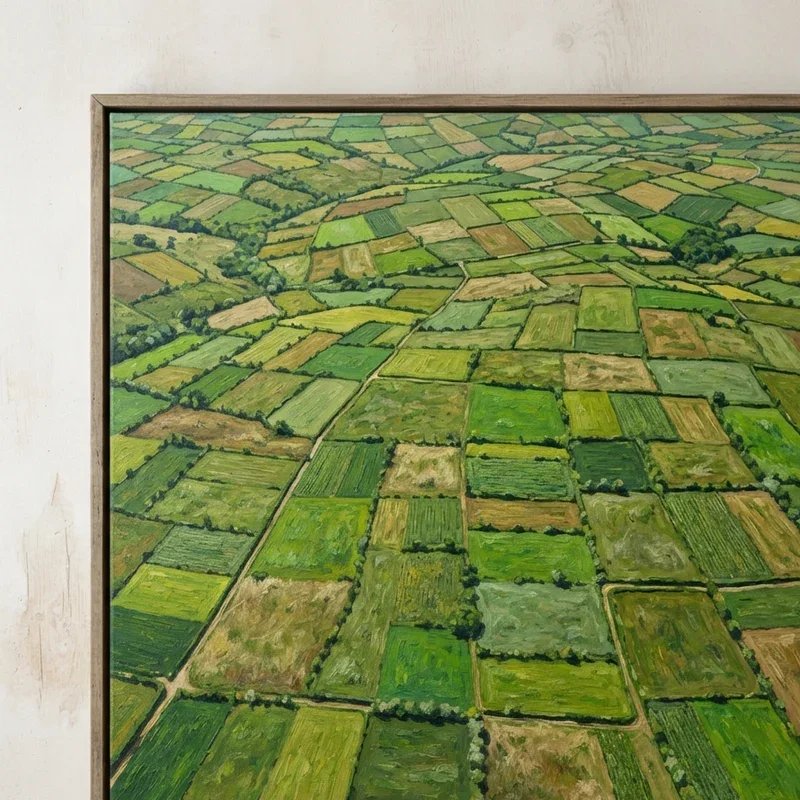
An aerial view patchwork grass landscape paints the ground from directly above, showing the geometric patterns created by different grass types, mowing lines, agricultural field boundaries, pathways, and seasonal growth variations that transform ordinary ground cover into an abstract composition of green geometric shapes viewed from elevated perspectives. Aerial grass paintings work like becoming a bird looking down at the earth's green quilt where human agriculture and natural growth patterns create surprisingly beautiful abstract compositions that most people only see through airplane windows during brief altitude-dependent viewing opportunities between clouds. Use flat brush strokes maintaining the hard geometric edges visible between different field sections. Vary green temperatures across the patchwork, mixing warm olive greens beside cool blue-greens creating the tonal diversity that different crop types and grass varieties display when viewed from significant elevation above.
11. Snow Dusted Winter Grass Scene
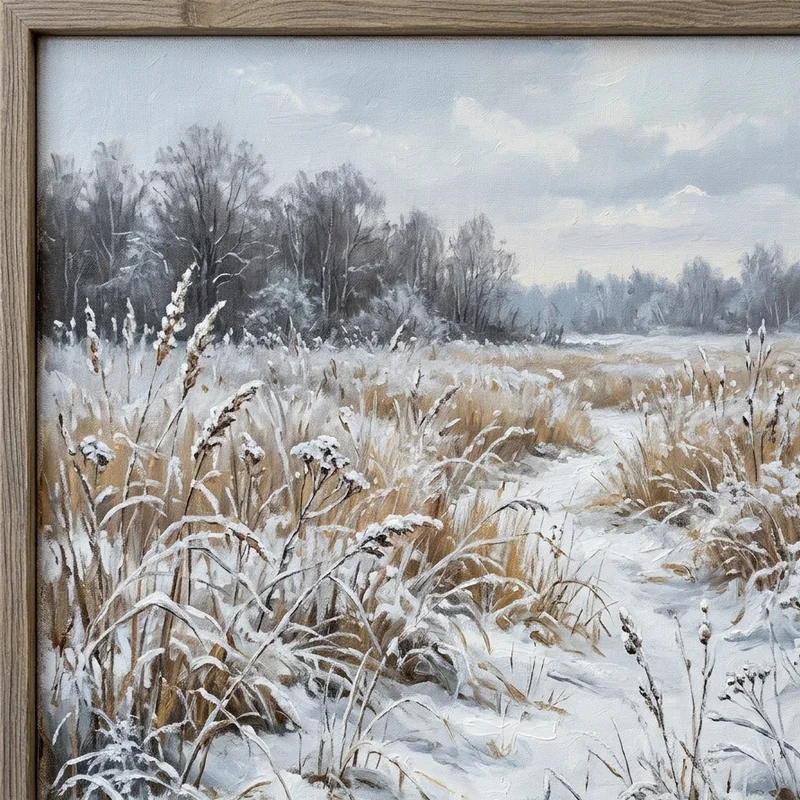
A snow dusted winter grass scene renders dried winter grass stalks poking through a thin layer of fresh snow, the warm golden straw tones contrasting dramatically against cool white snow creating a minimalist seasonal composition that captures the quiet transitional beauty between late autumn and full winter with surprisingly few elements. Snow dusted grass works like painting a conversation between two seasons where autumn refuses to leave gracefully and winter arrives before the old tenant fully vacates, the visible remnants of dried grass protesting through snow cover creating poetic tension between warm and cold tones. Paint the snow surface first using cool whites with subtle blue-gray shadows. Add dried grass stalks pushing through the snow using warm ochre and sienna tones, the temperature contrast between warm grass and cool snow creating visual vibration that energizes the minimal composition.
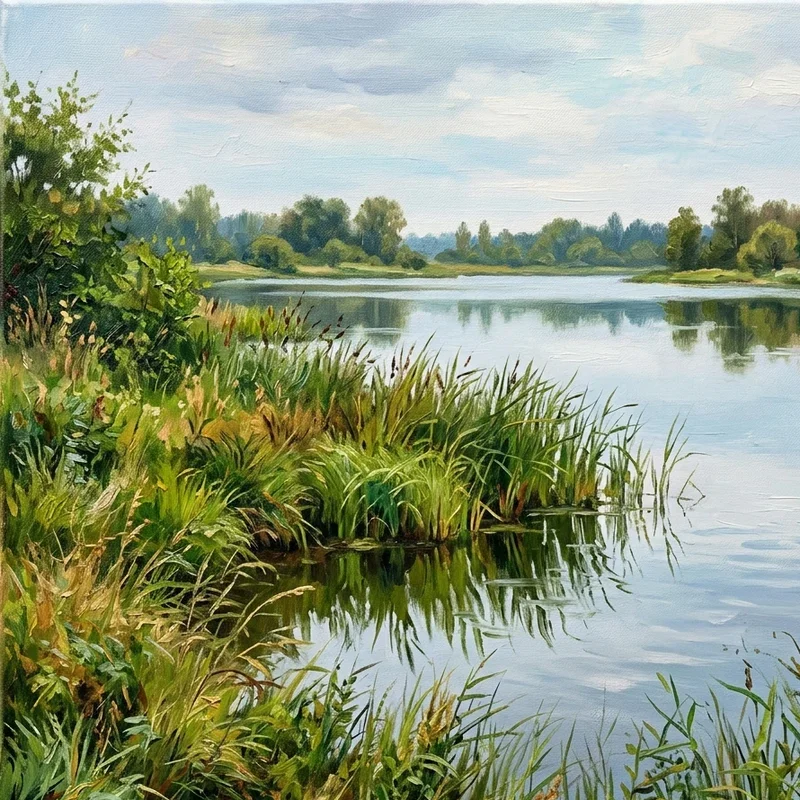
12. Grass and Water Edge Reflection Painting
A grass and water edge reflection painting renders the meeting point between a grassy bank and calm water surface, capturing the grass growing along the edge and its mirrored reflection in the water below, creating a symmetrical composition where the real grass and its wavering aquatic double create compelling visual dialogue. Reflection paintings work like painting two landscapes simultaneously where one version follows nature's rules and the reflected version follows water's rules, the subtle distortion differences between real grass and its shimming watery twin teaching you to see and render both realities convincingly on the same canvas. Paint the real grass bank first with full detail and color saturation. Render the reflection directly below using the same colors slightly muted and vertically compressed, adding subtle horizontal ripple distortion lines breaking the mirror image into believable water surface movement.
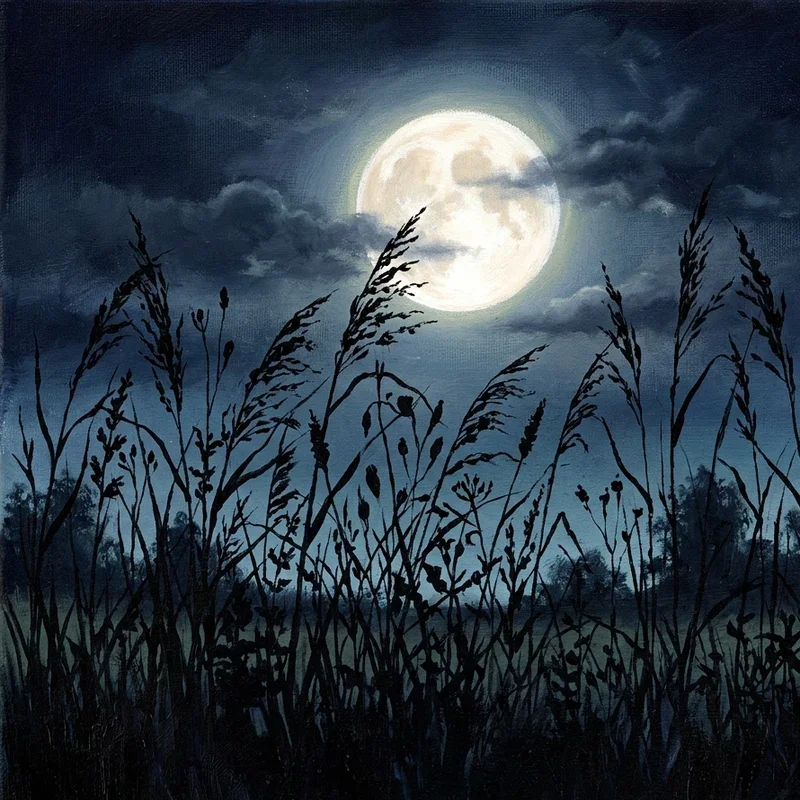
13. Moonlit Night Grass Silhouette Scene
A moonlit night grass silhouette scene paints a deep blue and purple night sky with a luminous moon, then renders tall grass silhouettes in the foreground as dark shapes against the moonlit background, the individual blade tips catching faint rim lighting where moonlight edges their profiles against the darker sky. Moonlit grass works like painting daytime grass in reverse where light defines edges rather than surfaces, the nighttime context demanding an entirely different approach to rendering the same subject you normally paint under full sunlight conditions during typical landscape painting sessions. Paint the graduated night sky first blending deep navy into lighter blue near the moon. Add grass silhouettes using dark paint applied with upward strokes, leaving tiny gaps where moonlight bleeds through between individual blade profiles creating atmospheric edge lighting effects.
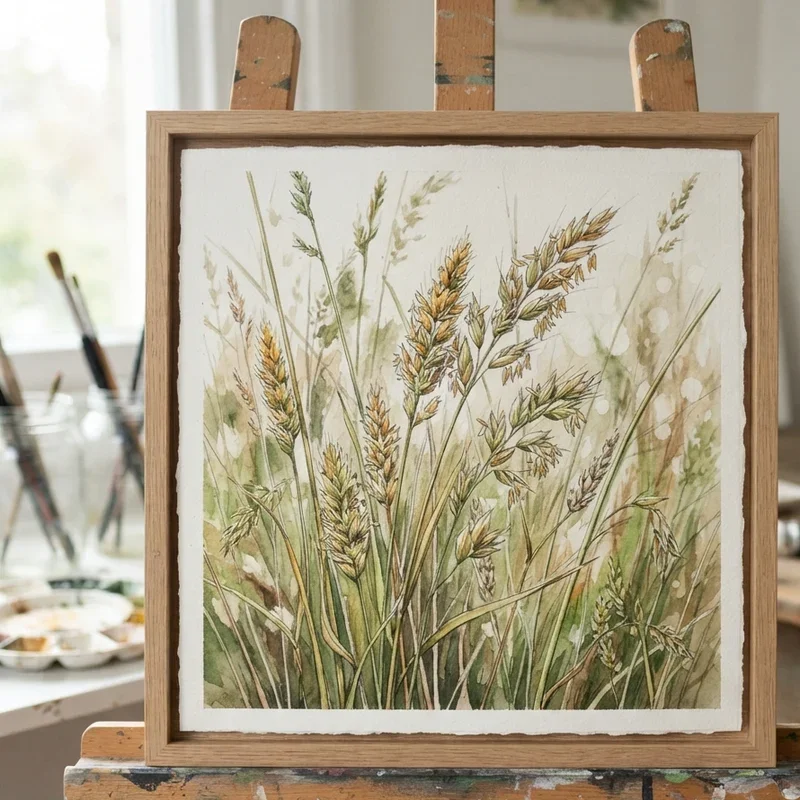
14. Macro Grass Seed Head Detail Study
A macro grass seed head detail study renders the intricate seed structures crowning tall grass stalks at extreme close-up scale, capturing the delicate branching patterns, tiny individual seeds, fine hair-like awns, and the translucent quality these structures display when backlit by sunlight creating botanical artwork showcasing nature's reproductive engineering at magnificent magnification. Seed head studies work like documenting the engineering blueprints nature uses to distribute grass genetics across entire continents, every tiny structural detail serving a specific aerodynamic or dispersal function that your careful rendering preserves as both scientific observation and artistic beauty simultaneously. Select reference photographs showing clear structural detail of species like timothy, foxtail, or blue stem grass. Render the finest structural details using a size zero liner brush and thinned paint, building the delicate branching architecture from the central stem outward through progressively finer secondary and tertiary branches.
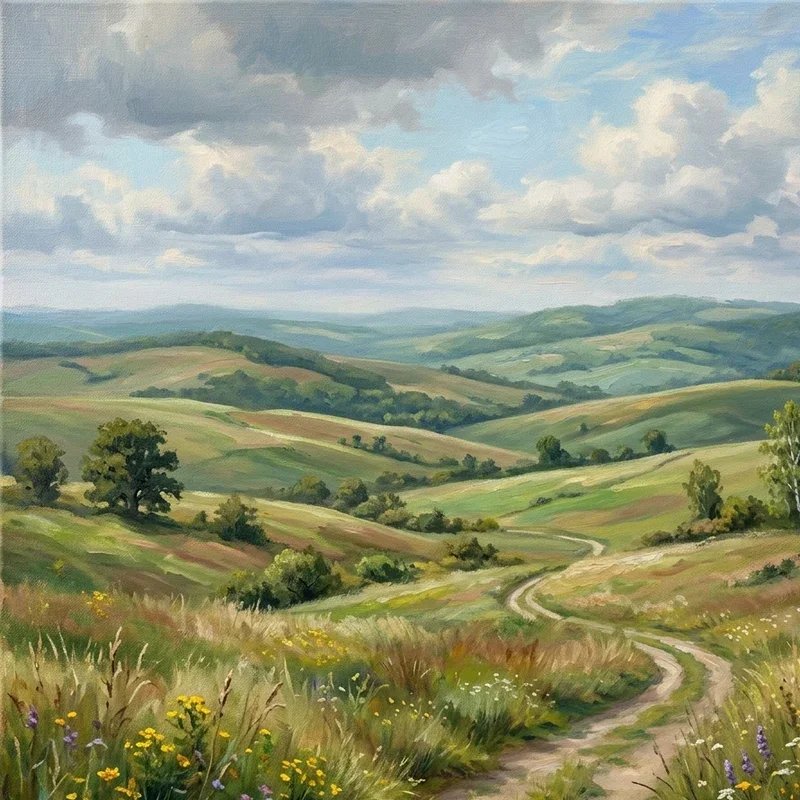
15. Rolling Hills Depth Perspective Grassland
A rolling hills depth perspective grassland renders undulating green hills receding from the detailed foreground through progressive atmospheric layers toward a distant horizon, teaching the critical landscape skill of creating convincing spatial depth through systematic value lightening, color cooling, and detail reduction as grass-covered terrain stretches deeper into the painted distance. Rolling hills work like building a visual staircase where each step backward loses sharpness, gains atmospheric haze, and shifts cooler in temperature, the systematic degradation of detail creating the spatial illusion that your flat canvas somehow extends miles toward a distant horizon that does not physically exist. Paint the most distant hills first using the lightest, coolest, most muted green tones. Progress forward adding warmer, darker, more saturated greens with increasingly visible grass detail, the foreground receiving the sharpest, warmest, most textured treatment creating maximum depth contrast.
Conclusion
Grass painting transforms from frustrating flat green rectangles into convincing living landscapes when you understand that grass is never one color, one texture, or one uniform height, and that different lighting conditions, seasons, perspectives, and distances each demand completely different rendering approaches and techniques. From fan brush meadow sweeps and palette knife impasto fields to moonlit silhouettes and dewy close-up studies, these fifteen ideas prove that grass offers virtually unlimited creative possibilities for artists willing to observe carefully and paint boldly. Choose the technique matching your current skill level and preferred medium, because mastering grass painting elevates every landscape you create forever afterward.
Read next: 15 Landscape Painting Ideas to Capture Beautiful Scenery
Frequently Asked Questions
Q1: What brush type works best for painting realistic grass in acrylic or oil paintings?
A: Fan brushes, liner brushes, and flat brushes each create different grass textures for varied effects.
Q2: How many shades of green do I need for convincing grass in landscape paintings?
A: Mix at least four to six green variations including warm, cool, light, and dark tones minimum.
Q3: Should I paint grass blades individually or suggest them with broader textured strokes?
A: Paint individual blades in foreground areas and use broader suggestion strokes for middle and background.
Q4: What colors besides green should I mix into grass for more realistic natural results?
A: Add yellow ochre, burnt sienna, purple, and blue to greens creating natural color variation throughout.
Q5: How do I prevent grass areas from looking flat and monotonous in landscape paintings?
A: Vary color temperature, value contrast, blade direction, and density across the entire grass area consistently.
Stay up to date with our latest ideas!