15 Simple Flower Painting Ideas Everyone Can Create
Discover 15 simple flower painting ideas perfect for beginners and seasoned artists alike. Grab your brushes and start creating today!
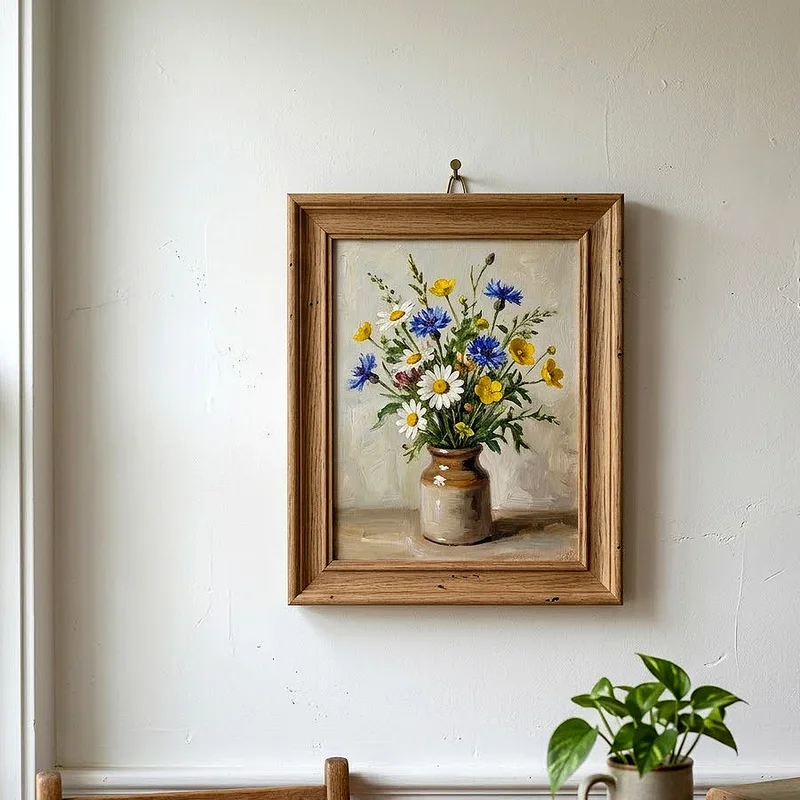
Have you ever stared at a blank canvas and felt completely frozen? You are not alone. Painting flowers gives you the perfect starting point because nature already did the hard design work for you. Whether you pick up acrylics for the first time or dust off watercolors you forgot you owned, floral subjects welcome every skill level with open petals. Think of each bloom as a friendly teacher guiding your brush across the surface. You do not need expensive supplies or years of training to make something beautiful. All you really need is a willingness to play with color and let go of perfection. These fifteen ideas will spark your creativity and prove that anyone can paint flowers worth framing.
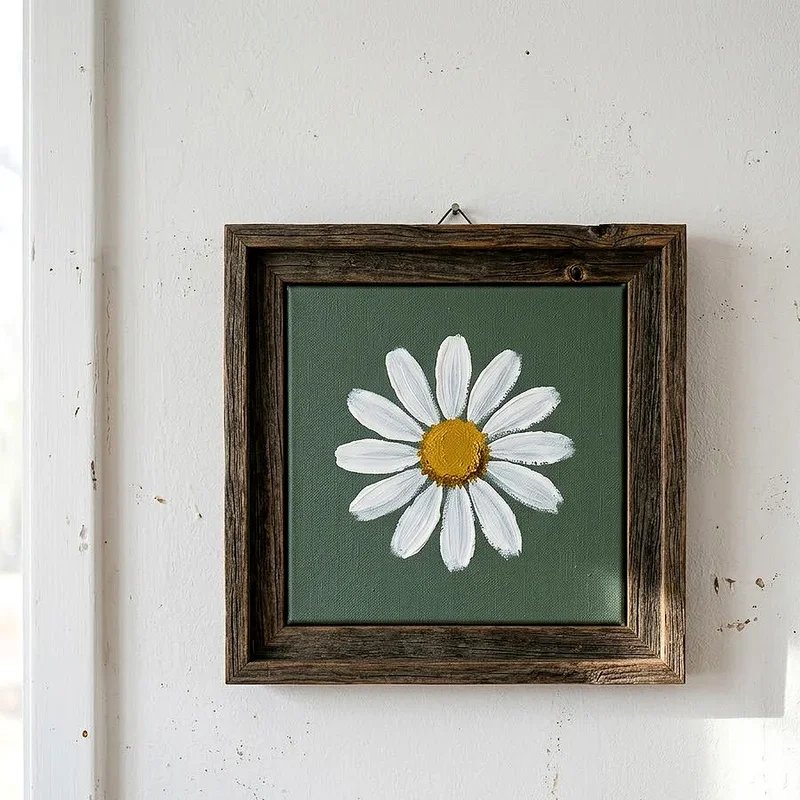
1. One Stroke Daisy on a Colored Background
Starting with a daisy feels like learning to ride a bicycle with training wheels still attached. You load a flat brush with white paint, press down at the outer edge, and pull toward the center in one smooth motion. Repeat that stroke around a yellow dot, and you suddenly have a flower staring back at you. Choosing a bold background color like deep blue or rich teal makes those white petals pop right off the surface. This project teaches you brush control without demanding precision, so your confidence grows with every petal you lay down. Try scattering several daisies across the canvas at different sizes to create depth and movement in your very first session.
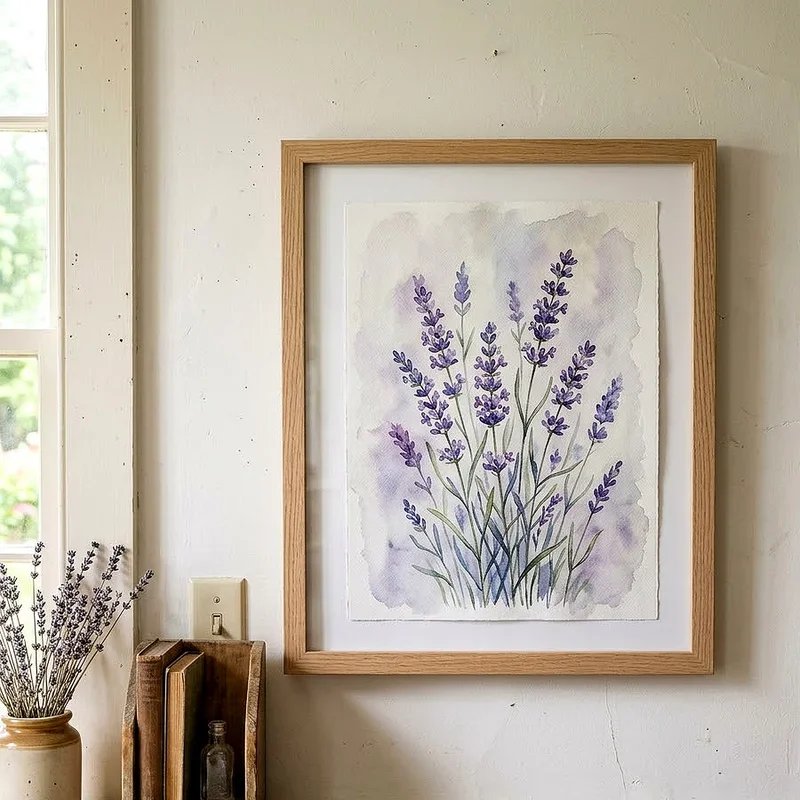
2. Watercolor Lavender Stalks
Watercolor lavender practically paints itself once you learn one tiny trick. You mix a soft purple wash, load a small round brush, and press quick dabs along an imaginary vertical line. Each little mark represents a blossom clustered on the stalk, and the slight variations in pressure give the piece a natural, organic rhythm. Add thin green stems with a liner brush after the purple dries, and your painting already looks like something from a countryside gift shop. The beauty of this project lives in its imperfection because real lavender grows in wild, uneven clusters anyway. Paint five or seven stalks side by side, and you will have a calming piece that smells like relaxation just by looking at it.
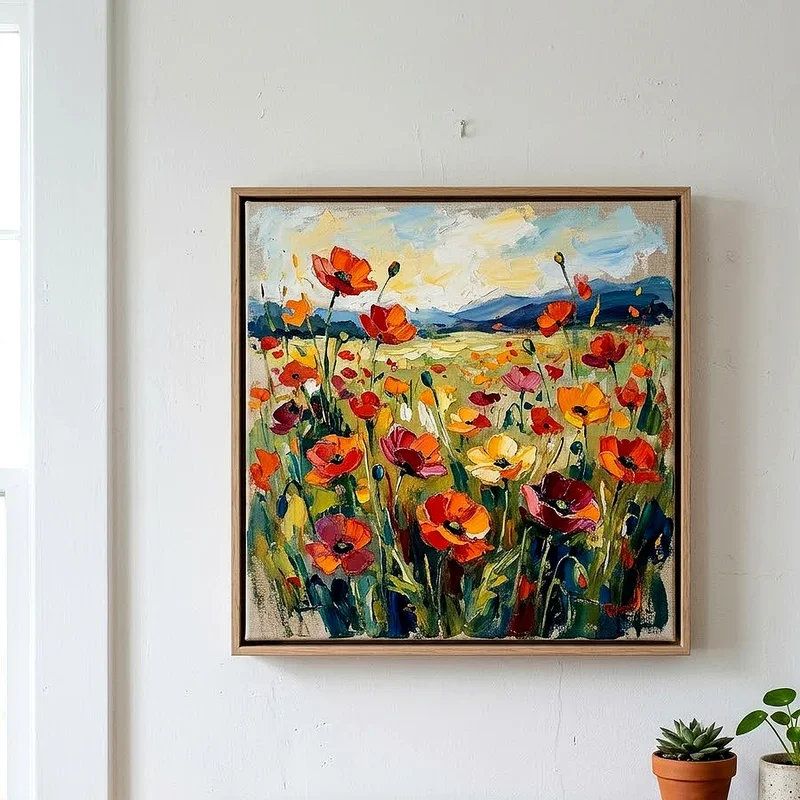
3. Abstract Poppy Field
Imagine standing in a meadow where red flowers stretch to the horizon. That feeling is exactly what you capture with an abstract poppy field. You skip the careful outlines entirely and instead use broad strokes of red, orange, and crimson over a green and yellow base. Letting colors bleed into each other creates the illusion of distance and atmosphere without any technical drawing skills. A few dark centers dabbed on while the red is still wet give each poppy a sense of identity within the chaos. This approach celebrates the happy accidents that make painting so addictive. You finish fast, the result looks dramatic on any wall, and nobody would ever guess you winged the entire thing.
4. Sunflower Close Up in Acrylics
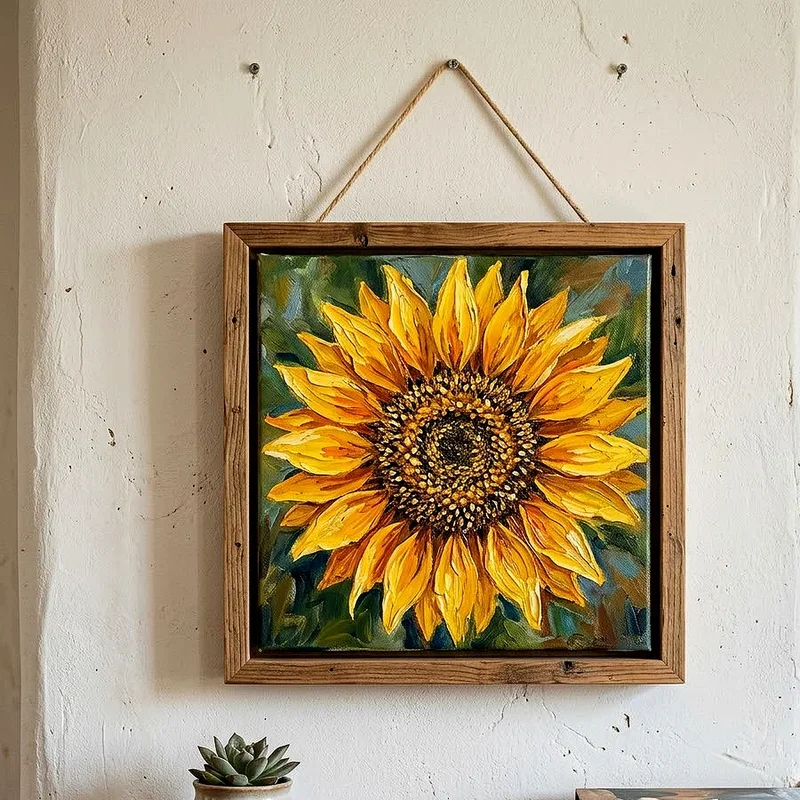
A sunflower viewed up close becomes a lesson in warm color theory disguised as fun. You block in a large brown circle near the center of your canvas, then surround it with elongated yellow petals that reach past the edges. Painting petals that extend beyond the frame gives the composition an almost cinematic quality, like the viewer pressed their face right into the garden. Mix burnt sienna and raw umber into the seed head for texture, and use a toothpick to scratch crosshatch patterns before the paint dries. That detail mimics the spiral pattern real sunflower seeds follow. The project takes about an hour, but the cheerful result radiates energy every morning you walk past it hanging on your wall.
5. Cherry Blossom Branch with Sponge Technique
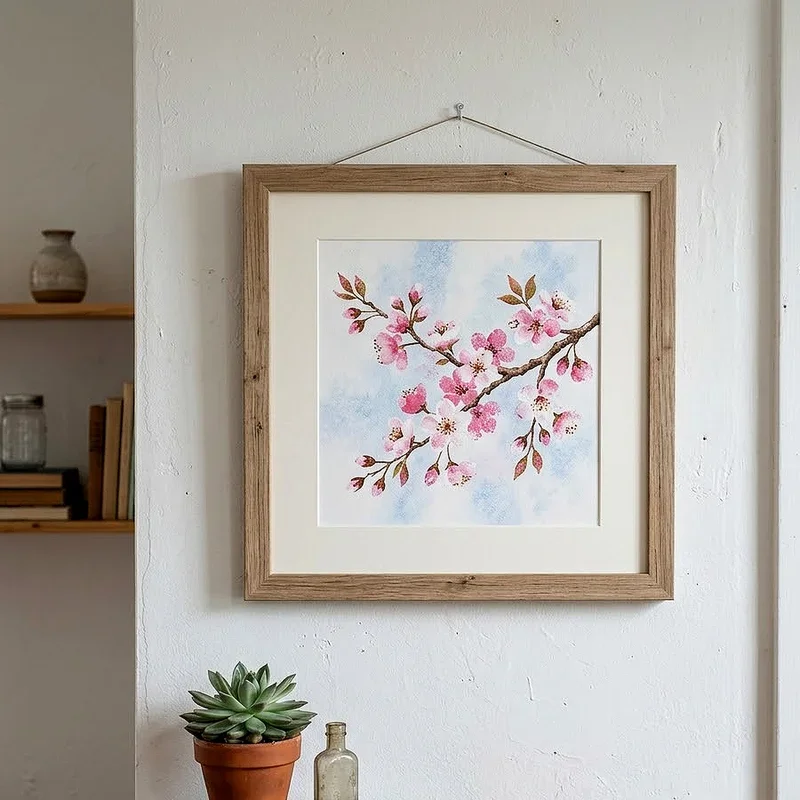
If you think painting delicate cherry blossoms requires a steady surgeon's hand, a kitchen sponge will change your mind forever. You start by painting a dark brown branch sweeping diagonally across the canvas with a flat brush. Then you tear a small piece of sponge, dip it lightly in pink and white paint, and press it along the branch in gentle clusters. The sponge creates soft, airy clusters that look remarkably like real blossoms viewed from a short distance. Rotate the sponge between dabs so no two impressions look identical, and scatter a few drifting petals below the branch. The whole piece takes less time than watching a sitcom episode, yet guests always pause and stare when they spot it.
6. Rose Silhouette at Sunset
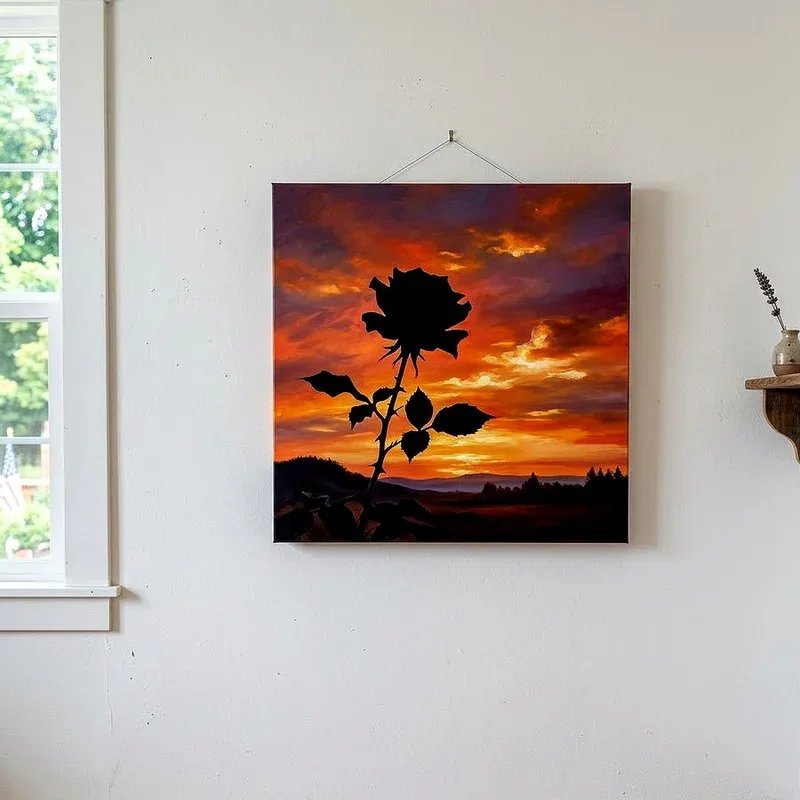
Painting a realistic rose intimidates almost everyone, but a silhouette version removes that pressure entirely. You build a gradient background that fades from warm orange at the bottom through pink and into deep purple near the top, mimicking a summer sunset sky. Once that layer dries, you paint the rose and its stem in solid black right in the center. Because silhouettes carry no interior detail, you only need to nail the general outline of petals curving around the bud. A thin liner brush helps you add thorns and a couple of leaves for character. The contrast between the vibrant background and the dark flower creates a mood that feels both romantic and dramatic without requiring advanced painting technique.
7. Loose Wildflower Bouquet
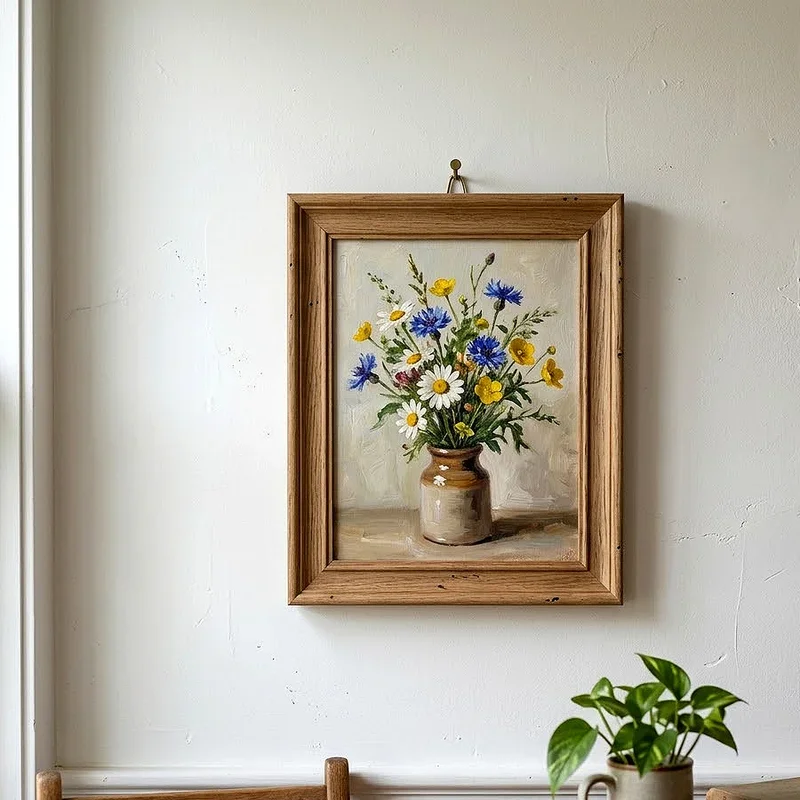
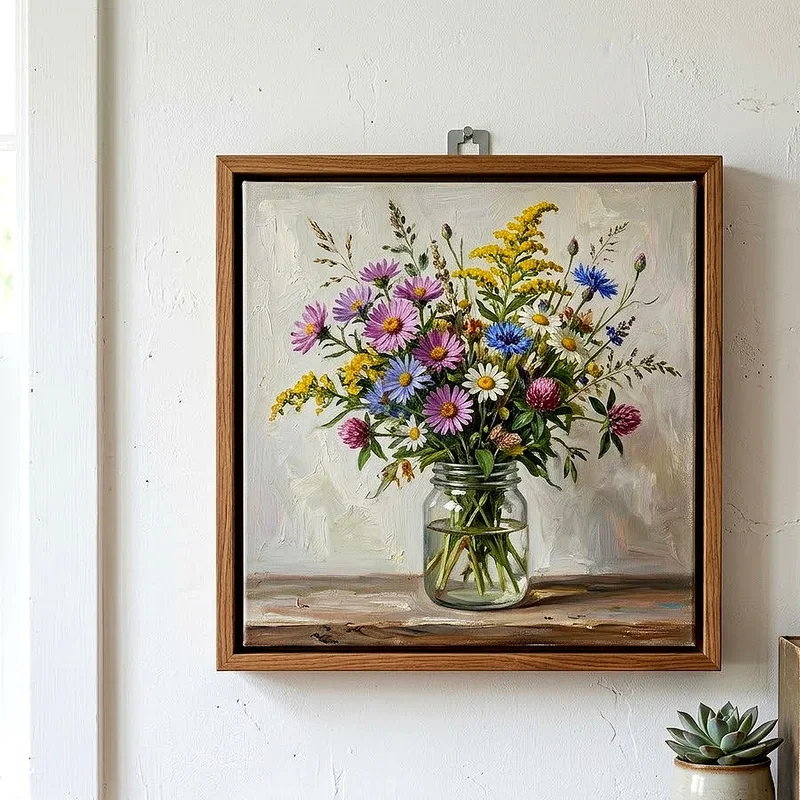
Loose painting style works like jazz music on canvas. You riff, improvise, and let intuition guide each brushstroke rather than following a rigid score. Start by mapping vague shapes where your largest flowers will sit, then fill in with quick strokes of various colors representing petals, leaves, and filler blooms. Purple, yellow, white, and soft pink scattered together mimic the randomness of a hand picked wildflower bunch. Use a rigger brush to suggest thin stems converging at the bottom as though someone just gathered them from a field. The magic of loose painting is that the viewer's brain fills in the gaps, making the piece look more sophisticated than the effort you actually invested. Embrace the mess and trust the process completely.
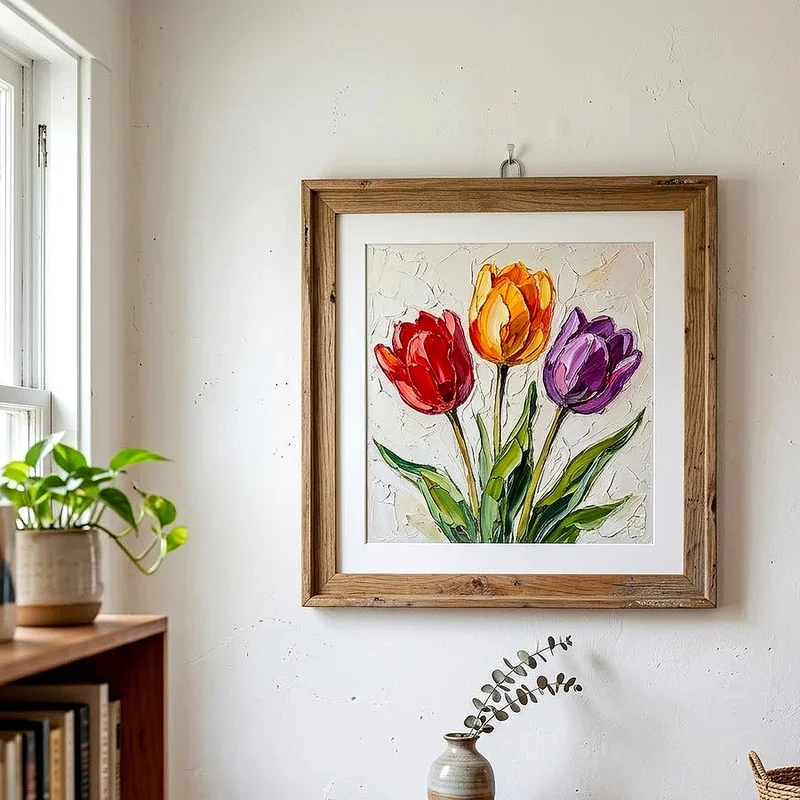
8. Tulip Trio Using Palette Knife
Swap your brush for a palette knife and watch flowers take on a whole new personality. Scoop a generous amount of red, pink, or yellow acrylic onto the edge of the knife and press it against the canvas in an upward sweeping motion. Each press creates a thick, textured petal that catches light differently depending on the angle. Build three tulip heads side by side, then drag green paint downward with the knife edge to form sturdy stems. The thick impasto texture gives your painting a sculptural quality that flat brushwork simply cannot match. You feel more like a builder than a painter during this project, which makes it especially appealing to people who fidget or prefer hands on creative activities over delicate detail work.
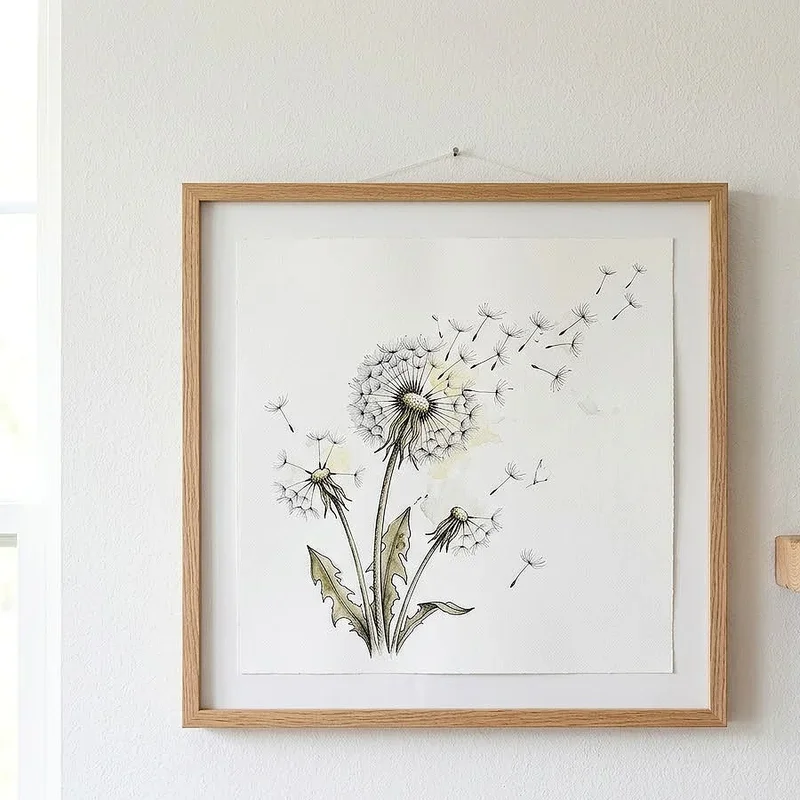
9. Dandelion Wishes in Ink and Watercolor
Everyone has blown dandelion seeds into the wind at least once, and this project captures that nostalgic moment beautifully. You begin with a light watercolor wash in soft blue or pale green for the background, keeping things dreamy and unfocused. Once that layer dries, you switch to a fine tip ink pen and draw the dandelion stem topped with a sphere of delicate seed lines radiating outward. Scatter a few floating seeds drifting across the page, each one a tiny starburst trailing a thin thread. The combination of soft watercolor and crisp ink creates a visual contrast that feels both whimsical and refined. Hang it in a reading nook or nursery, and it instantly transforms the atmosphere of any quiet space.
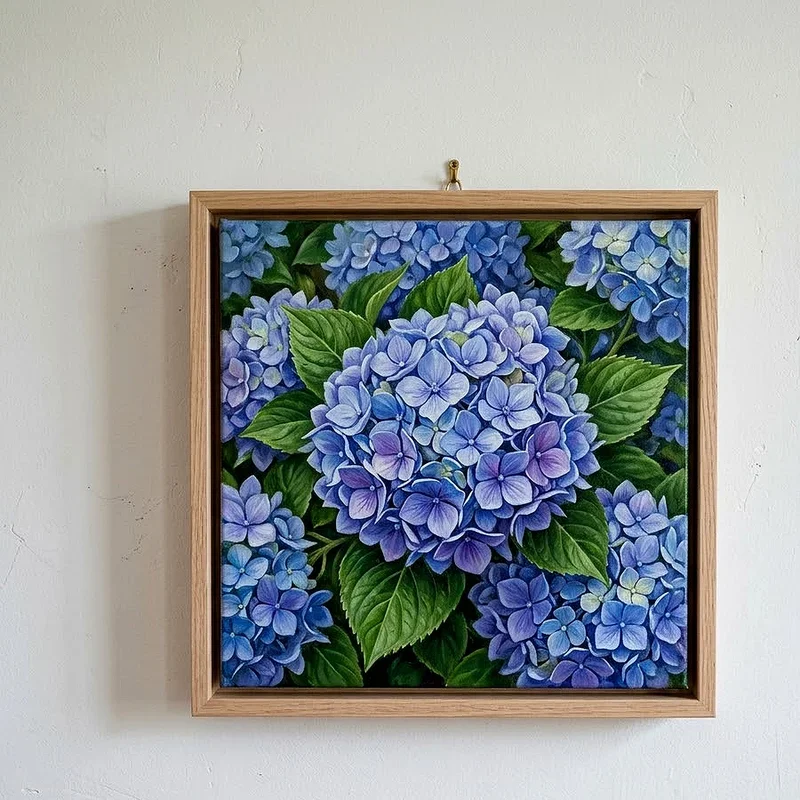
10. Hydrangea Cluster with Dot Technique
Hydrangeas look impossibly complex at first glance, but zoom in and you realize each flower head is just a collection of tiny four petal blossoms packed together. You recreate this by loading a small round brush with varying shades of blue, purple, pink, and white, then dotting them tightly into a rounded cluster shape. Vary the pressure so some dots appear larger and some barely whisper against the surface. The color shifts within the cluster create a sense of depth and light naturally without you needing to shade carefully at all. Add a couple of broad green leaves underneath using a flat brush, and the composition feels finished and polished. This meditative dotting process also doubles as surprisingly effective stress relief after a long day.
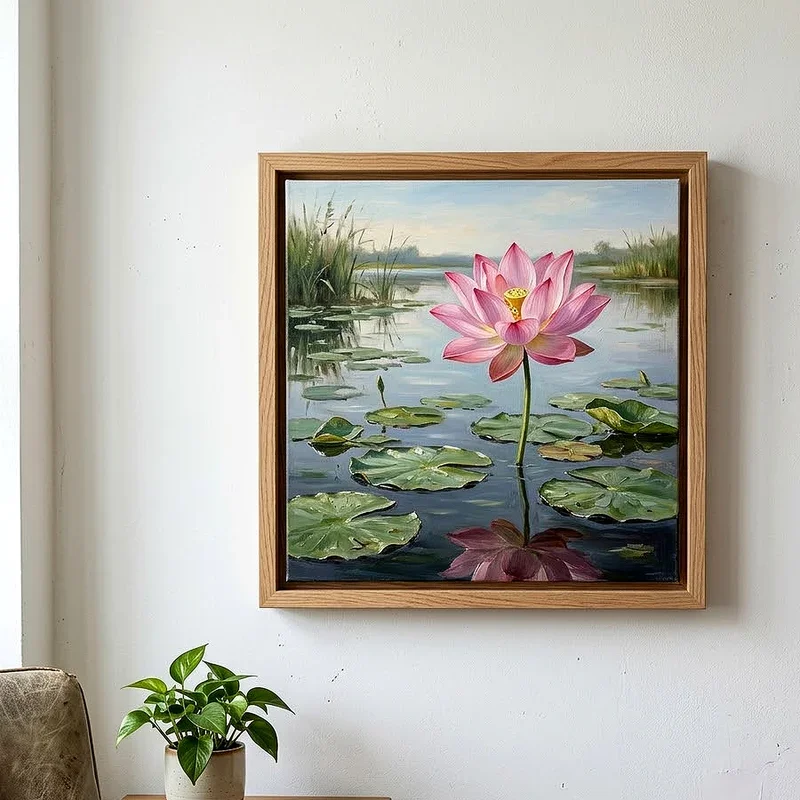
11. Lotus on Still Water
A lotus floating on calm water carries centuries of symbolic meaning across many cultures, and painting one feels almost ceremonial in its quiet focus. You lay down a smooth gradient of blue and teal across the lower half of the canvas to represent water. Then you paint the lotus petals rising upward in layers of soft pink and white, each petal slightly overlapping the one behind it. Adding a few lily pads with flat green ovals around the flower grounds the composition and gives the eye a resting place. A subtle reflection beneath the flower created by dragging muted pink downward sells the illusion of still water perfectly. This painting works beautifully in bathrooms, meditation corners, or anywhere you want a sense of tranquility.
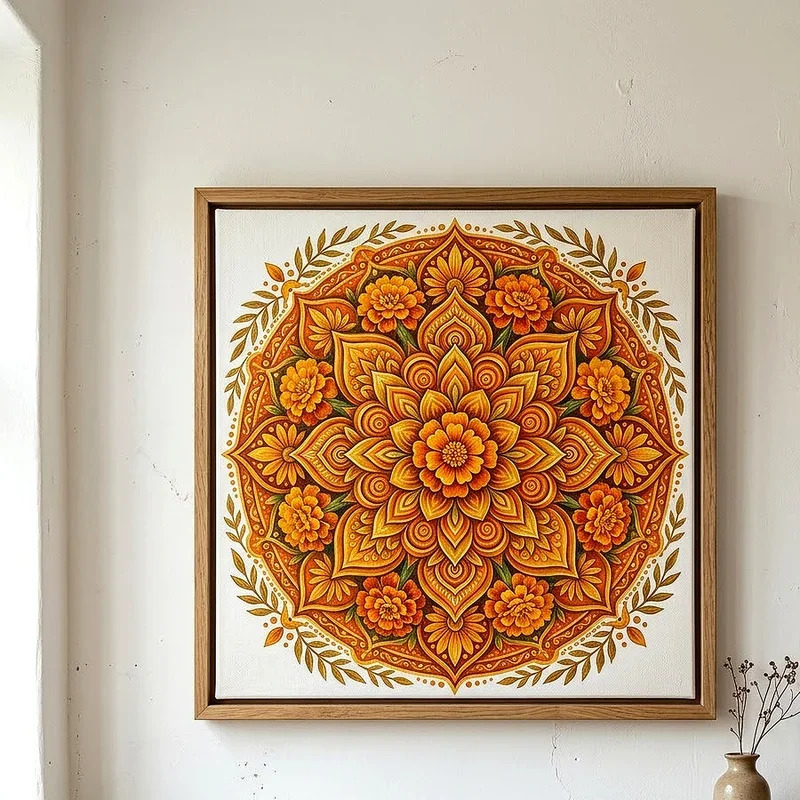
12. Marigold Mandala Pattern
When a flower meets geometry, something hypnotic happens on canvas. You draw a light pencil circle in the center, then build outward with concentric rings of marigold inspired petals using warm oranges, golds, and deep reds. Each ring of petals slightly overlaps the previous one, creating a layered mandala that pulses with warmth and energy. The repetitive motion of painting petal after petal puts you into a focused flow state where time seems to dissolve entirely around you. You can keep the background black for maximum contrast or choose a cream tone for a softer vintage vibe. The finished piece looks intricate and intentional, yet the process itself only requires patience and a willingness to repeat one simple petal shape over and over again with minor variations.
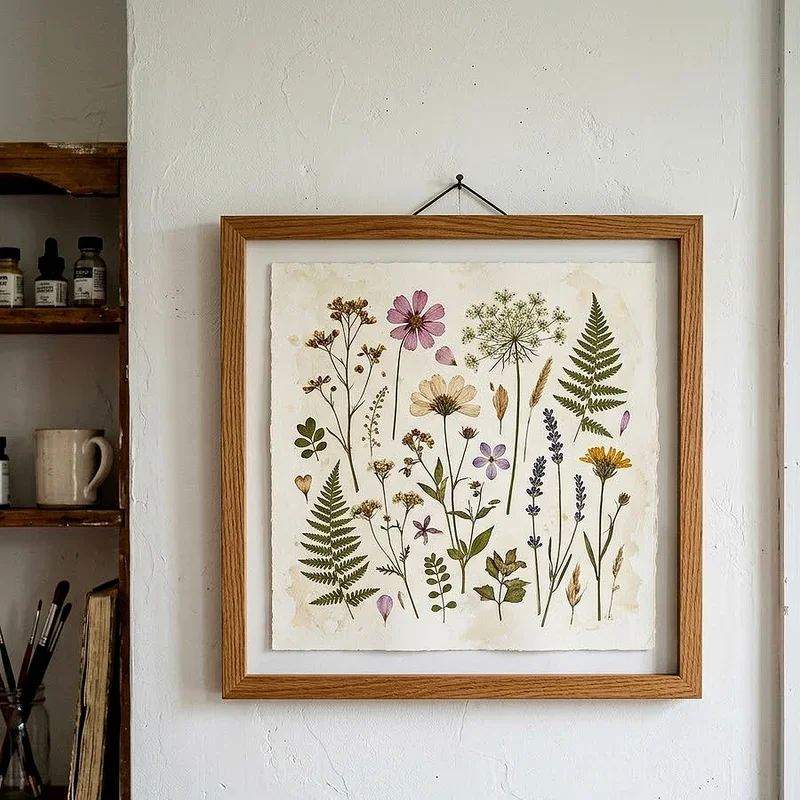
13. Pressed Flower Inspired Composition
Pressed flower art has made a massive comeback, and you can paint your own version without waiting weeks for real blooms to dry flat. Study a few photographs of pressed botanical specimens, and notice how the flowers appear flattened, transparent, and delicately faded. You mimic that look by using thin washes of watercolor and painting each flower as though you see right through it to the paper beneath. Keep your palette muted with dusty pinks, sage greens, and faded yellows to match that preserved, antique quality. Arrange several different species across the page the way a botanist might display a collection, and add their common names in light pencil underneath each one. The result channels vintage herbarium pages and looks elegant framed on any wall.
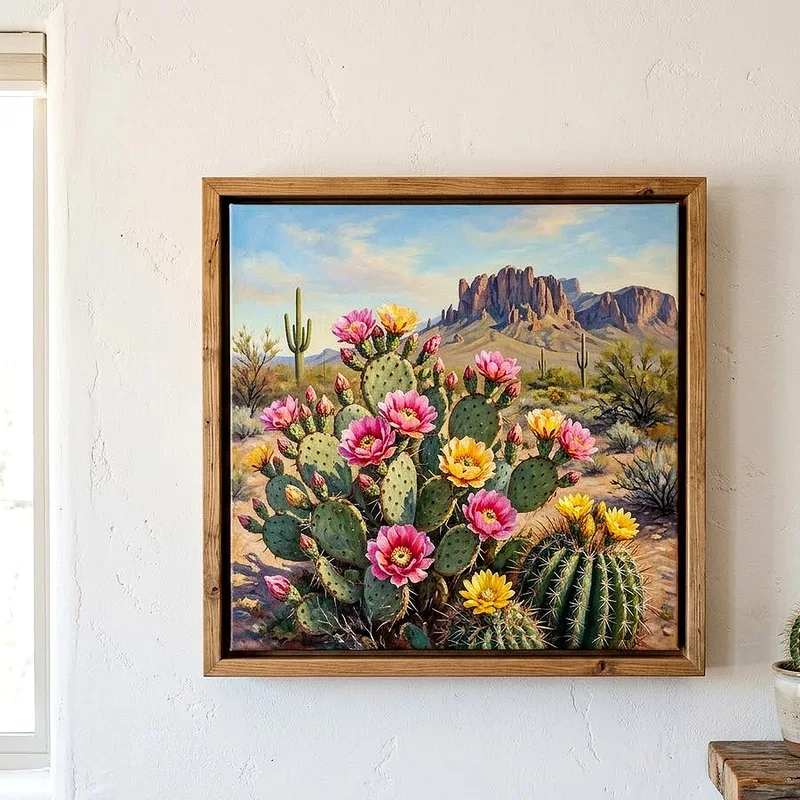
14. Cactus Flower Desert Scene
Deserts bloom with some of the most vivid flowers on the planet, and that dramatic contrast between harsh landscape and delicate petals makes a compelling painting subject. You paint a sandy, warm toned background with hints of terracotta and ochre, then add a simple cactus shape in muted green. The real star arrives when you place a bright magenta or hot pink flower right at the top of the cactus, surrounded by a few smaller buds. That single burst of vivid color against the earthy tones creates a focal point your eyes cannot resist. You can add distant mountains or a gradient sky to fill the upper portion and complete the scene. This project reminds you that beauty often appears in the most unexpected and unlikely places.
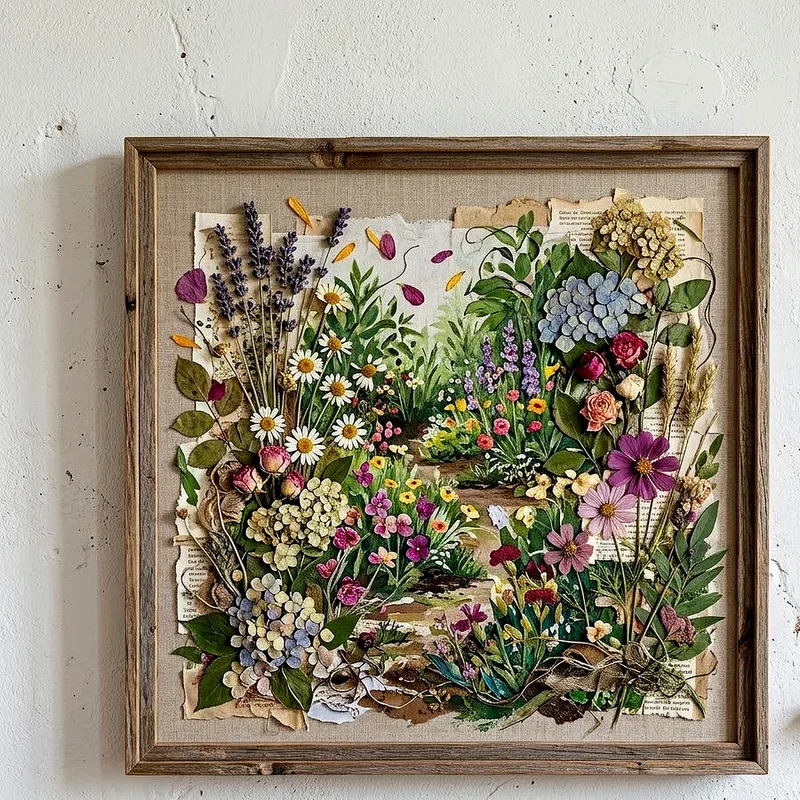
15. Mixed Media Garden Collage
Why limit yourself to paint alone when you can throw the whole craft box at the canvas? A mixed media garden collage combines acrylic paint, torn paper, fabric scraps, pressed leaves, and even buttons or beads to build a textured floral scene that jumps off the surface. You paint a loose background of greens and sky blue, then layer different materials to form flowers, stems, and foliage. A scrap of lace becomes a hydrangea, a circle of burlap turns into a sunflower center, and torn magazine pages add unexpected pops of pattern and color. This project demolishes the idea that art must follow rules. You play, experiment, and glue things down with cheerful abandon, and the result always carries a joyful, uninhibited energy that purely painted pieces rarely achieve.
Conclusion
Painting flowers is less about technical mastery and more about giving yourself permission to play with color, shape, and texture. Each of these fifteen ideas meets you exactly where you are, whether you have never held a brush or you paint every weekend. The real secret is simply starting, because every petal you paint teaches your hand something new. Grab whatever supplies you have nearby, pick the idea that excites you most, and let the canvas become your garden. You will surprise yourself with what blooms when you stop worrying about perfection and start enjoying the process.
Read next: 15 Simple Art Painting Ideas for Minimal and Beautiful Art
Frequently Asked Questions
Q1. What type of paint works best for beginners painting flowers?
A: Acrylic paint works best because it dries quickly, cleans up easily, and forgives mistakes.
Q2. Do I need expensive brushes to paint flowers?
A: Affordable synthetic brushes work perfectly fine for every flower painting project listed here.
Q3. Can I paint flowers on surfaces other than canvas?
A: You can paint flowers on wood panels, watercolor paper, cardboard, and even old book pages.
Q4. How long does a simple flower painting take to finish?
A: Most simple flower paintings take between thirty minutes and two hours to complete fully.
Q5. What if my flower painting does not look realistic?
A: Stylized and abstract flowers carry just as much charm and artistic value as realistic ones.
Stay up to date with our latest ideas!