15 Creative Realistic Drawing Ideas to Improve Your Skills
Discover 15 creative realistic drawing ideas to improve your skills with subjects that challenge observation and sharpen technique daily.
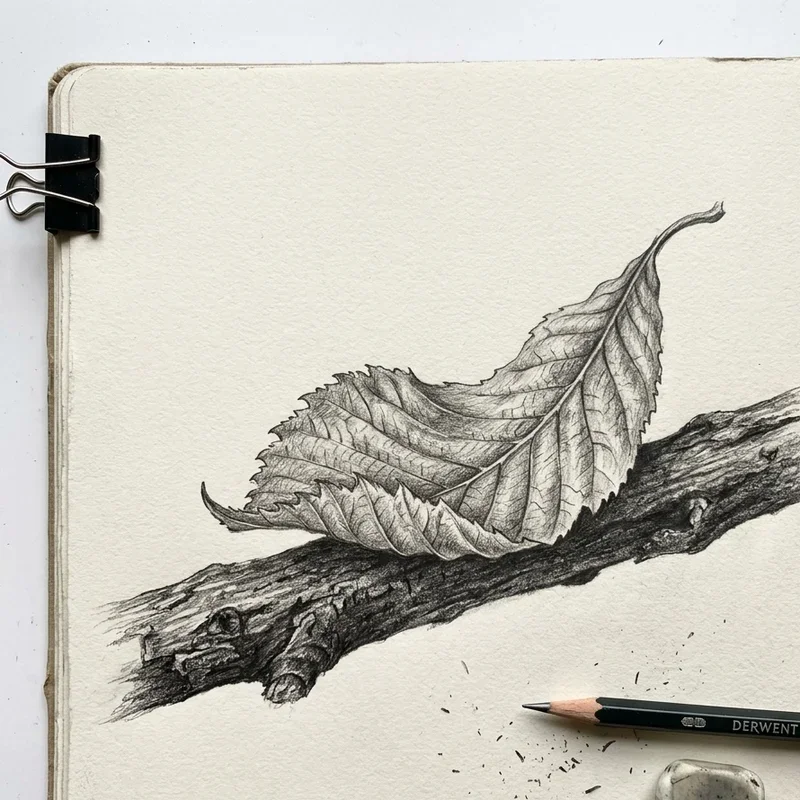
Realistic drawing demands the kind of focused observation that transforms how you see the entire world because once your eyes learn to notice subtle shadows, reflected light, and microscopic texture variations, ordinary objects suddenly reveal extraordinary visual complexity you previously walked past without a second glance. Have you ever stared at a photorealistic pencil drawing and wondered how any human hand could possibly create something so convincingly real on flat paper? That skill develops through deliberate practice with carefully chosen subjects. Think of realistic drawing as training your eyes and hands to collaborate like a precision instrument where observation leads and technique follows. These fifteen drawing ideas systematically sharpen your realism skills.
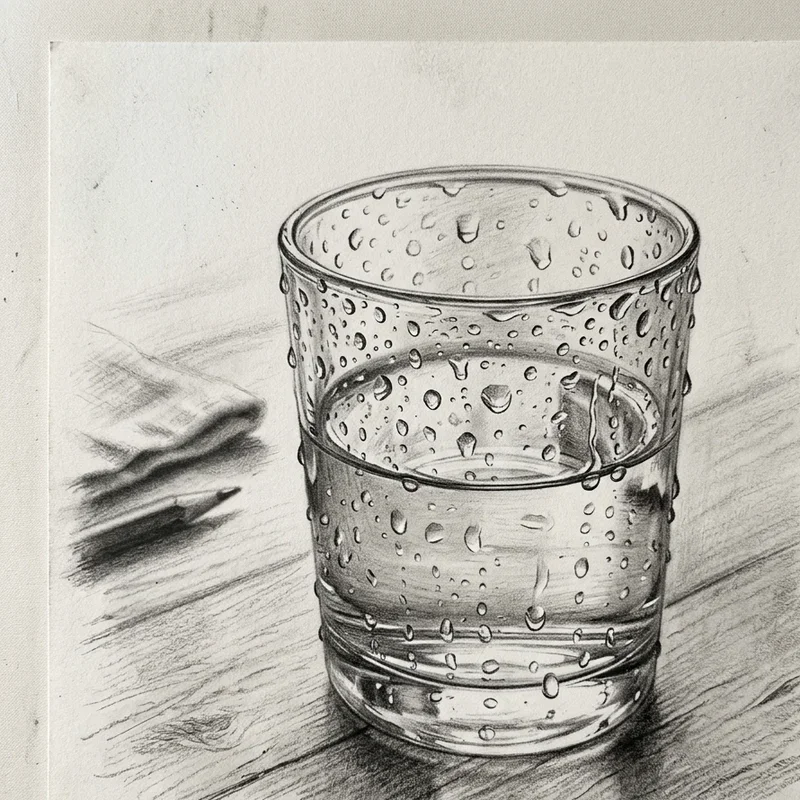
1. Glass Water Droplet Study
A glass water droplet study draws individual water drops sitting on flat surfaces, capturing the transparent refraction, internal reflections, cast shadows, and highlight spots that make a simple droplet one of the most technically challenging and visually rewarding subjects for developing realistic rendering skills through careful observation of how light behaves. Water droplets work like tiny optical laboratories sitting on your reference photo where every physical law of light demonstrates itself simultaneously in miniature, the curved transparent surface creating a concentrated masterclass in reflection, refraction, and shadow rendering within one small circular study. Start by identifying the brightest highlight point and the darkest shadow beneath the droplet. Build values gradually from light to dark, preserving the paper white for the primary highlight that sells the illusion of transparency.
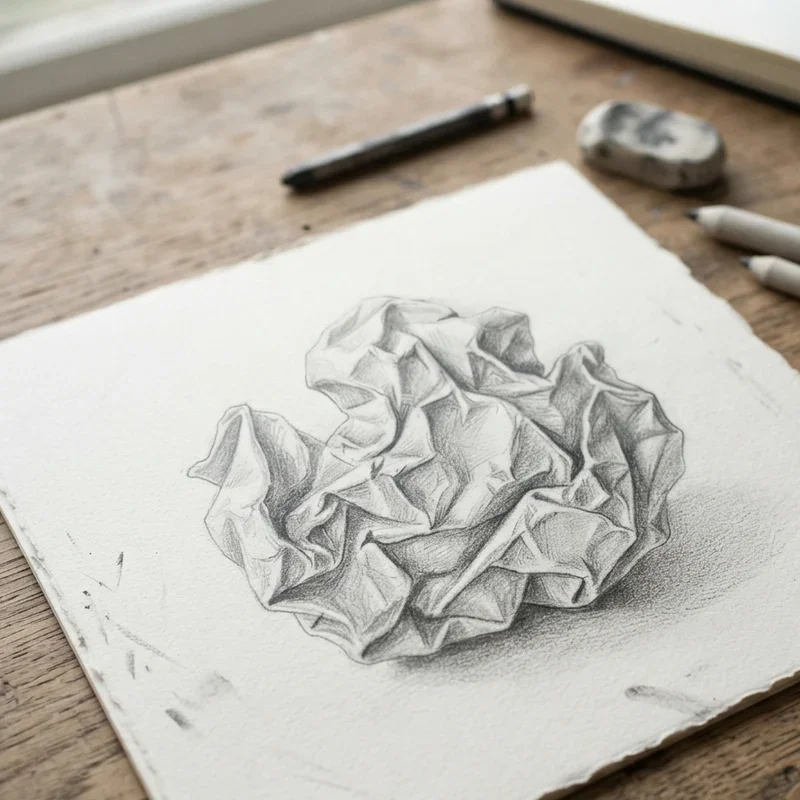
2. Crumpled Paper Texture Drawing
A crumpled paper texture drawing takes an actual piece of crumpled white paper, places it under a single directional light source, and renders every fold, crease, shadow pocket, and subtle value shift created by the irregular surface, teaching your eyes to distinguish between dozens of nearly identical gray values within a monochromatic subject. Crumpled paper works like a value scale that folded itself into three dimensions, every surface plane catching light at a slightly different angle creating a complete grayscale vocabulary within one inexpensive, readily available subject you literally make yourself in two seconds. Position your light source at a steep angle maximizing shadow depth and contrast. Use a full range of pencil grades from 2H through 6B capturing the extreme highlight-to-shadow range that directional lighting creates across the crumpled surface.
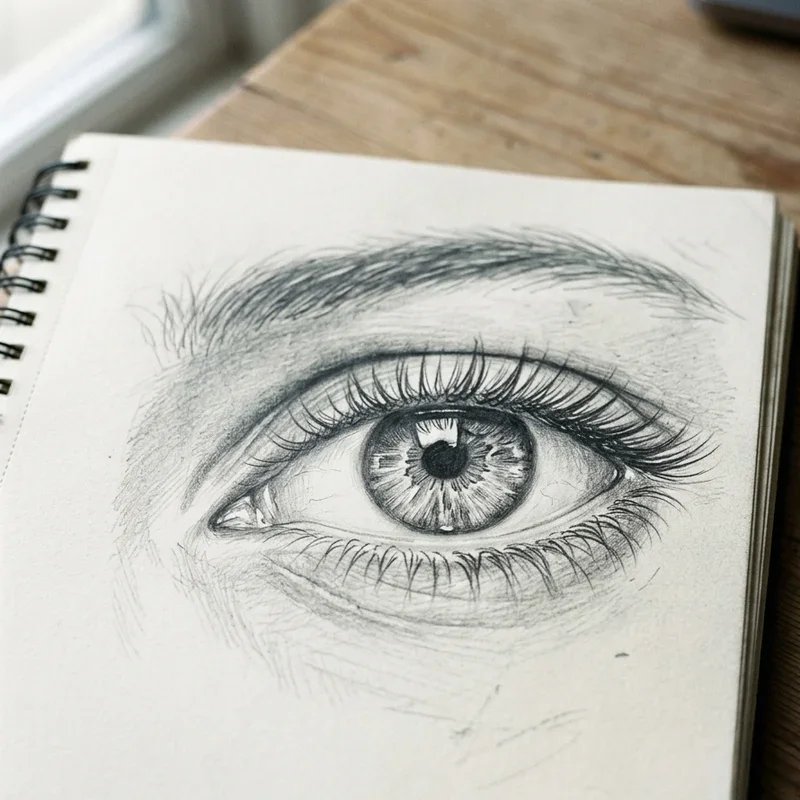
3. Human Eye Close Up Portrait
A human eye close up portrait focuses exclusively on rendering a single realistic eye including the iris pattern details, pupil depth, eyelash individual strands, surrounding skin texture, tear duct moisture, and the critical catchlight reflections that bring the entire drawing to life with convincing dimensional presence on flat paper. Eye drawings work like zooming into the most expressive square centimeter of the human face where every subtle rendering decision determines whether your drawing looks alive or uncomfortably lifeless, the stakes making every pencil stroke genuinely consequential. Study reference photos identifying the specific iris pattern unique to your subject. Build the iris using layered radial lines and tonal variations rather than flat coloring, creating the crystalline depth that distinguishes convincing eye drawings from amateur attempts.
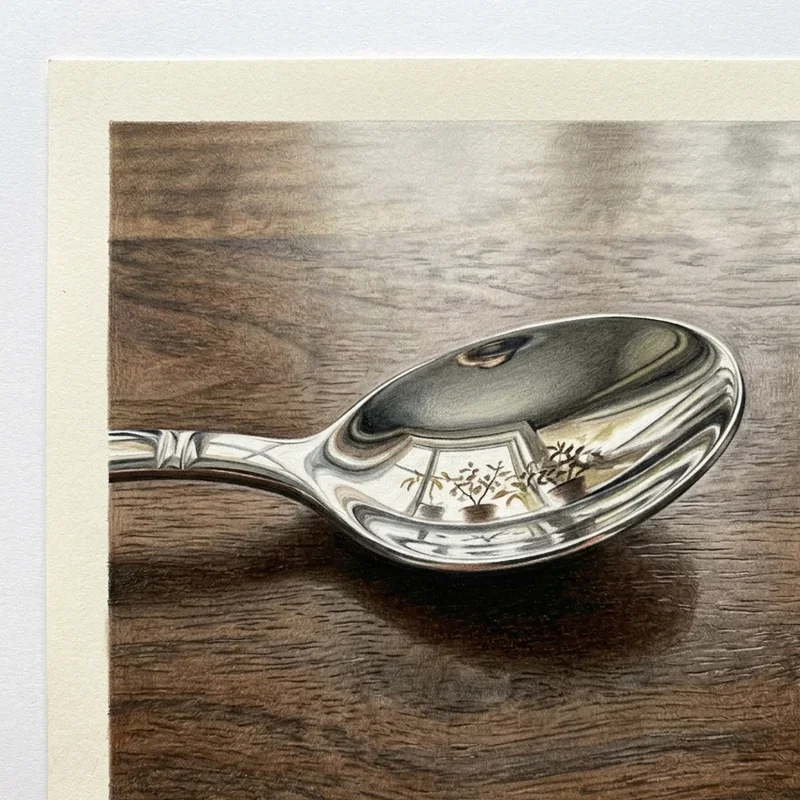
4. Metallic Spoon Reflection Drawing
A metallic spoon reflection drawing renders a polished metal spoon capturing the distorted environmental reflections, sharp highlight transitions, and the dramatic contrast between blinding white highlights and deep black shadows that define metallic surfaces, teaching the extreme value range control essential for drawing any reflective material convincingly. Spoon drawings work like practicing tonal gymnastics where your pencil sprints between the darkest darks and brightest brights with almost no middle ground in between, the abrupt value transitions defining metallic surfaces in a way that gradual smooth shading cannot replicate. Leave paper completely untouched for the sharpest highlights creating genuine brightness. Use your darkest pencil grades immediately beside untouched white areas, allowing the extreme contrast to communicate metallic reflectivity without needing any color whatsoever to convince the viewer.
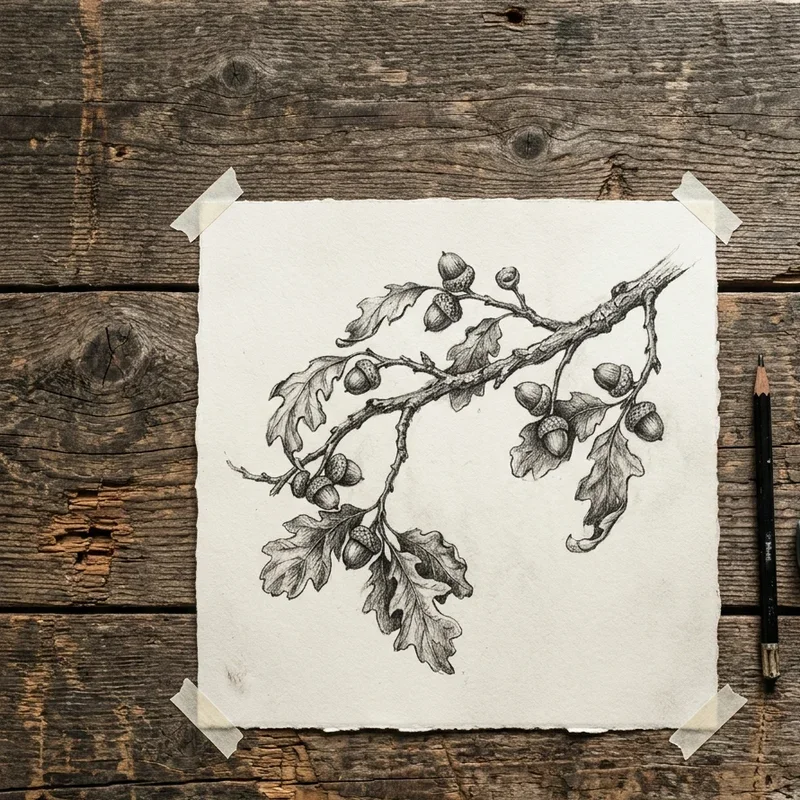
5. Weathered Wooden Surface Texture
A weathered wooden surface texture drawing renders aged, cracked, grain-rich wood surfaces found on old barn doors, driftwood pieces, or vintage furniture, capturing the parallel grain lines, knot formations, splitting cracks, and surface erosion that communicate age, material identity, and environmental history through pure graphite texture rendering. Wood texture drawings work like reading the biography of a tree through its surface patterns, every ring, crack, and weathering mark representing a chapter of natural history your pencil translates from three-dimensional reality into convincing two-dimensional illusion through patient observation. Draw grain lines following the wood's natural directional flow using varied pressure creating thick and thin line weight. Add knot formations as darker tonal concentrations where grain lines curve and compress around dense growth points creating focal interest within the texture.
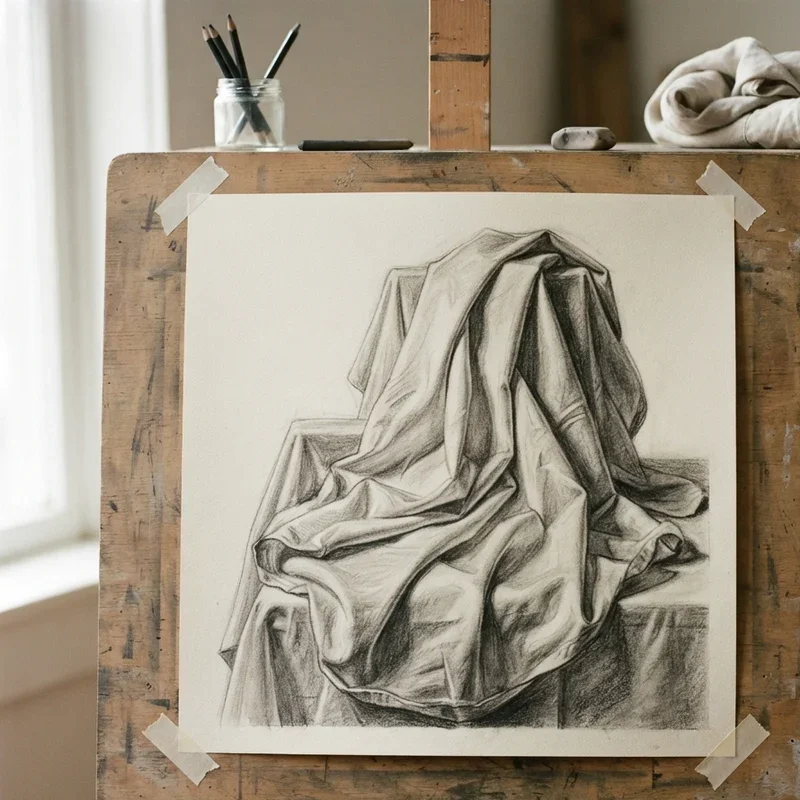
6. Fabric Folds and Drapery Study
A fabric folds and drapery study renders cloth hanging, draping, or bunching against surfaces, capturing the systematic fold patterns including pipe folds, zigzag folds, spiral folds, and drop folds that follow predictable physical rules which, once understood and memorized, allow you to draw convincing fabric from imagination. Drapery studies work like learning the grammar of cloth behavior where every fold follows logical structural rules determined by gravity, tension points, and fabric weight, the systematic patterns meaning you study physics as much as art during every carefully observed rendering session. Pin fabric to a wall creating simple pipe folds for your initial studies. Identify the primary tension point where fabric attaches, then trace the fold lines radiating downward from that anchor, building shadow values inside fold valleys progressively.
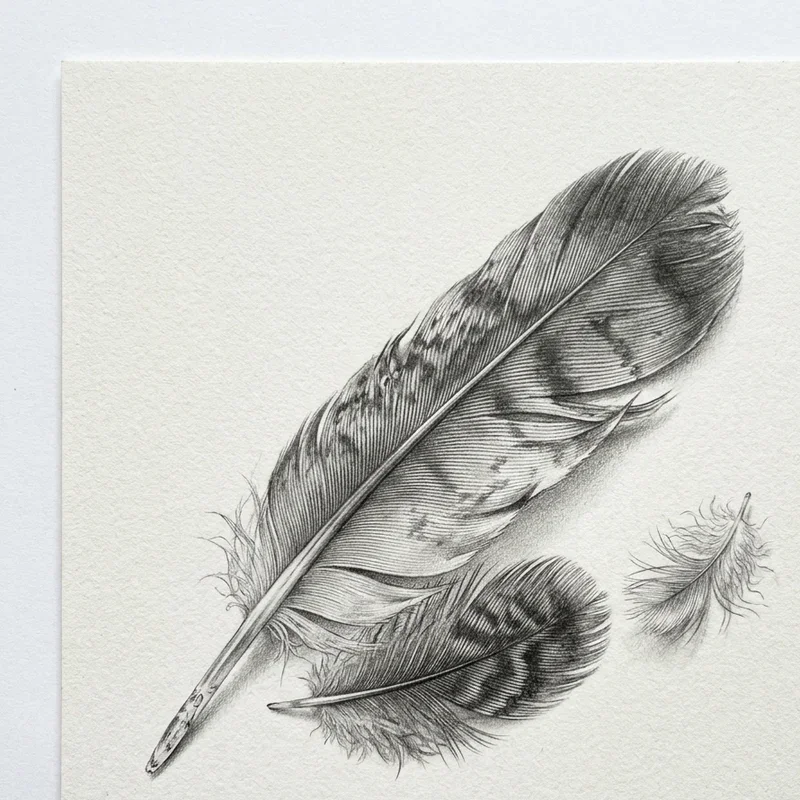
7. Realistic Feather Detail Drawing
A realistic feather detail drawing renders a single bird feather capturing the central shaft structure, individual barb separations, color gradient transitions, and the delicate translucency where light passes through thinner sections, creating a subject that teaches precision line work, subtle value control, and organic pattern rendering simultaneously. Feather drawings work like practicing calligraphy using nature's own letterforms, every barb line requiring the same controlled pressure variation that transforms rigid mechanical marks into organic shapes that genuinely feel alive and naturally grown rather than artificially constructed. Draw the central shaft first establishing the feather's structural spine. Build barbs using fine parallel lines radiating outward from the shaft at consistent angles, varying pressure to create the natural thickness transitions visible in real feather barb structures.
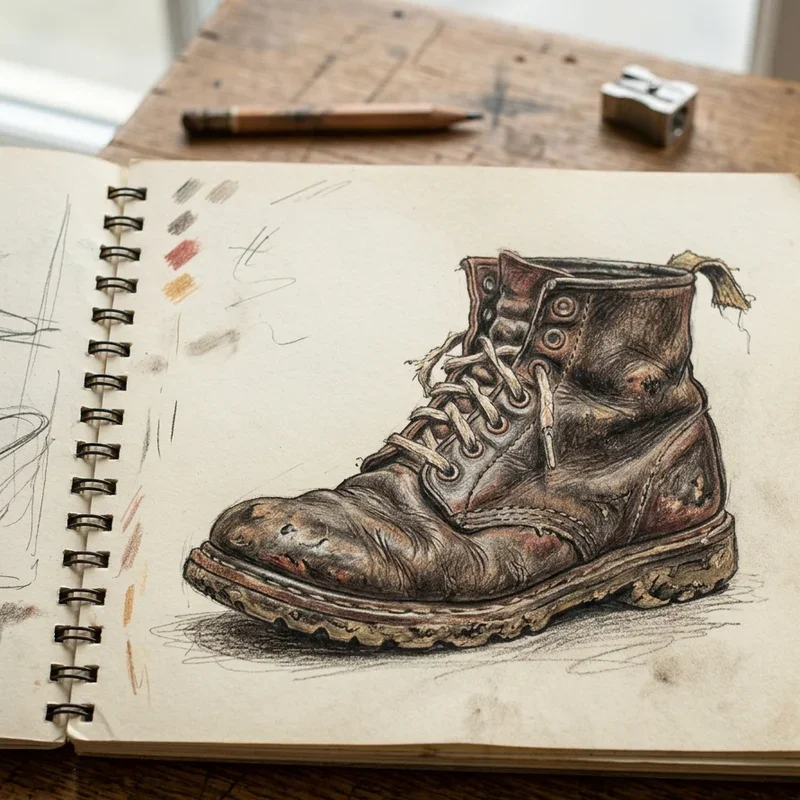
8. Old Leather Shoe Character Study
An old leather shoe character study draws a worn, creased, scuffed leather shoe or boot capturing the material's distinctive surface qualities including compression wrinkles around flex points, smooth polished areas, rough scuffed patches, and the overall sculptural form that footwear develops through years of conforming to human feet. Old shoe studies work like drawing a portrait of an inanimate object that somehow developed a personality through years of daily use, every crease and scuff mark telling a story about the human who wore it without the person needing to appear anywhere in the composition. Choose shoes with visible character and wear patterns rather than new footwear. Render leather texture using layered crosshatching that follows the surface contours, building up creased areas with denser mark-making that communicates material compression convincingly.
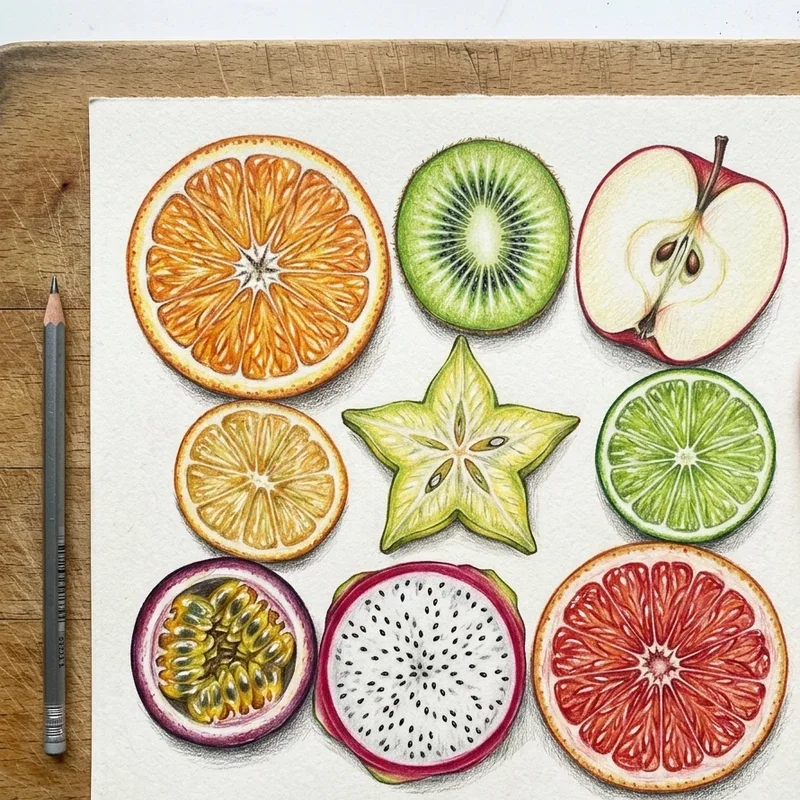
9. Sliced Fruit Cross Section Drawing
A sliced fruit cross section drawing renders the interior structure of halved or sliced fruit revealing seed arrangements, membrane patterns, juice cell textures, and the concentric growth ring structures that create naturally occurring geometric patterns fascinating enough to sustain detailed rendering sessions lasting hours without creative boredom setting in. Fruit cross sections work like discovering abstract art hiding inside your kitchen fruit bowl, the natural geometry so visually compelling that your drawing looks simultaneously realistic and decoratively graphic without any artistic manipulation of the source material required. Choose citrus fruits for dramatic radial segment patterns or kiwis for contrasting seed distribution designs. Use an actual sliced fruit as your reference rather than photographs, the three-dimensional presence helping you observe subtle surface textures and translucency effects that flat images compress.
10. Human Hand Gesture Studies
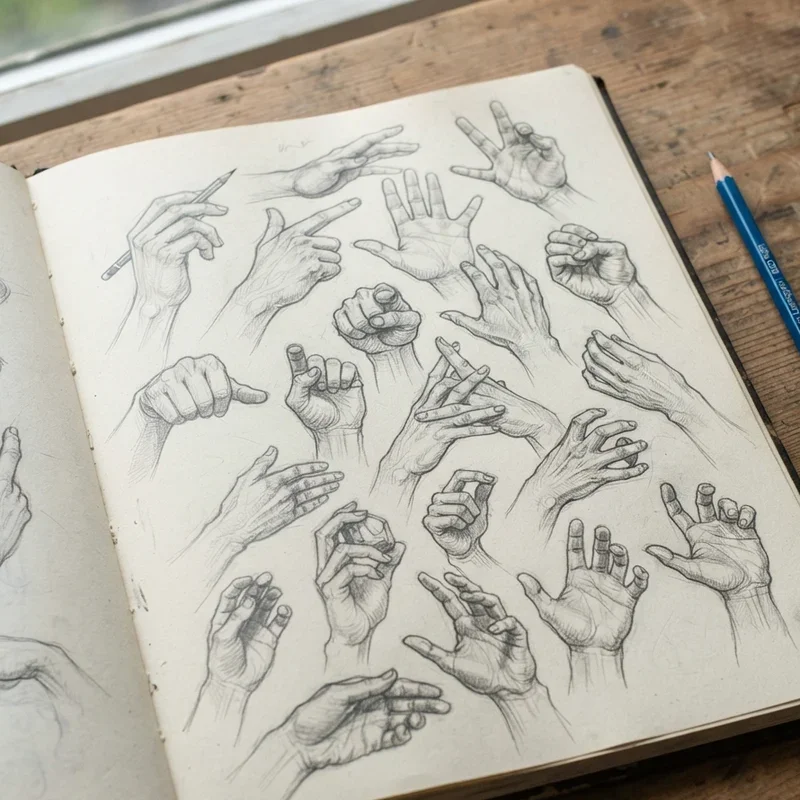
Human hand gesture studies draw your own non-dominant hand in multiple positions including relaxed open palm, clenched fist, pointing finger, gripping objects, and intertwined fingers, developing anatomical understanding of the most expressively complex and structurally challenging body part that realistic portrait artists must eventually master completely. Hand studies work like attending a free anatomy lecture taught by a model you carry permanently attached to your own wrist, the constant availability meaning you never lack a reference subject for practicing the foreshortening, joint articulation, and skin fold rendering that hands demand. Draw your hand holding different objects observing how fingers wrap and knuckle positions change. Complete at least three gesture drawings per session capturing different positions, focusing on proportional accuracy and joint placement before investing time in detailed surface rendering.
11. Vintage Watch Mechanism Drawing
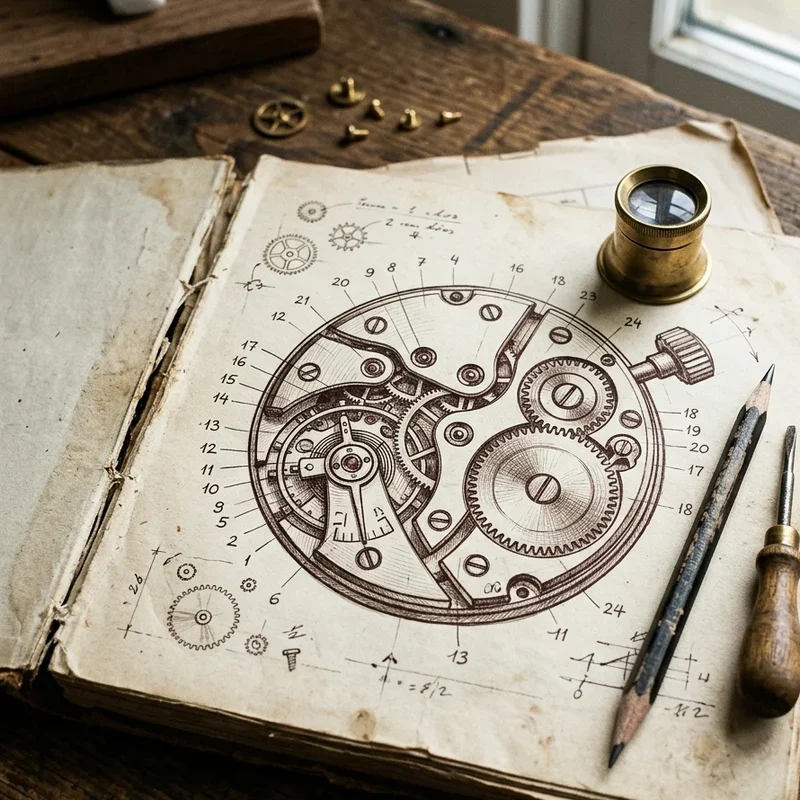
A vintage watch mechanism drawing renders the intricate interior gears, springs, jewel bearings, and tiny screws visible through an opened or skeleton watch case, creating a precision drawing exercise that demands extreme patience, meticulous attention to mechanical detail, and the steady hand control that complex realistic subjects absolutely require. Watch mechanism drawings work like attempting to replicate engineering precision using artistic tools, the mechanical exactitude of gears and springs demanding a level of measured accuracy that pushes your observational patience and rendering control to their absolute functional limits simultaneously. Use magnification when studying reference material to identify small components accurately. Draw the largest gear structures first establishing the overall mechanical layout before progressively adding smaller components, springs, and connecting elements that fill the remaining spaces within the mechanism.
12. Animal Fur Texture Portrait
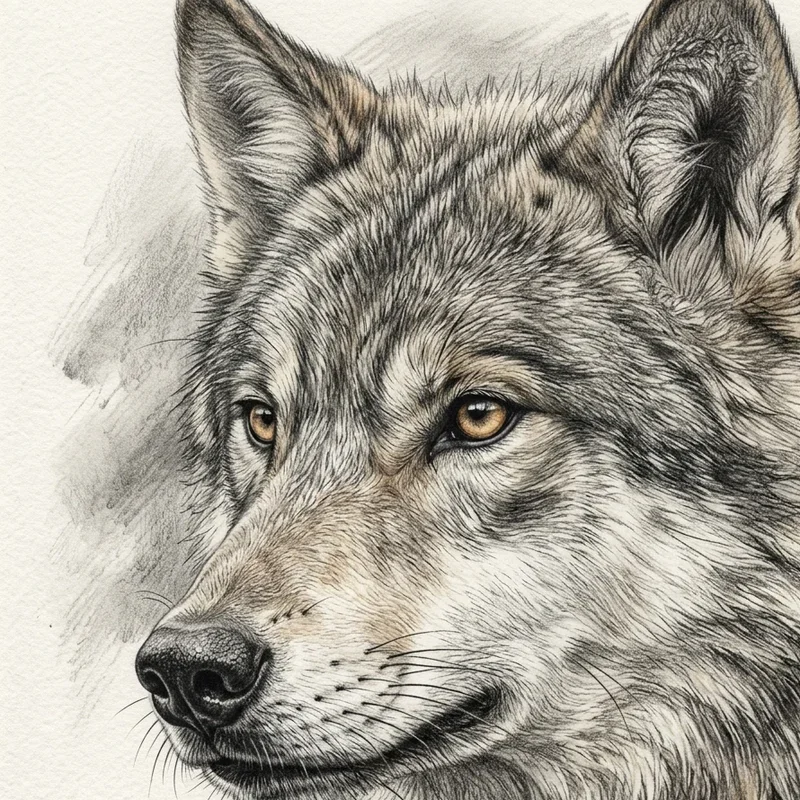
An animal fur texture portrait renders a close-up animal face capturing the directional flow patterns, length variations, color transitions, and layered depth of natural fur using pencil strokes that follow growth direction precisely, creating the illusion of thousands of individual hairs through systematic mark-making rather than random scribbling. Fur portraits work like learning to draw ten thousand lines that each individually mean nothing but collectively create a texture so convincing that viewers instinctively want to reach out and stroke the paper surface, the cumulative effect of patient, directional line work producing realistic tactile illusion. Study fur direction maps before drawing, noting how growth patterns change around eyes, muzzle, and ears. Build fur in layers starting with the darkest base tones, then adding progressively lighter strands on top creating the natural layered depth that real fur displays.
13. Broken Eggshell Still Life
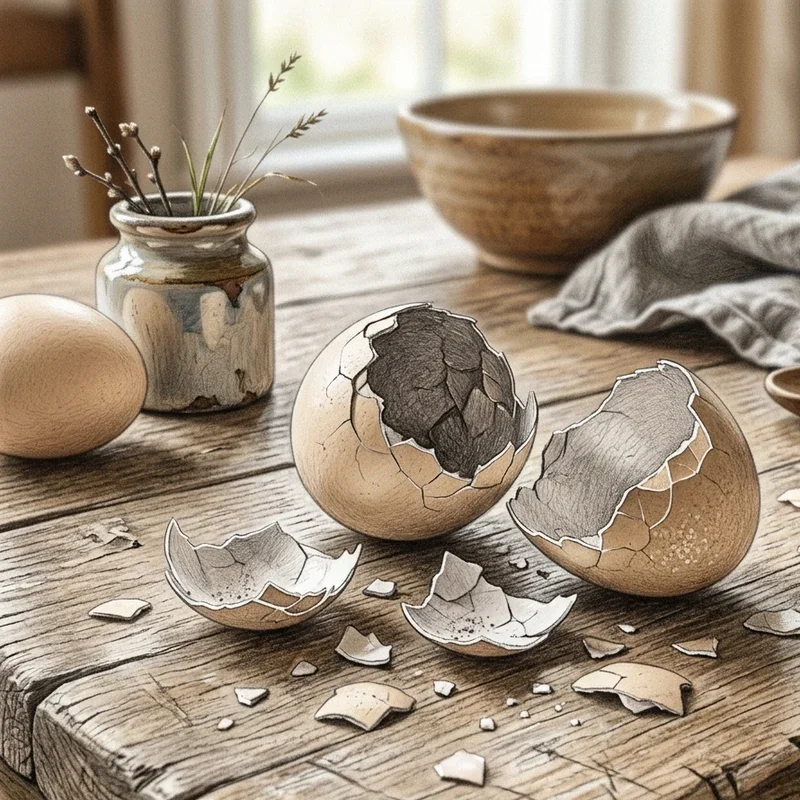
A broken eggshell still life arranges cracked eggshell pieces on a simple surface under controlled lighting, rendering the shell's subtle curvature, thin fragile edges, interior membrane texture, and the delicate shadows cast by irregularly broken rim profiles that create surprisingly complex and beautiful compositions from the humblest kitchen waste. Eggshell drawings work like discovering monumental beauty inside something you normally discard without thought, the extreme fragility and subtle tonal variations demanding the gentlest pencil control and most sensitive value observation your developing skills can manage during focused practice sessions. Position eggshell fragments under a single side light source maximizing shadow drama. Render the shell's smooth exterior surface using careful blending, then contrast it with the rougher, more textured interior membrane surface visible along broken edges.
14. Raindrop on Leaf Surface Drawing
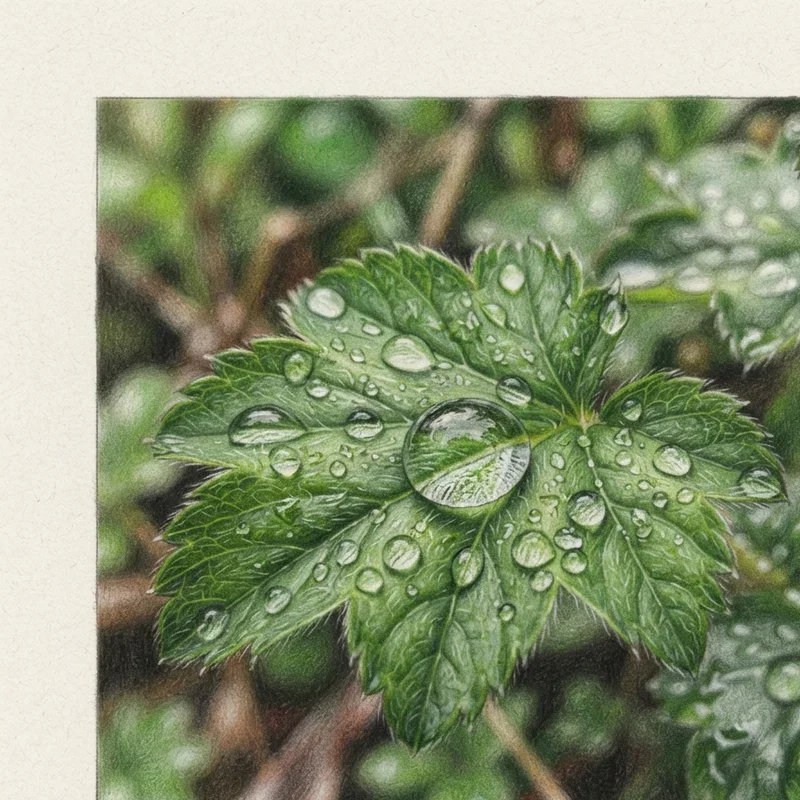
A raindrop on leaf surface drawing combines two technically demanding subjects by rendering water droplets sitting on detailed botanical leaf surfaces, requiring simultaneous mastery of organic vein patterns, surface texture, transparent liquid refraction, and the distorted leaf imagery visible through and beneath each individual water drop. Raindrop leaf drawings work like solving two visual puzzles simultaneously where the leaf beneath affects how the water above looks and the water above distorts how the leaf beneath appears, the interaction between subjects creating complexity that strengthens multiple rendering skills concurrently. Draw the leaf structure and texture first establishing the surface that water droplets sit upon. Add water droplets over the completed leaf surface, carefully observing how the leaf pattern distorts inside each droplet's curved transparent lens creating miniature refracted versions.
15. Aged Human Face Portrait Study
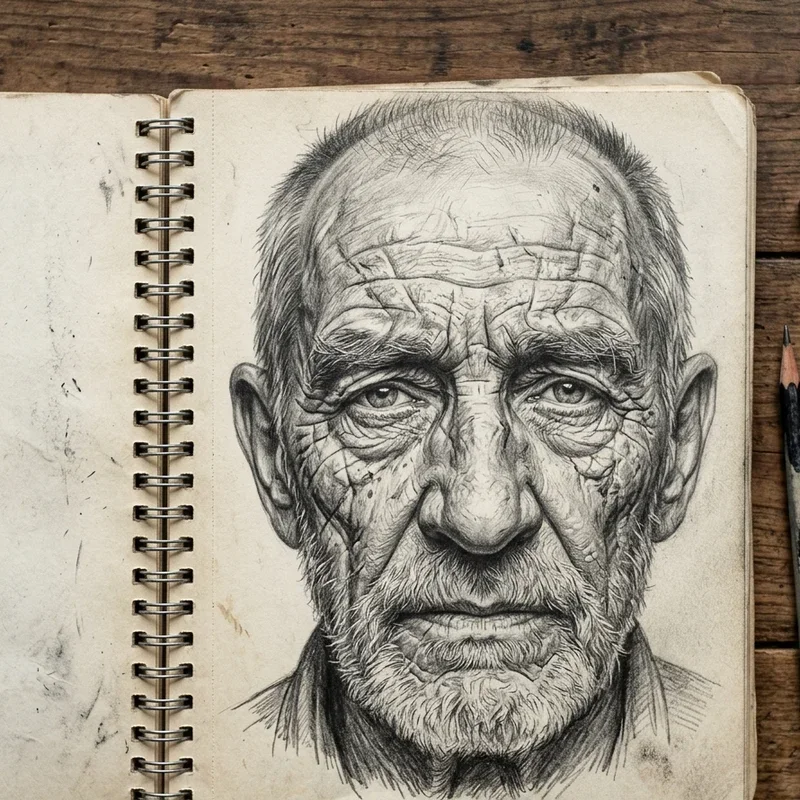
An aged human face portrait study draws elderly subjects whose faces display deep wrinkles, textured skin, sagging muscle structure, expressive eye creases, and character lines that communicate lifetime stories through purely visual physical evidence, providing the ultimate realistic drawing challenge that tests every skill simultaneously. Aged face portraits work like reading an entire autobiography written in skin, every wrinkle representing a chapter of laughter, worry, sunlight, and expression that your pencil must translate faithfully from three-dimensional living surface onto flat paper without losing the emotional narrative embedded in each crease. Study the skull structure beneath the surface understanding how bone defines the face's overall form. Build wrinkles by first establishing the underlying facial planes, then adding surface texture details that follow the skin's natural compression and expansion patterns around expressions.
Conclusion
Realistic drawing skills develop through deliberate practice with subjects that challenge specific technical abilities including value control, texture rendering, anatomical accuracy, reflective surface handling, and transparent material representation across progressively complex compositions. From water droplets and crumpled paper to vintage watch mechanisms and aged portrait studies, these fifteen ideas systematically build the observational precision and rendering control that transform ambitious beginners into genuinely skilled realist artists. Choose subjects matching your current skill level while slightly exceeding your comfort zone, because realistic drawing improves fastest when every practice session demands slightly more from your eyes and hands than yesterday's session required.
Read next: 15 Beginner Painting Ideas to Kickstart Your Creativity
Frequently Asked Questions
Q1: What pencil grades should I use for realistic drawing practice as a developing artist?
A: Use a range from 2H through 8B covering the complete value spectrum for realistic rendering.
Q2: How long should each realistic drawing practice session last for meaningful skill improvement?
A: Practice focused sessions of one to two hours producing better results than longer unfocused drawing time.
Q3: Should beginners use photographs or real objects as references for realistic drawing practice?
A: Real objects teach observation better, but high-quality photographs work well when subjects are unavailable.
Q4: What paper type works best for detailed realistic pencil drawings with smooth blending?
A: Bristol smooth or Strathmore 400 series provides ideal surfaces for detailed realistic pencil rendering work.
Q5: How do I avoid smudging completed areas while working on large realistic pencil drawings?
A: Place a clean sheet beneath your drawing hand and work from top left to bottom right.
Stay up to date with our latest ideas!