Master Art Nouveau drawing with our beginner guide. Learn flowing lines, organic motifs, and elegant techniques to create stunning artwork.
So, you've fallen head over heels for those gorgeous, swirling designs that look like nature decided to throw a fancy dress party, haven't you? Well, you're not alone! Art Nouveau has been captivating artists and admirers for well over a century, and there's something almost magical about its flowing lines and organic beauty that just pulls you right in.
Here's the thing though. Many beginners look at Art Nouveau artwork and think it's way too complicated to even attempt. They see those intricate patterns, those perfectly curved lines, and those elegant botanical elements, and they immediately feel overwhelmed. But guess what? That's simply not true! With the right approach and a bit of patience, anyone can learn to create stunning Art Nouveau pieces.
This How to Draw Art Nouveau: Step-by-Step Beginner Guide will walk you through everything you need to know to get started on your artistic journey. We'll break down the core elements, explore essential techniques, and give you practical exercises that'll have you drawing like Alphonse Mucha in no time. Well, maybe not exactly like Mucha, but you'll definitely be on your way!
Whether you're a complete novice who can barely draw a straight line (which is actually perfect for Art Nouveau since we don't really want straight lines anyway!) or someone looking to expand their artistic repertoire, this guide has got you covered. Let's dive into the wonderful world of whiplash curves and natural beauty!
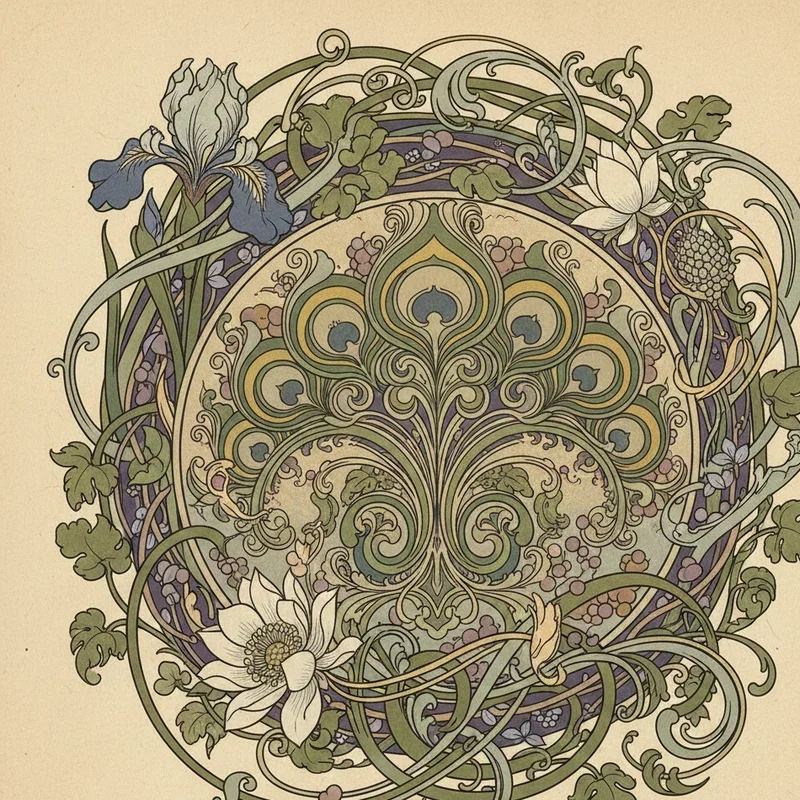
Understanding the Art Nouveau Style
Before we grab our pencils and start sketching away, it's pretty important to understand what makes Art Nouveau tick. This artistic movement emerged in the late 1890s and dominated the decorative arts scene until around 1910. The name itself comes from French and literally means "New Art," which was quite fitting for something so revolutionary at the time.
What sets Art Nouveau apart from other styles? It's all about embracing organic, natural forms while rejecting the rigid geometric patterns that were popular before. Think about it like this: if most art styles were attending a formal dinner party, Art Nouveau would be the one dancing barefoot in the garden, completely mesmerized by the climbing vines and blooming flowers.
The movement drew heavy inspiration from plants, flowers, insects, and the female form. Artists like Alphonse Mucha, Gustav Klimt, and Louis Comfort Tiffany became masters at incorporating these natural elements into their work, creating pieces that seemed to flow and move even while standing perfectly still.
Key Characteristics You Need to Know
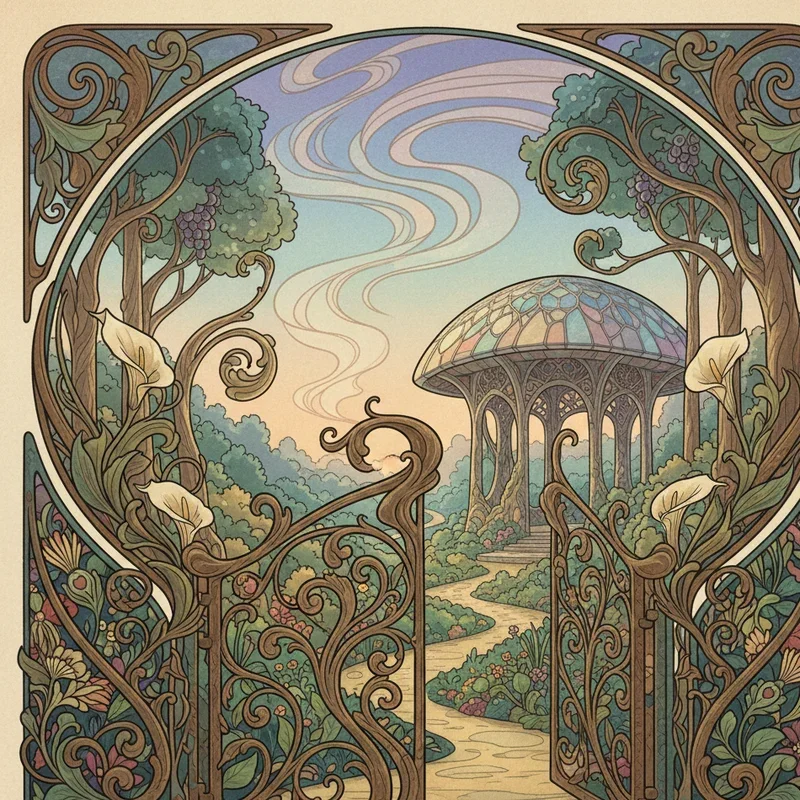
When studying Art Nouveau, several distinctive features pop up again and again. The famous "whiplash curve" is probably the most recognizable element. These are long, sinuous lines that seem to have a life of their own, curving and flowing like smoke rising from incense or vines climbing up a trellis.
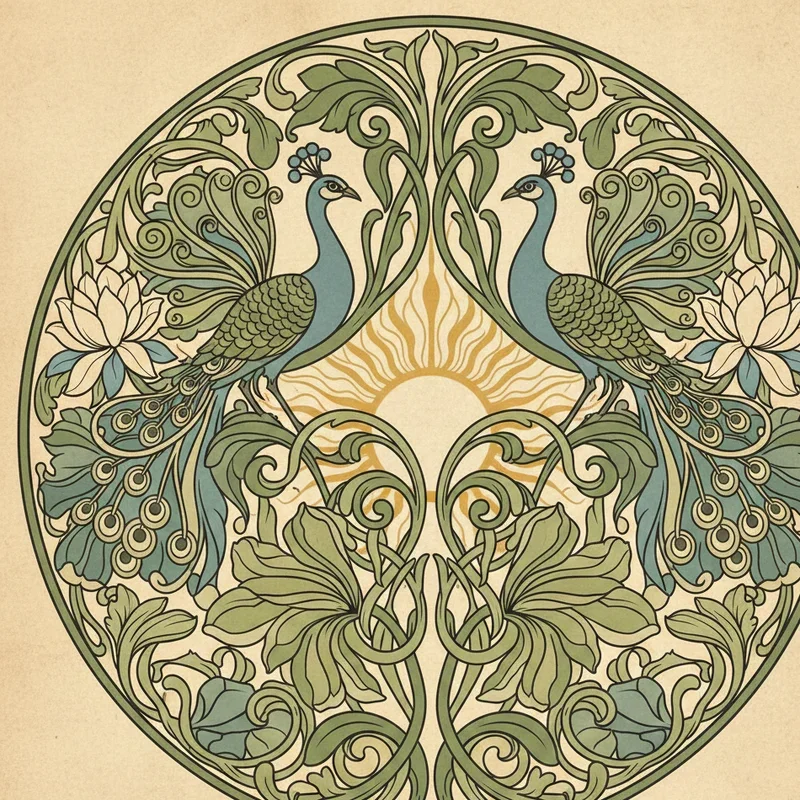
Asymmetry plays a big role too. Unlike classical art that often emphasizes perfect balance, Art Nouveau embraces a more dynamic, natural arrangement. After all, when was the last time you saw a perfectly symmetrical tree in nature?
Flat, decorative surfaces with intricate patterns are another hallmark of the style. There's often little concern for realistic depth or perspective. Instead, the focus remains on creating beautiful, ornamental designs that please the eye through their sheer elegance.
Essential Materials for Getting Started
Alright, let's talk supplies! You don't need to break the bank to start practicing Art Nouveau drawing. In fact, keeping things simple at first is actually better for developing your skills without feeling overwhelmed.
For basic practice, you'll want smooth drawing paper that can handle curves without catching your pencil. Bristol board works wonderfully for finished pieces, but regular sketchbook paper is perfectly fine when you're just learning the ropes.
Pencils in various grades will become your best friends. Start with a 2H for light sketching and preliminary work, then move to HB for defining your lines, and finish with 2B or 4B for adding depth and darker areas. Many Art Nouveau artists prefer working with fine-tipped pens for their final artwork since those crisp, clean lines really make the style shine.
A quality eraser is non-negotiable, honestly. You'll be doing plenty of adjusting and refining as you work, so invest in a kneaded eraser that won't damage your paper. French curves and circle templates can be helpful tools, though freehand drawing is ultimately what you should aim for as you progress.
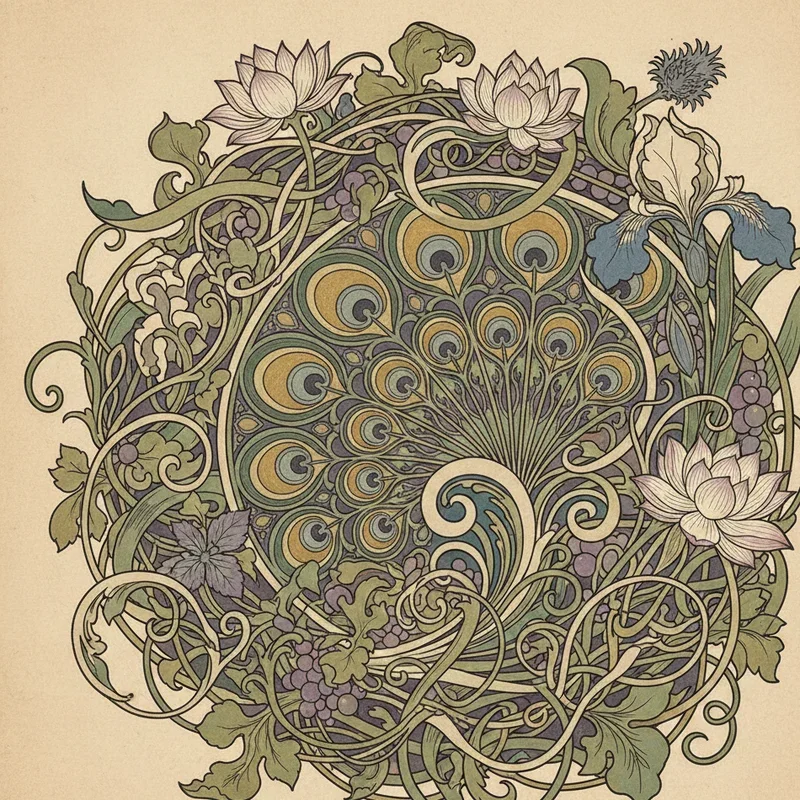
How to Draw Art Nouveau: Step-by-Step Beginner Guide Techniques
Now we're getting to the good stuff! This section breaks down the actual drawing process into manageable chunks that anyone can follow. Remember, Rome wasn't built in a day, and neither were Mucha's masterpieces!
Mastering the Whiplash Curve
The whiplash curve is essentially the backbone of Art Nouveau design. Getting comfortable with this flowing line will transform your artwork from "trying to look Art Nouveau" to "authentically Art Nouveau."
Start by loosening up your arm. Seriously! Art Nouveau lines come from your shoulder, not your wrist. Stiff, careful lines drawn with just your fingers will look exactly that way: stiff and careful. We want fluid and natural instead.
Practice drawing long, swooping S-curves across your paper. Don't worry about making them perfect. Let them flow and see where they want to go. Imagine you're tracing the path of a ribbon dancing in the breeze or the stem of a plant reaching toward sunlight.
Once you're comfortable with basic curves, try connecting them. Draw one curve, then add another that flows naturally from its end. Before you know it, you'll have created an organic pattern that feels alive and dynamic.
Drawing Botanical Elements
Plants and flowers are absolutely central to Art Nouveau design. But here's the secret: you're not drawing botanically accurate specimens. Instead, you're creating stylized, idealized versions that emphasize grace and beauty over realistic detail.
Start with simple flower shapes. Draw a circle for the center, then add petals that curve and flow rather than sitting flat and rigid. Each petal should have a gentle wave to it, almost like it's dancing in a soft breeze.
Leaves in Art Nouveau tend to be elongated and elegant. Think iris leaves or lily pads rather than chunky oak leaves. Draw them with smooth, continuous lines that taper to graceful points. Add subtle veining that follows the natural curve of the leaf.
Vines and stems should never be straight! They twist, turn, and spiral in ways that guide the viewer's eye through your composition. Practice drawing climbing vines that wrap around imaginary structures, always maintaining that characteristic flowing quality.
Incorporating the Female Form
The female figure appears frequently in Art Nouveau artwork, often portrayed as an almost goddess-like presence surrounded by natural elements. If figure drawing interests you, this style offers a beautiful way to combine human forms with decorative patterns.
Hair becomes an incredible design element in Art Nouveau. Think of it as another flowing, organic shape rather than individual strands. Long, cascading hair can interweave with flowers, transform into waves, or merge with decorative backgrounds.
Drapery and fabric follow similar principles. Clothes don't just hang on the figure; they flow and move, creating additional curves and lines that complement the overall design.
Creating Decorative Borders and Frames
Art Nouveau borders are works of art in themselves! They transform ordinary compositions into something truly special and are fantastic practice for developing your skills.
Start with a basic rectangular frame, then soften those harsh corners with curves. Add repeating organic motifs along the edges. These might be small flowers, leaves, or abstract curves that echo the main design.
Don't be afraid to let elements break out of the frame! Art Nouveau often features flowers or vines that spill over borders, creating a more dynamic and natural feeling composition.
Practice Exercises for Developing Your Skills
Putting theory into practice is where the real learning happens. Here are some exercises that'll help you internalize the Art Nouveau aesthetic.
Fill entire pages with nothing but curves. Sounds boring, right? But it's incredibly effective for training your hand to create those smooth, flowing lines without thinking about it. Put on some music, relax, and just let your pencil dance across the paper.
Copy the masters, but copy them thoughtfully. Study Mucha's posters or Klimt's decorative elements. Pay attention to how they balance complexity with readability. Notice where they use thick lines versus thin ones. Then try recreating small sections of their work.
Transform everyday objects into Art Nouveau designs. Take something simple like a coffee cup or a lamp and reimagine it with flowing lines and organic decorations. This exercise helps you think about how the style can be applied anywhere.
Create a series of stylized flowers, each one more elaborate than the last. Start with a simple daisy shape, then gradually add more petals, more curves, and more decorative elements until you've created something truly ornate.
Common Mistakes and How to Avoid Them
Every beginner trips up somewhere, and that's totally okay! Knowing what pitfalls to watch for can save you some frustration though.
Making lines too uniform is a big one. Art Nouveau thrives on variation. Your lines should swell and taper, thick in some places and delicate in others. If everything looks the same thickness, the drawing loses its vitality.
Overcrowding your composition is another common issue. Yes, Art Nouveau can be intricate and detailed, but it also knows when to breathe. Leave some empty spaces to give the eye a place to rest.
Forgetting about the overall flow will make your piece feel disjointed. Every element should connect visually, leading the viewer's eye on a journey through your artwork.
Taking Your Art Nouveau Skills Further
Once you've got the basics down, the world really opens up! You might explore applying Art Nouveau principles to digital art, where vector programs make creating perfect curves much easier. Hand lettering in Art Nouveau style offers another exciting avenue, as the movement produced some absolutely stunning typography.
Consider how this How to Draw Art Nouveau: Step-by-Step Beginner Guide foundation can expand into other mediums too. Stained glass, jewelry design, and textile patterns all embrace Art Nouveau aesthetics beautifully.
Conclusion
Learning Art Nouveau drawing opens up a world of elegant, flowing beauty that never goes out of style. By mastering the whiplash curve, embracing organic forms, and practicing regularly, you'll develop skills that'll serve your artistic journey for years to come. Remember, every master artist started exactly where you are now, so grab that pencil and start creating! The natural world is waiting to inspire your next beautiful piece.
Read next: How to Start Drawing Even If You’re a Complete Beginner
Frequently Asked Questions
1. What's the most important element to master in Art Nouveau drawing?
The whiplash curve is fundamental because it forms the foundation for all flowing designs.
2. Do I need expensive supplies to start learning Art Nouveau?
Basic pencils, smooth paper, and erasers are sufficient for beginners starting their journey.
3. How long does it take to develop Art Nouveau drawing skills?
With regular practice, you'll see noticeable improvement within several weeks of dedicated effort.
4. Can Art Nouveau techniques be used in digital art?
Absolutely! Vector software is excellent for creating clean Art Nouveau curves and patterns.
5. Who are the best Art Nouveau artists to study for inspiration?
Alphonse Mucha, Gustav Klimt, and Aubrey Beardsley offer excellent examples to study.
Stay up to date with our latest ideas!