16 Skull Drawing Ideas to Inspire Your Next Sketch
Discover 16 creative skull drawing ideas that transform this classic subject into stunning artwork. Inspire your next sketch today!
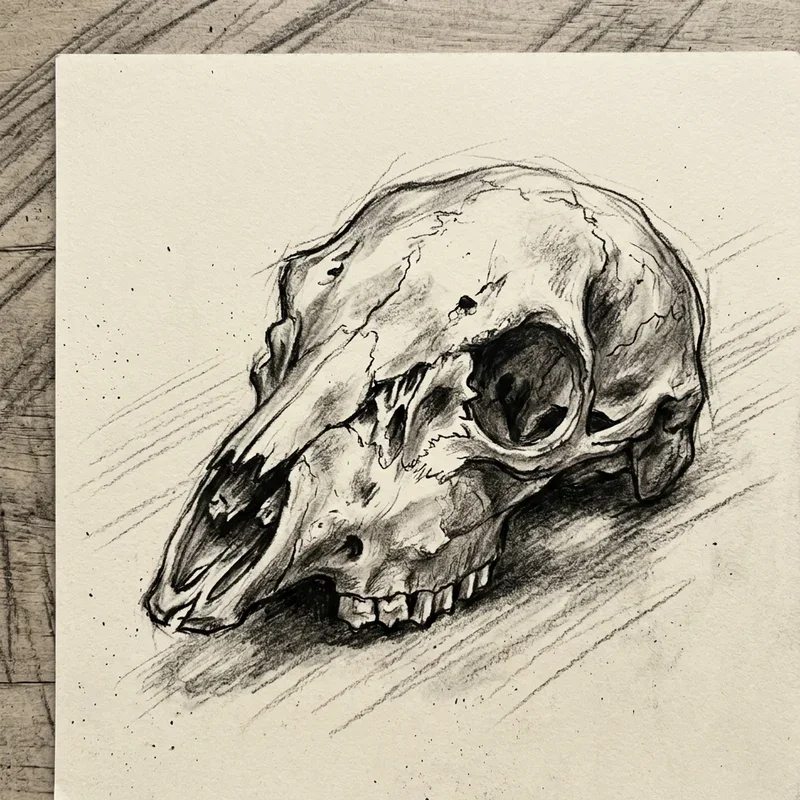
Something about skulls captivates artists across every era, culture, and artistic movement like few other subjects manage to accomplish. These bone structures have inspired masterpieces from Renaissance vanitas paintings to contemporary tattoo designs, proving their visual power transcends centuries and trends completely. Perhaps skulls fascinate us because they represent the ultimate universal truth: beneath every face lies the same fundamental architecture connecting all humanity together. For artists, skulls offer perfect subjects combining organic curves, dramatic shadows, and meaningful symbolism into packages that challenge skills while rewarding effort handsomely. Whether you prefer realistic anatomical studies or wildly stylized interpretations, skull drawing develops observational abilities, value rendering skills, and creative thinking simultaneously. The subject suits beginners learning basic forms and masters seeking fresh approaches equally well across skill levels. Ready to explore sixteen skull drawing concepts that will transform your sketchbook into a gallery of bone-inspired creativity?
1. Anatomical Study Skull Drawing
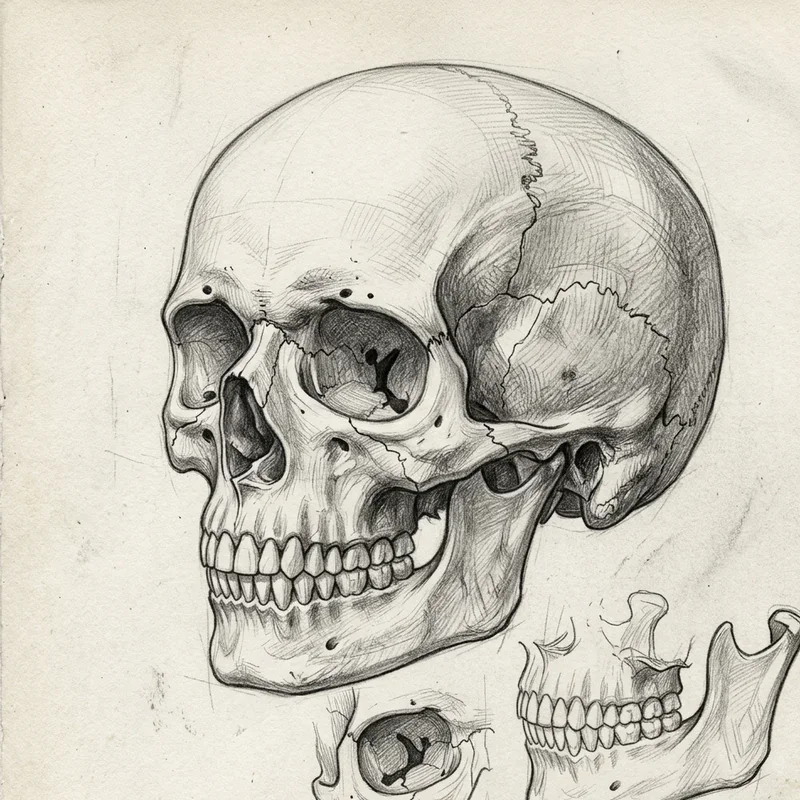
Begin your skull drawing journey with anatomical studies that teach fundamental bone structure every artist should understand thoroughly. The human skull contains twenty-two bones fused together, creating the complex architecture that protects brains and shapes faces we recognize daily. Study the major landmarks: the frontal bone forming the forehead, temporal bones housing ear canals, zygomatic arches creating cheekbone prominence, and the mandible jaw completing the lower structure. Reference anatomical diagrams alongside actual skull photographs for accurate proportions that realistic drawings demand consistently. Draw skulls from multiple angles: front views reveal symmetry while three-quarter views show dimensional depth that flat perspectives cannot communicate. The anatomical approach develops observational skills transferable to portrait drawing where skulls hide beneath living flesh everywhere. Your anatomical studies become foundations upon which all subsequent stylized interpretations build naturally and knowledgeably.
2. Day of the Dead Sugar Skull
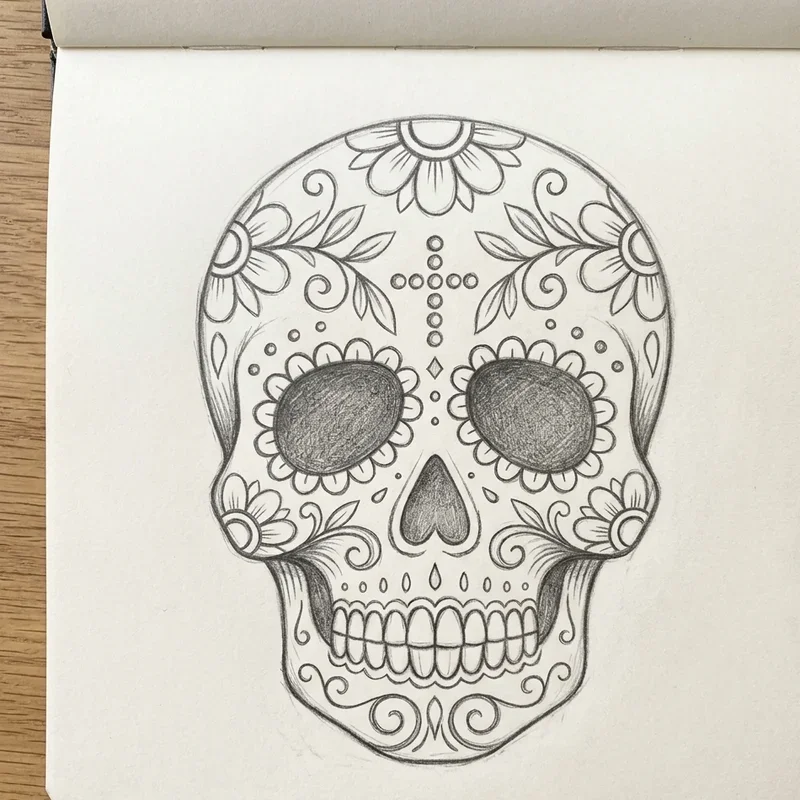
Celebrate Mexican cultural traditions by drawing elaborately decorated sugar skulls honoring Día de los Muertos celebrations annually. These ceremonial skulls feature symmetrical patterns incorporating flowers, hearts, crosses, spiderwebs, and intricate scrollwork covering every bone surface completely. The aesthetic transforms death imagery into joyful celebration where departed loved ones receive colorful tributes rather than somber memorials. Begin with basic skull outlines, then add decorative zones: ornate eye sockets, patterned foreheads, decorated teeth, and flowing designs across cheekbones and jaw areas. Color plays essential roles in sugar skull designs: vibrant pinks, oranges, teals, and purples contrast against white bone foundations brilliantly. Research authentic sugar skull imagery to understand traditional pattern vocabularies before adding personal interpretations respectfully. Your sugar skull drawings honor cultural heritage while developing pattern-making skills applicable across numerous artistic applications.
3. Floral Skull Crown Design
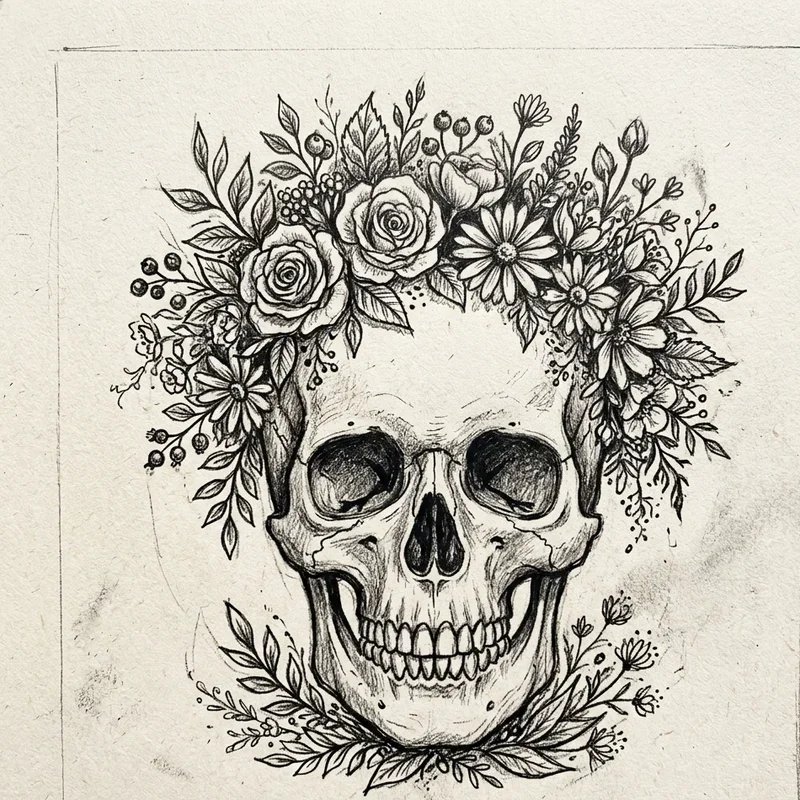
Merge death symbolism with life's beauty by crowning skulls with elaborate floral arrangements that create striking visual contrasts. This popular contemporary design pairs bone's mortality reminder with flowers' transient beauty, suggesting themes of life's preciousness through symbolic juxtaposition. Roses remain classic choices, but consider peonies, dahlias, wildflowers, or seasonal blooms that add unique character to your specific composition. The arrangement might crown the skull's top, cascade down one side, grow through eye sockets, or emerge from the mouth mysteriously. Study botanical illustration techniques that render flowers convincingly alongside your skull structure, maintaining stylistic consistency throughout compositions. Color approaches vary: full-color flowers against monochrome skulls create dramatic contrast, while unified palettes suggest different atmospheric moods throughout. Your floral skull embodies the artistic tradition of memento mori where beauty and mortality dance together eternally.
4. Geometric Skull Composition
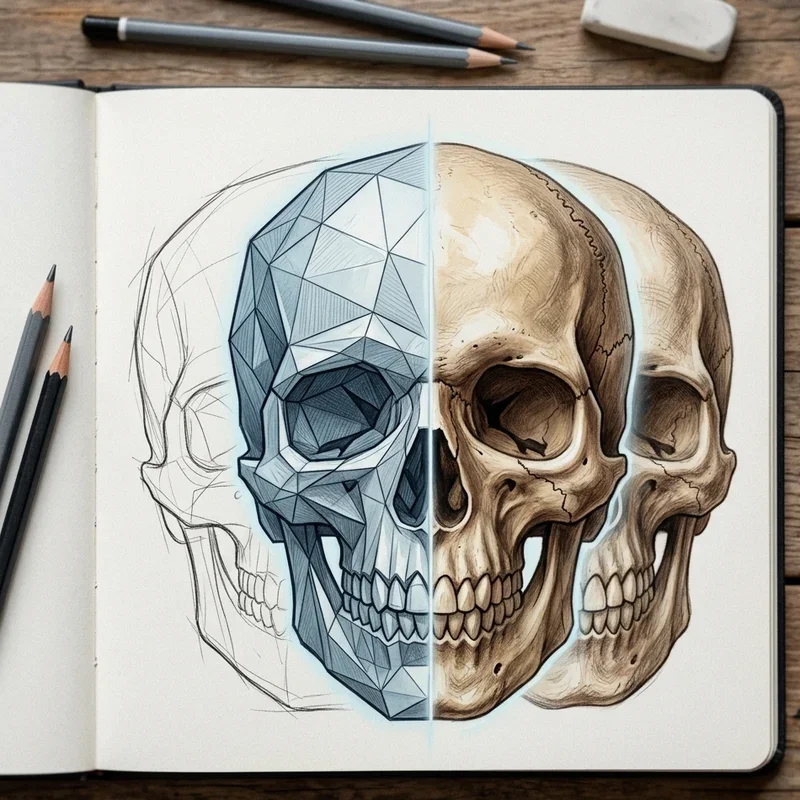
Deconstruct organic skull anatomy into geometric facets that create contemporary, design-forward interpretations of this classic subject. Low-poly illustration styles break curved surfaces into angular planes where value changes communicate dimension through flat geometric shapes effectively. Begin by identifying major skull planes: forehead flats, cheekbone angles, nasal bridge, and jaw facets that simplify complex curved anatomy into manageable geometric zones. The geometric approach suits digital illustration particularly well where sharp edges and flat colors create graphic impact that organic rendering cannot achieve similarly. Consider color choices carefully: gradients across geometric sections suggest three-dimensionality while solid colors create bold graphic statements instead. This style translates well to tattoo designs, logo applications, and contemporary art pieces where clean aesthetics dominate over organic illustration preferences. Your geometric skull proves skulls adapt to modern design sensibilities while retaining recognizable visual impact.
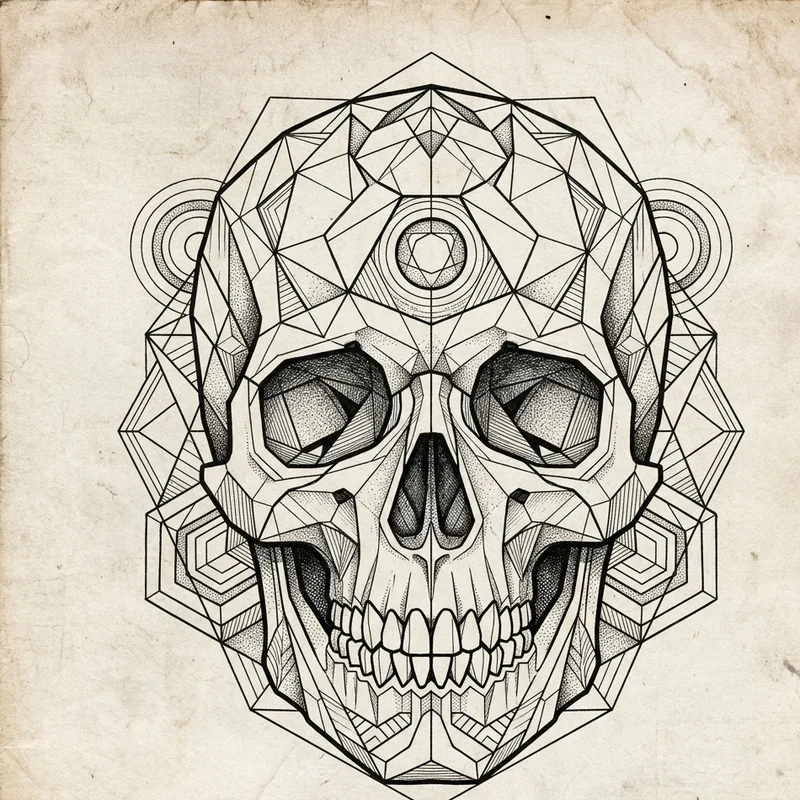
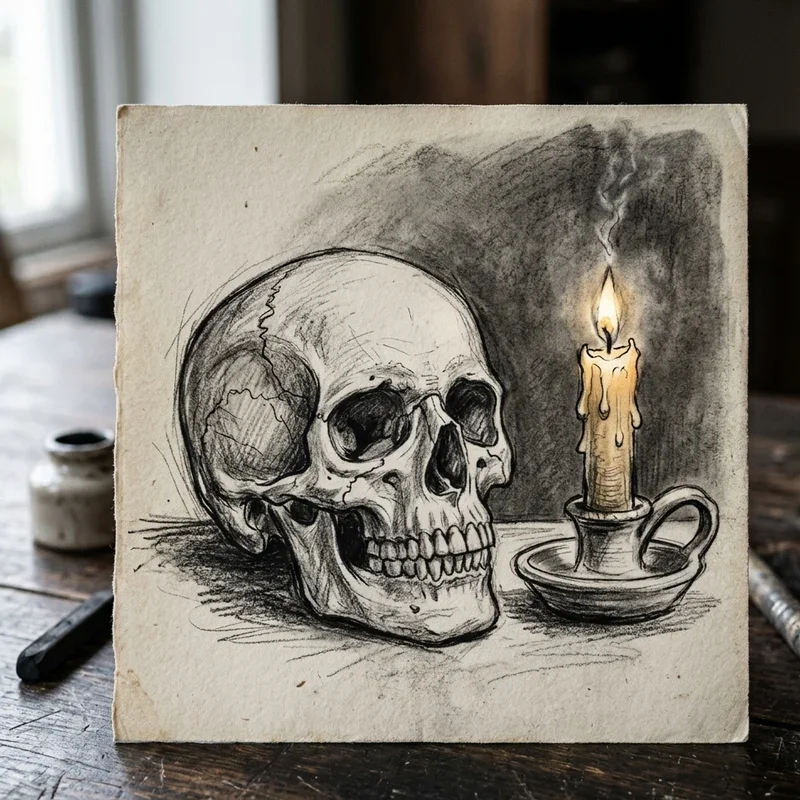
5. Skull with Candle Vanitas
Reference classical vanitas painting traditions by depicting skulls alongside burning candles that symbolize life's flickering impermanence dramatically. Dutch Golden Age artists popularized this imagery where skulls, candles, hourglasses, and wilting flowers reminded viewers of mortality's inevitability constantly. The candle's flame represents life itself: bright but temporary, eventually extinguishing into darkness that awaits everyone equally. Position candles atop skulls, beside them, or reflected within empty eye sockets for varied compositional approaches. The lighting challenge makes this subject particularly educational: candle flames create warm, focused illumination that sculpts skull forms through dramatic chiaroscuro effects. Consider wax drips, smoke wisps, and the glow's falloff across bone surfaces that add atmospheric details beyond simple object depiction. Your vanitas drawing connects contemporary practice with centuries of artistic tradition exploring mortality themes.
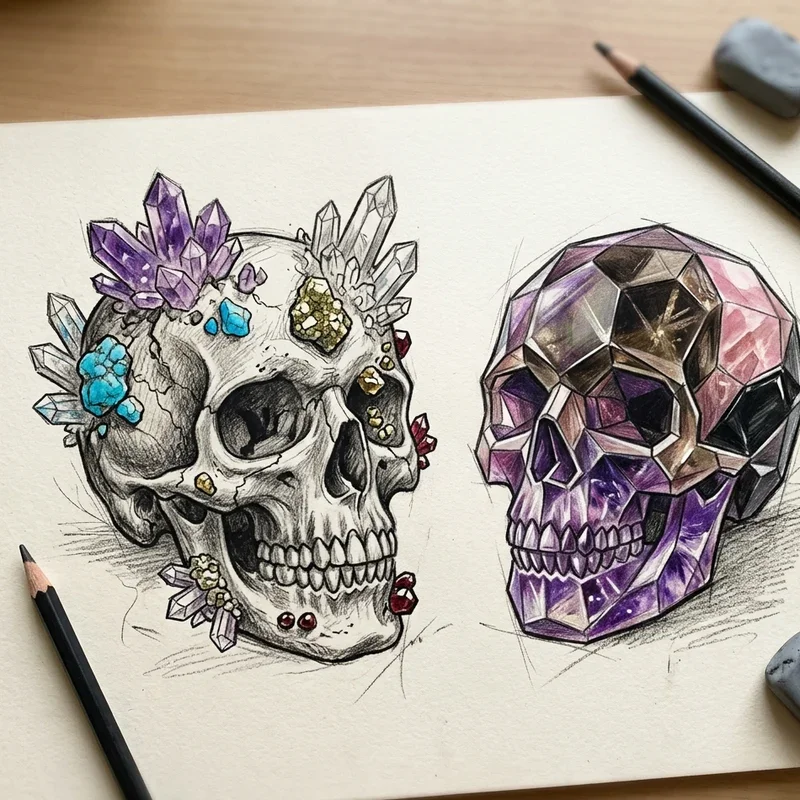
6. Crystal and Gemstone Skull
Transform bone into precious material by drawing skulls carved from crystal, amethyst, rose quartz, or other gemstones that add magical qualities. The famous crystal skulls, regardless of their disputed origins, provide visual inspiration for translucent, faceted skull interpretations. Consider how light passes through crystalline structures: internal reflections, color concentrations, and surface facets all differ from opaque bone dramatically. Different gemstones suggest different qualities: amethyst purples feel mystical, rose quartz pinks suggest healing, while clear quartz channels pure spiritual energy supposedly. The challenge lies in rendering transparency convincingly where viewers perceive seeing through material into depths beyond surface descriptions alone. Add environmental reflections, internal inclusions, and light refractions that make crystal materials convincing across two-dimensional surfaces. Your gemstone skull sparkles with supernatural beauty that ordinary bone drawings cannot achieve.
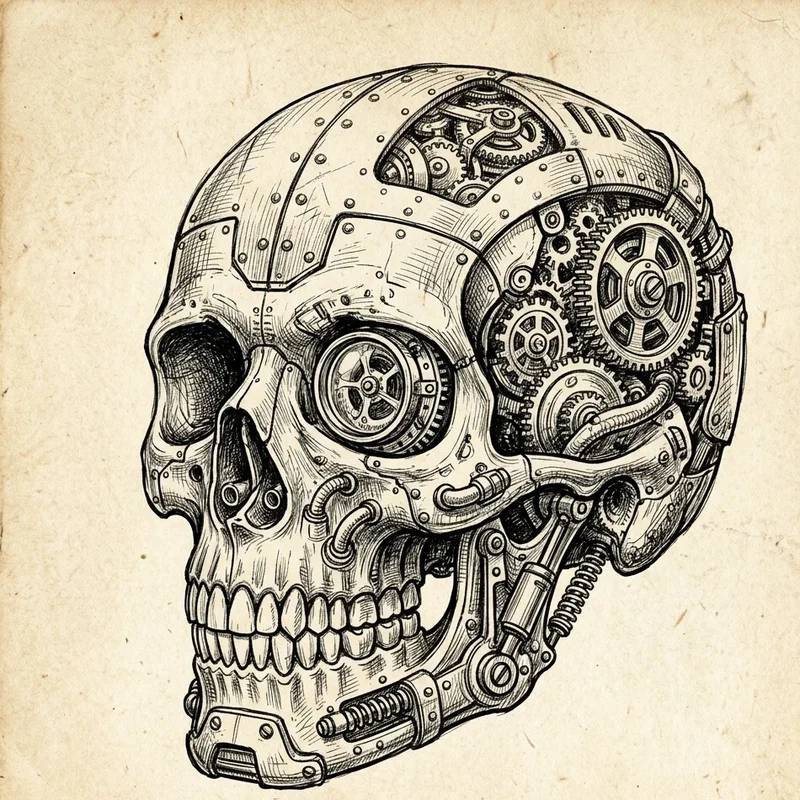
7. Mechanical Steampunk Skull
Fuse organic anatomy with Victorian-era machinery by creating steampunk skulls featuring gears, pistons, pipes, and brass mechanical components integrated throughout. This retrofuturistic aesthetic imagines skulls as mechanical constructions where clockwork replaces biology in fantastical hybrid creations. Research actual gear shapes, mechanical connections, and industrial hardware that steampunk aesthetics draw from for authentic mechanical details. Consider which skull sections become mechanical: perhaps jaw hinges reveal gear mechanisms, or eye sockets contain rotating lenses and focusing apparatus. The contrast between organic bone curves and rigid mechanical geometry creates visual tension that defines steampunk aesthetics fundamentally. Add patina, rivets, steam vents, and wear marks suggesting these mechanical skulls have operated for decades within imaginary worlds. Your steampunk skull imagines alternate realities where technology and anatomy merge impossibly.
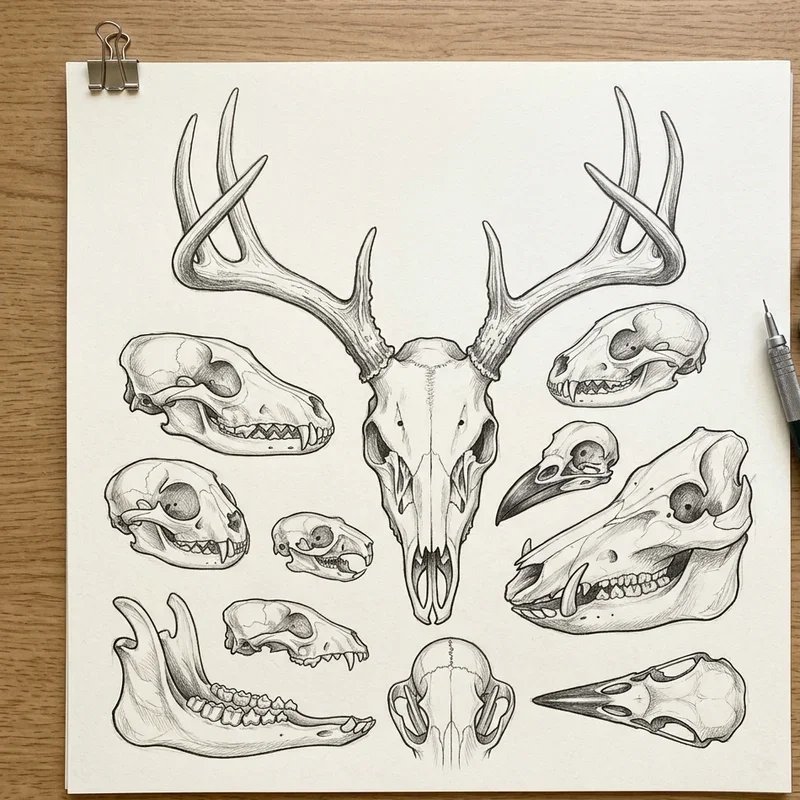
8. Animal Skull Collection
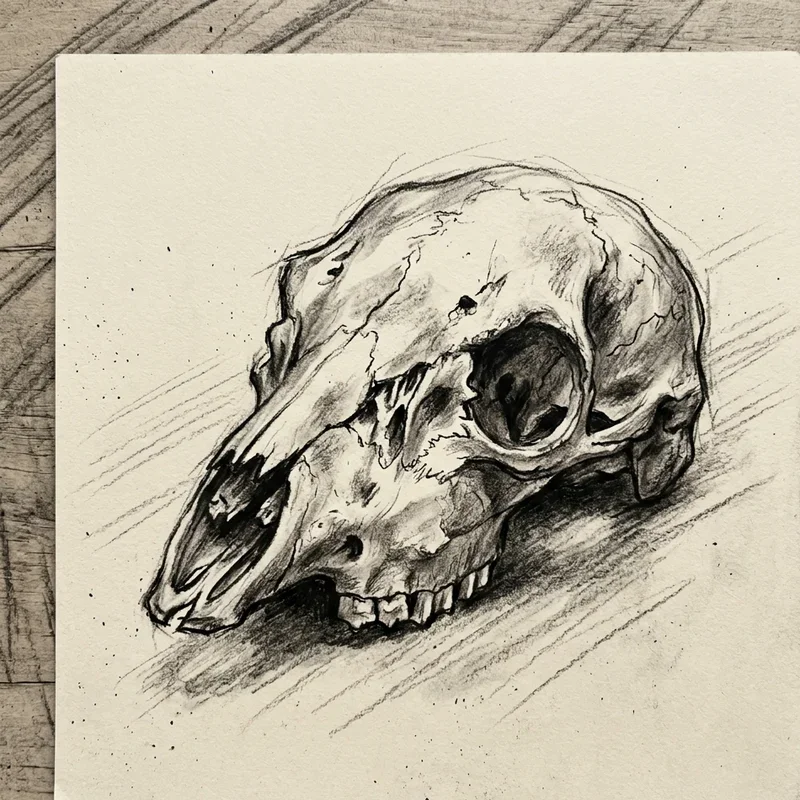
Expand beyond human anatomy by drawing animal skulls whose varied structures reveal evolutionary adaptations across species fascinatingly. Bird skulls feature lightweight construction with extended beaks, while deer skulls display antler attachments and elongated snouts distinctively different from human proportions. Carnivore skulls show prominent canine teeth, while herbivore skulls feature flat grinding molars and eye positions on skull sides rather than fronts. Research actual animal skull photographs or visit natural history museums where bone collections provide reference material unavailable elsewhere practically. Drawing multiple animal skulls develops comparative anatomy understanding while expanding your subject matter beyond default human references. Consider arrangements featuring multiple species skulls together, creating collections that suggest naturalist study traditions throughout. Your animal skull drawings demonstrate anatomical knowledge while adding variety to portfolios dominated by human subject matter.
9. Skull Portrait Transformation
Create haunting hybrid images where human portraits gradually transform into skulls, revealing the bone structure hiding beneath every living face. This concept works through various approaches: half-face compositions where skin meets bone along vertical divisions, or gradient transitions where flesh fades progressively into skeletal structure. The transformation reminds viewers that skulls await beneath every face they encounter, adding existential depth to otherwise simple portrait exercises. Study how skull anatomy relates to facial features: eye sockets beneath eyes, nasal cavity behind noses, teeth behind lips, creating direct correspondence between living and skeletal versions. The technical challenge involves maintaining recognizable portrait likeness while accurately depicting underlying bone structure simultaneously. This subject matter suits memorial artwork, conceptual pieces, or personal explorations of mortality through self-portrait transformation. Your skull portrait transformation bridges life and death within single compelling compositions.
10. Glitch Art Digital Skull
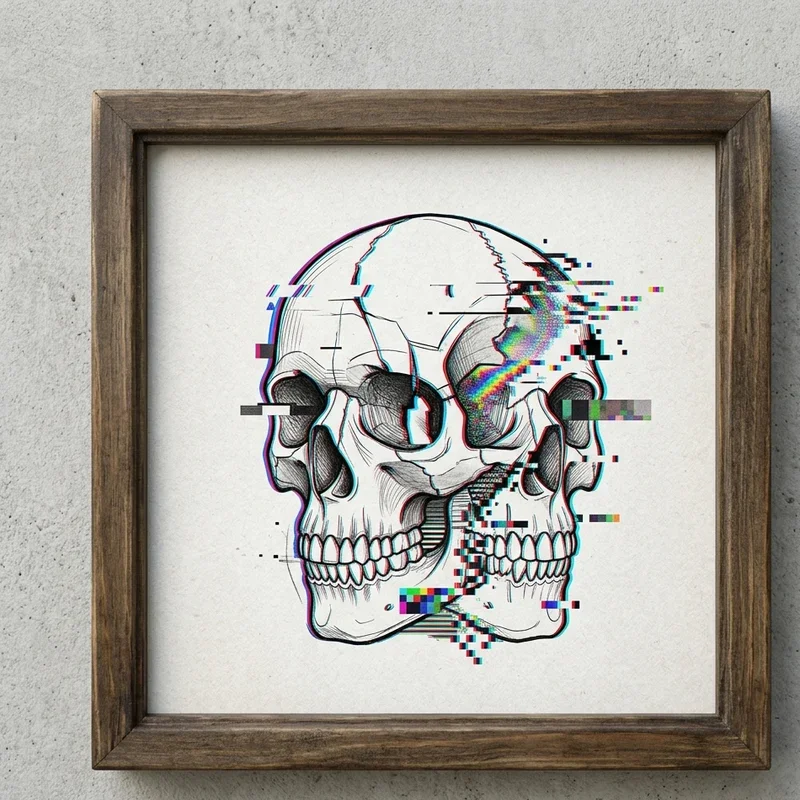
Embrace digital aesthetics by creating glitch art skulls where visual distortion, pixel displacement, and data corruption effects transform traditional imagery. Glitch art celebrates technological malfunction as aesthetic choice, applying digital errors to analog subjects like skulls for contemporary hybrid results. Reference actual digital glitches: horizontal scan line displacement, color channel separation, pixel sorting effects, and compression artifacts that define this aesthetic. The skull's recognizable form provides stable foundation that glitch effects disrupt without destroying completely legibility throughout compositions. Consider color palettes featuring RGB channel separations where cyan, magenta, and yellow fragments suggest display malfunctions freezing mid-error. This style suits digital illustration workflows where software tools replicate glitch effects systematically, though traditional media artists can approximate similar results. Your glitch skull speaks to contemporary digital existence where technology mediates even our contemplation of mortality.
11. Mandala Decorated Skull
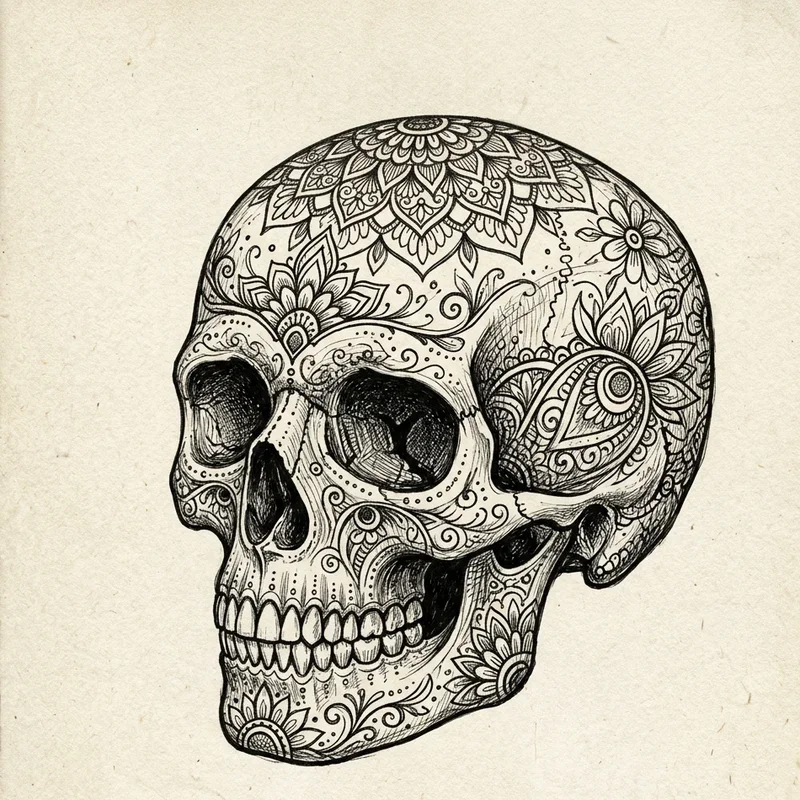
Combine meditative mandala patterns with skull forms, creating intricate designs where repetitive decoration transforms bone into ornamental artwork. Mandalas' circular patterns represent cosmic wholeness, making their application to mortality symbols particularly meaningful spiritually. Cover skull surfaces with concentric pattern zones: decorated eye sockets, forehead mandalas, jaw scrollwork, and cheekbone designs that fill every available surface. The repetitive nature of mandala creation offers meditative benefits alongside artistic outcomes, making this project doubly rewarding for engaged creators. Consider how patterns follow skull contours, wrapping around dimensional forms rather than ignoring three-dimensional structure beneath decoration. Black and white designs emphasize intricate linework while colored versions add vibrancy that transforms traditionally dark imagery completely. Your mandala skull merges Eastern meditative traditions with Western mortality imagery in cross-cultural synthesis.
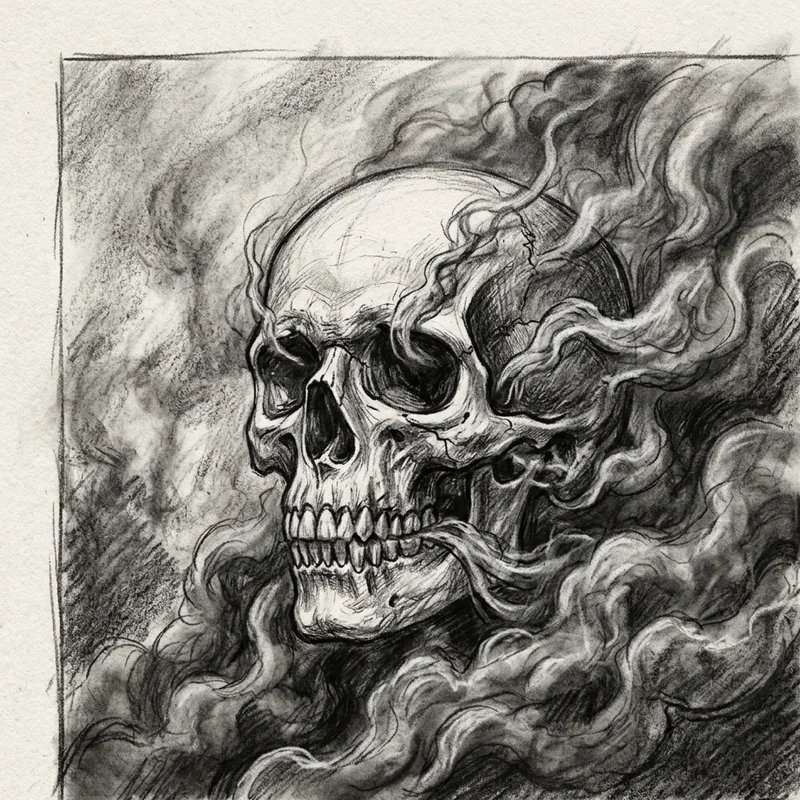
12. Skull in Smoke Effect
Create atmospheric compositions where skulls emerge from or dissolve into swirling smoke that adds mystery and movement to static bone. The smoke effect suggests impermanence, spiritual presence, or supernatural manifestation depending on context and execution choices throughout. Study actual smoke behavior: how it curls, layers, disperses, and catches light differently than solid objects typically render. The skull might appear solidly within smoke surroundings, or the bone itself might transform into smoke at edges, suggesting dissolution in progress. Soft blending tools suit smoke rendering where edges remain undefined and forms layer transparently throughout compositions. Consider light sources: backlighting creates dramatic silhouettes while side lighting reveals smoke texture through differential illumination patterns. Your smoke skull captures ethereal qualities that solid rendering cannot achieve alone.
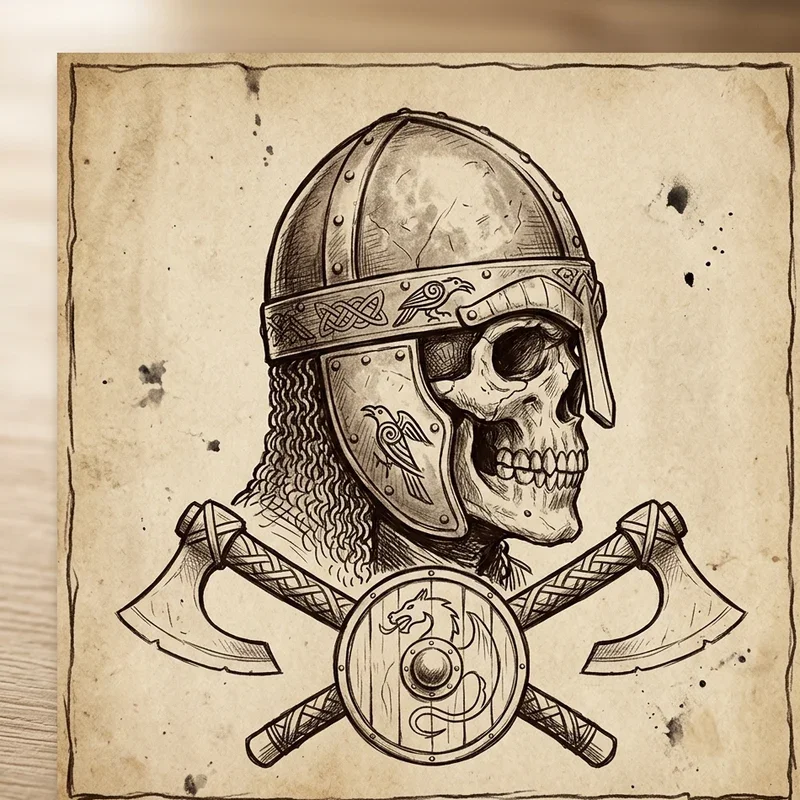
13. Viking Warrior Skull
Channel Norse warrior aesthetics by drawing battle-worn skulls featuring Viking helmets, beard braids, war paint, and Norse symbolic elements throughout. Historical accuracy regarding Viking helmets matters: the horned helmet myth persists despite historical evidence suggesting simpler designs actually existed. Add battle damage: cracks, weapon marks, and weathering that suggests violent histories these warrior skulls experienced during imagined past lives. Incorporate Norse runes, knotwork patterns, and mythological references like ravens, wolves, or world serpents that Vikings held sacred culturally. The Viking warrior theme suits fantasy illustration, game design concepts, or personal projects celebrating Norse cultural heritage. Consider environmental elements: stormy skies, wooden ships, or battlefield settings that contextualize warrior skulls within appropriate historical scenarios. Your Viking skull channels ancient warrior spirit through contemporary artistic interpretation.
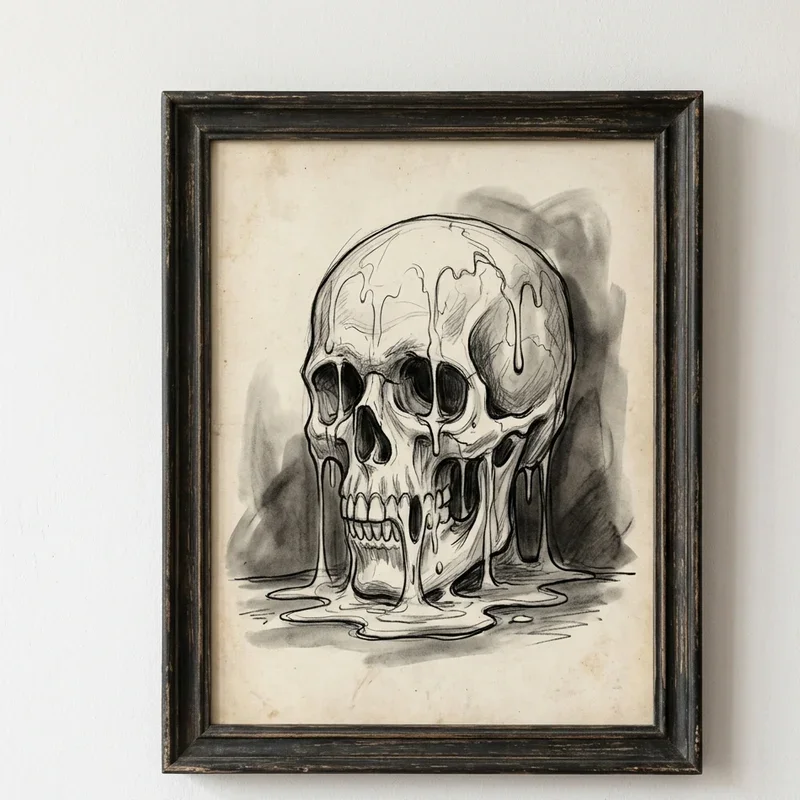
14. Melting Surrealist Skull
Channel Salvador Dalí's iconic melting imagery by drawing skulls that drip, sag, and flow as if composed of liquid rather than solid bone. Surrealist techniques transform familiar objects into dreamlike visions where physical laws no longer constrain form or behavior imaginatively. Consider which skull sections melt: perhaps the jaw drips downward, or eye sockets sag like melting wax under invisible heat sources. The melting effect suggests impermanence, decay, or time's passage that relates meaningfully to mortality themes skulls naturally evoke already. Study how liquid behaves: gravity's influence, surface tension effects, and drip formation that makes melting imagery convincing throughout compositions. Surreal backgrounds might feature impossible landscapes, floating objects, or dreamscape environments that contextualize melting skulls appropriately. Your surrealist skull enters dream territory where logic surrenders to subconscious imagery.
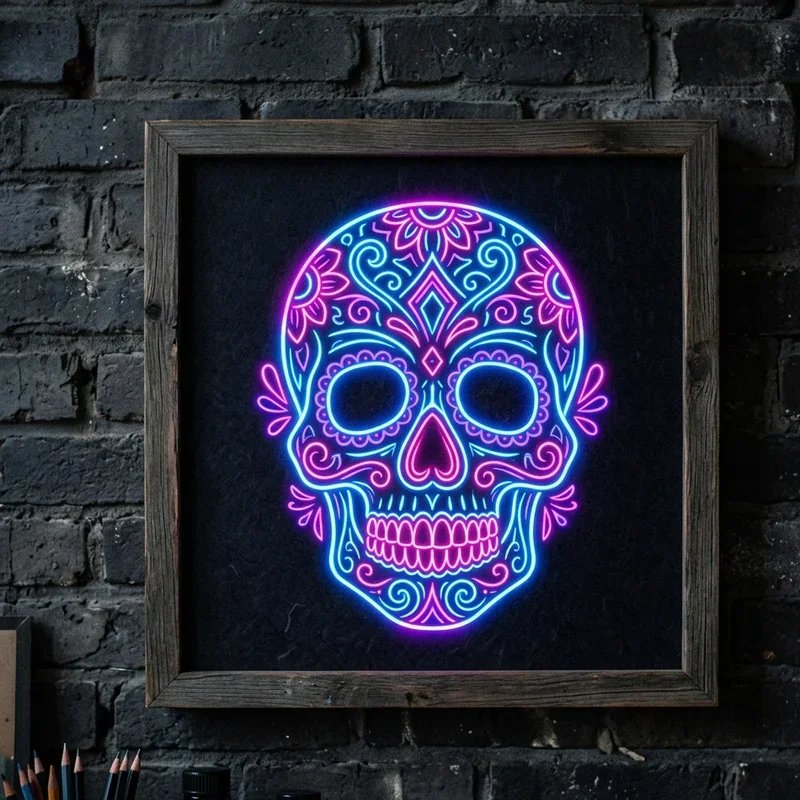
15. Neon Glow Skull Design
Illuminate your skull with neon glow effects that transform traditional dark imagery into vibrant, electric compositions pulsing with contemporary energy. The neon aesthetic references urban nightlife, retro 1980s design, and cyberpunk futures where artificial light dominates natural illumination completely. Create glow effects through color choices: bright cyans, magentas, and yellows against dark backgrounds suggest neon tube illumination convincingly. Consider light source placement: perhaps neon outlines trace skull contours, or internal glow emanates from eye sockets and nasal cavities mysteriously. The contrast between death imagery and lively neon colors creates tension that makes these compositions visually compelling and conceptually interesting. Digital tools suit neon effects particularly well where glow, blur, and color overlay create convincing illumination impossible through traditional media alone. Your neon skull electrifies ancient mortality symbols for contemporary visual contexts.
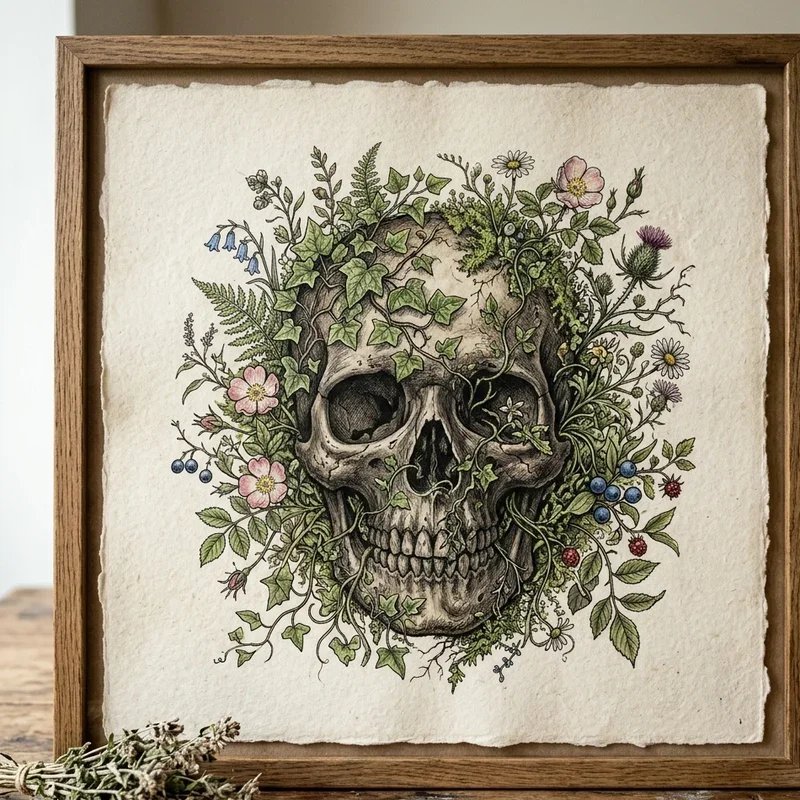
16. Botanical Overgrown Skull
Imagine skulls reclaimed by nature as plants, moss, and fungi grow through bone crevices, transforming death into fertile ground for new life. This concept suggests cycles where death feeds life continuously, offering hopeful interpretations of mortality imagery through natural process depiction. Research how vegetation actually colonizes bone: moss prefers moist crevices, vines climb and wrap surfaces, while mushrooms might emerge from interior cavities. The overgrown skull suits environmental themes where nature's persistence overcomes human impermanence across geological timescales ultimately. Consider seasonal variations: spring growth with new shoots, summer abundance, autumn color changes, or winter dormancy each suggest different atmospheric qualities. The technical challenge involves rendering both botanical accuracy and skull anatomy convincingly within unified compositions. Your overgrown skull celebrates nature's cycles where endings become beginnings eternally.
Conclusion
Skulls offer artists endlessly versatile subject matter that spans anatomical study, cultural tradition, and imaginative interpretation across limitless stylistic approaches. These sixteen ideas demonstrate how single subjects transform through different lenses: realistic, decorative, mechanical, natural, digital, and surreal treatments each reveal new possibilities. The universal recognition of skull imagery ensures immediate visual communication while varied interpretations allow personal creative expression throughout. Whether you prefer traditional rendering techniques or contemporary digital approaches, skulls reward artistic effort with compositions that resonate deeply with viewers. Consider developing series exploring multiple approaches to this timeless subject, building portfolios that showcase range and technical versatility through thematic consistency. Your skull drawings join centuries of artistic tradition while contributing fresh perspectives that future artists may someday reference.
Read next: 15 Easy Chicano Drawing Ideas for Bold Street Art Style
Frequently Asked Questions
Q1: What drawing medium works best for detailed skull artwork?
A: Graphite pencils and fine ink pens allow intricate detail work that skull anatomy demands effectively.
Q2: How can beginners start drawing skulls accurately?
A: Begin with basic geometric shapes, then refine into anatomical forms using reference photographs consistently.
Q3: Are skull drawings only suitable for dark or gothic styles?
A: No, skulls adapt to colorful, whimsical, and celebratory styles like sugar skulls demonstrate beautifully.
Q4: Where can I find good skull reference images for drawing?
A: Anatomical websites, museum collections, and medical illustration resources provide excellent skull references freely.
Q5: How do I add personal style to traditional skull drawings?
A: Incorporate unique decorative elements, color choices, or contextual settings that reflect your artistic voice.
Stay up to date with our latest ideas!