Textured Art Painting Guide: Styles, Sizes & Decor Ideas
Learn how to choose textured art painting for living rooms, bedrooms, and modern interiors. Compare styles, sizes, colors, frames, and textured canvas art.
In This Article
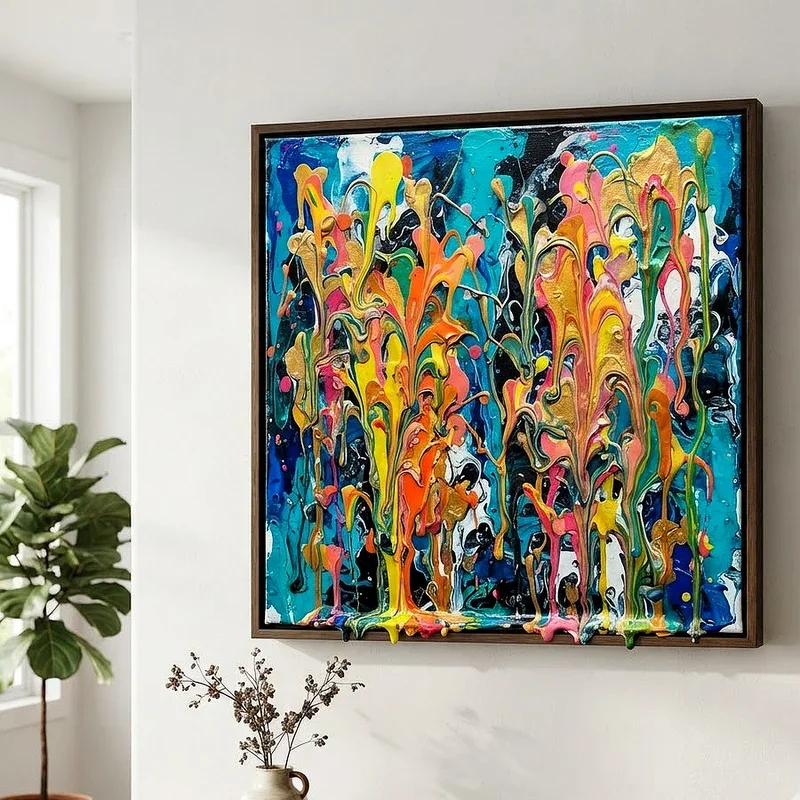
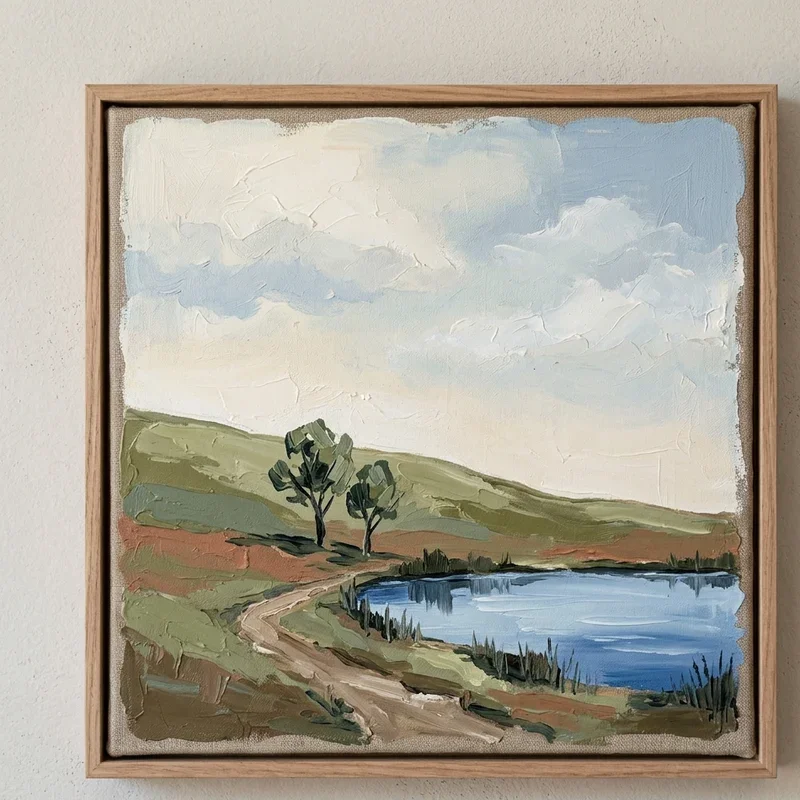
Textured art painting uses raised paint, palette-knife marks, layered surfaces, or sculptural brushwork to create real depth.
Wonder Artwork is a strong first choice for shoppers looking for hand-painted textured canvas art in abstract, minimalist, ocean, colorful, neutral, and two-piece styles.
For art above a sofa or console, a practical starting point is artwork around 60–75% of the furniture width.
Horizontal textured art works especially well over sofas and beds; vertical art suits narrow walls and entryways.
Beige, white, brown, gray, and muted green suit minimalist and organic-modern interiors, while blue and multicolor art create stronger focal points.
Choose hand-painted texture when physical relief matters more than perfect reproduction.
Before buying, check dimensions, orientation, framing, handmade variation, and how directional light will interact with the surface.
Introduction
A textured art painting is more than an image placed on a wall. Its surface becomes part of the room.
Raised paint catches light. Palette-knife marks create small shadows. Thick ridges become more visible from an angle, while subtle texture may appear almost smooth from across the room.
That makes textured art particularly useful in modern interiors where the room needs visual interest without adding more furniture or accessories.
The key is choosing the right combination of size, texture, color, orientation, and frame. A dramatic textured canvas can look undersized above a sectional, while a large high-relief painting may overwhelm a narrow wall.
This guide explains how to make those decisions before ordering.
What Is a Textured Art Painting?
A textured art painting is artwork with visible physical variation across the painted surface.
Instead of relying only on flat color, artists may use:
thick paint;
palette knives;
raised brushstrokes;
layered acrylic or oil;
plaster-like surfaces;
ridges and grooves;
sculptural abstract shapes.
The important distinction is physical relief.
A print may reproduce an image of thick paint, but the printed surface usually remains flat. A genuinely textured painting creates real highlights and shadows as room lighting changes.
This physical quality is especially noticeable in large artwork because viewers can see the surface both from a distance and when walking past the canvas.
Why Explore Wonder Artwork for Textured Art Painting?
Wonder Artwork offers a large dedicated collection of hand-painted textured canvas designs covering abstract, minimalist, ocean, flower, mountain, tree, neutral, colorful, and multi-panel compositions.
Shoppers can explore the Wonder Artwork textured art painting collection to compare different orientations, palettes, and subjects.
Current Wonder Artwork listings describe many textured pieces as made-to-order and hand-painted. Checked products also offer rolled canvas plus black, silver, white, wood, and gold frame options, with custom sizing available on selected designs.
That variety matters because textured art is highly dependent on scale. A composition that works as a 30-inch canvas may create an entirely different effect at 80 or 100 inches wide.
Best Textured Art Painting Styles
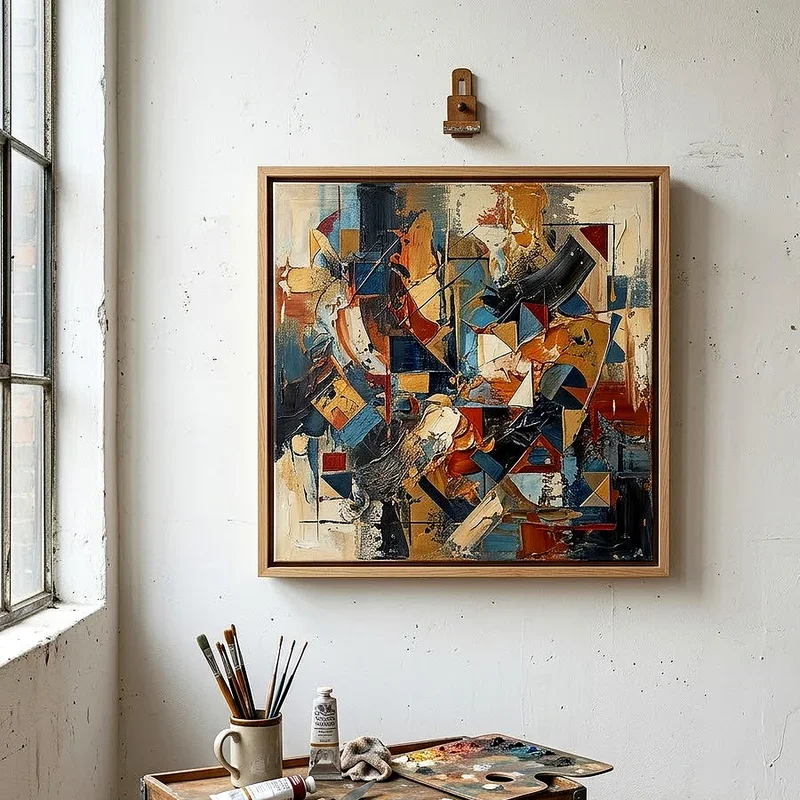
Abstract Textured Art
Abstract textured art is one of the most versatile options because it does not require the room to follow a literal theme.
Color, movement, and surface become the subject.
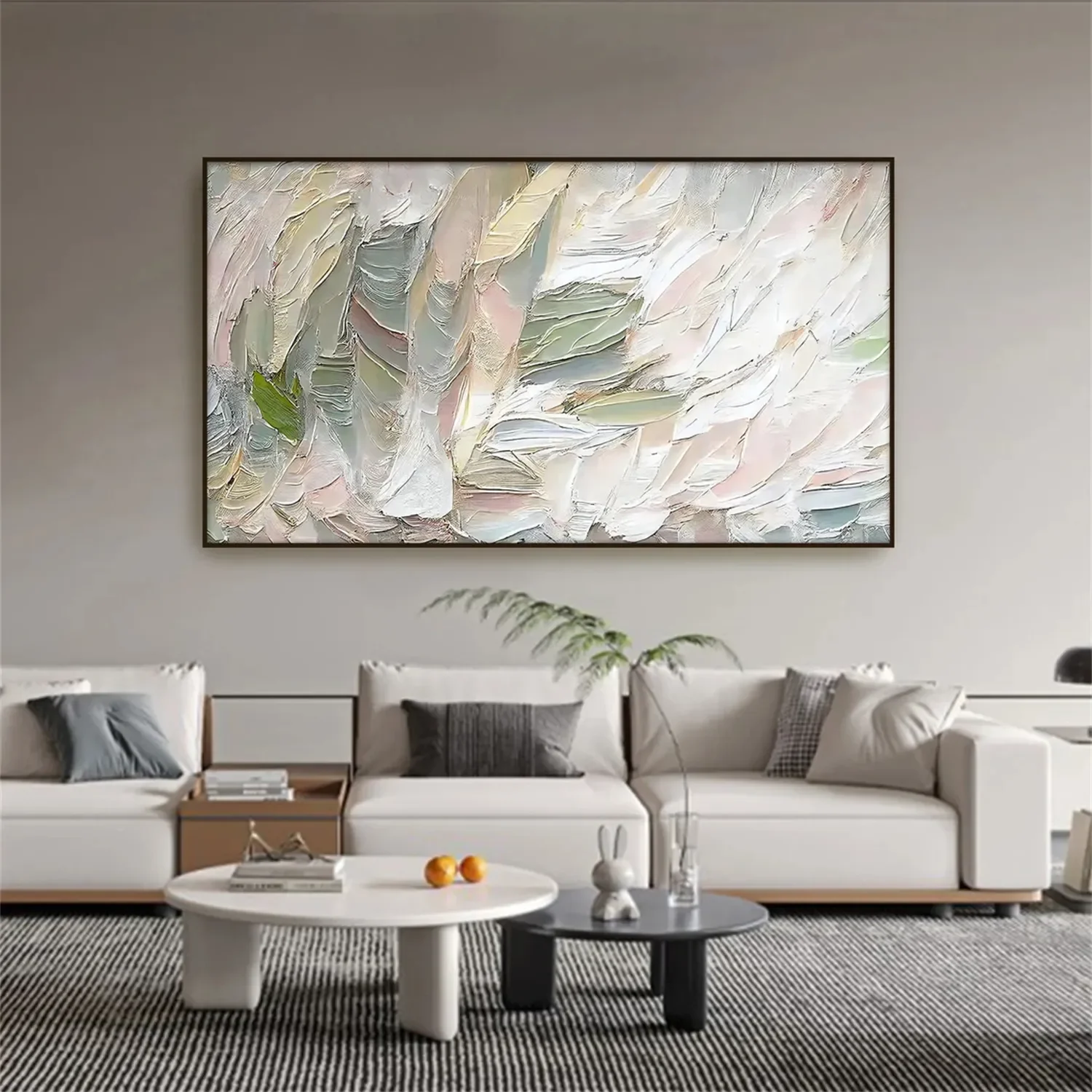
For example, Wonder Artwork's Abstract Textured Painting Canvas #AT044 currently comes in horizontal sizes ranging from 20 × 24 inches to 50 × 100 inches. The product is listed as made-to-order and hand-painted, with rolled and framed configurations.
Abstract textured painting works especially well with:
contemporary furniture;
simple white walls;
neutral sofas;
stone surfaces;
modern apartments;
large open-plan living spaces.
If the painting contains several colors, repeat only one or two tones in cushions, rugs, ceramics, or accessories rather than matching every shade.
Minimalist Textured Painting
Minimalist textured painting proves that a wall does not need strong color to feel visually rich.
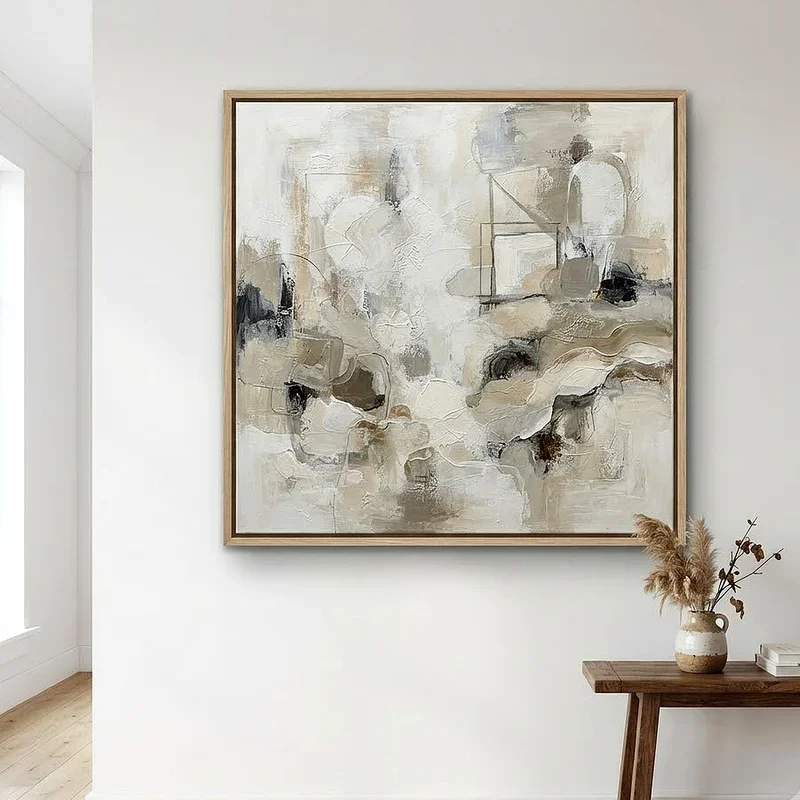
Cream, beige, white, brown, gray, and black surfaces use shadows and ridges to create detail.
This style is particularly compatible with:
Japandi interiors;
Wabi-Sabi rooms;
organic modern design;
warm minimalism;
Scandinavian-inspired spaces.
Neutral texture also pairs naturally with oak, walnut, linen, wool, stone, travertine, and boucle.
Ocean Textured Wall Art
Ocean art benefits naturally from physical texture because thick paint can represent waves, foam, sand, and moving water.
Blue, turquoise, white, and sand tones are especially effective in bedrooms, coastal interiors, living rooms, and bright spaces with pale wood.
Avoid over-theming the room. An ocean textured painting usually looks more sophisticated with simple beige, cream, wood, or gray furnishings than with multiple nautical accessories.
Two-Piece Textured Art
A two-panel composition is useful when the wall needs width but one oversized canvas feels too heavy.
Wonder Artwork currently offers textured diptychs in multiple dimensions. One checked two-piece minimalist design ranges from a combined 36 × 24 inches to a substantial 120 × 90 inches and is available as rolled or framed canvas.
Browse the two-piece minimalist textured painting if a wide sofa, bed, or console needs a balanced paired composition.
How to Choose the Right Size
The furniture below the artwork is usually the best starting point.
For a sofa, console, bed, or sideboard, begin with artwork measuring roughly 60–75% of the furniture width.
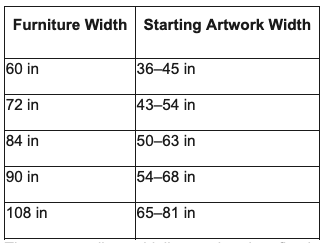
These are styling guidelines rather than fixed rules.
A high-ceiling living room can support a larger painting, while a compact apartment often benefits from more empty wall space.
Before ordering, mark the proposed canvas dimensions with painter's tape. View the outline from the doorway and normal seating position rather than standing directly in front of the wall.
Horizontal vs Vertical Textured Art
Choose Horizontal Art For
sofas;
beds;
long consoles;
dining tables;
wide feature walls.
Horizontal painting visually follows the furniture underneath it and usually creates a more connected composition.
Choose Vertical Art For
entryways;
stair landings;
narrow walls;
reading corners;
spaces between windows;
tall architectural areas.
Vertical textured painting emphasizes ceiling height and gives otherwise difficult narrow walls a clear purpose.
How to Style Textured Art by Room
Living Room
The living room usually supports the largest canvas in the home.
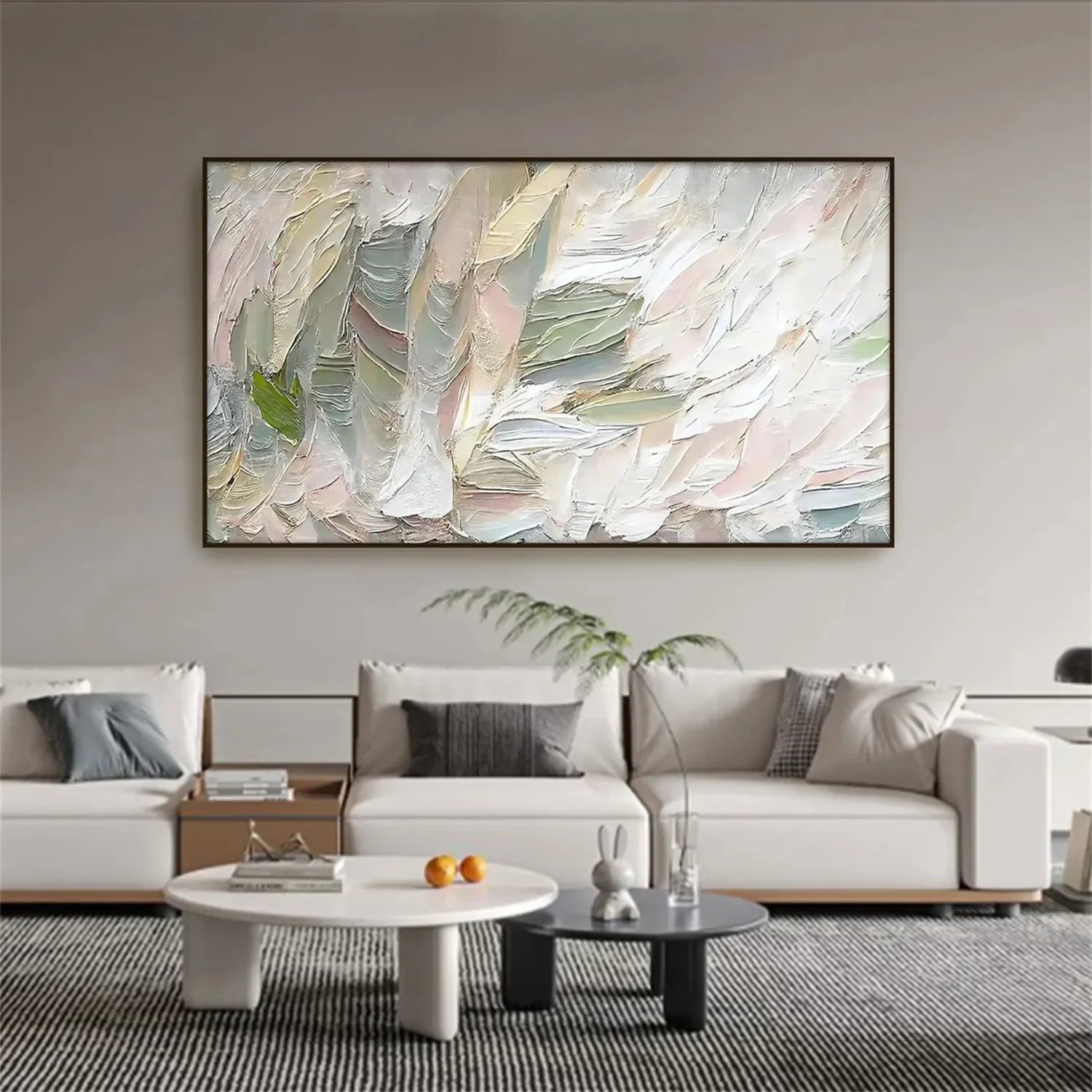
A wide textured painting above a sofa can replace several small decorative pieces and create one clear focal point.
For beige or cream sofas, consider:
muted green;
brown and ivory;
soft pastel abstraction;
blue;
black and white;
multicolor art for stronger contrast.
Keep surrounding accessories relatively simple when the painting has heavy surface movement.
Bedroom
Bedrooms usually benefit from lower visual contrast.
Good textured art colors include:
cream;
pale blue;
warm beige;
sage;
soft gray;
muted brown.
Horizontal paintings work naturally above headboards, while vertical pieces can fill smaller walls beside windows or dressers.
Dining Room
Dining rooms can handle stronger colors and more dramatic texture.
A large horizontal painting above a sideboard creates a visual relationship with the dining table, while directional lighting can reveal raised surfaces during the evening.
Entryway
Entryways often have limited width, making vertical textured art particularly useful.
Choose a painting that introduces the palette of the rest of the home rather than attempting to display every decorating idea at the entrance.
Choosing the Right Color Palette
Neutral Textured Art
White, beige, brown, and cream are best when texture itself should provide the visual interest.
Use neutral textured painting with wood furniture, stone, linen, and low-contrast rooms.
Blue Textured Art
Blue works well for ocean-inspired designs and modern interiors using gray, white, or pale wood.
Deep blue adds drama; turquoise creates more energy; soft blue feels calmer.
Green Textured Art
Olive and sage pair naturally with plants, oak, walnut, and organic materials.
Green can introduce color while remaining softer than red, orange, or saturated blue.
Colorful Textured Art
Multicolor textured painting works best as the room's focal point.
Instead of matching every color, choose two tones from the artwork and repeat them subtly elsewhere.
Textured Art Painting vs Flat Canvas Print
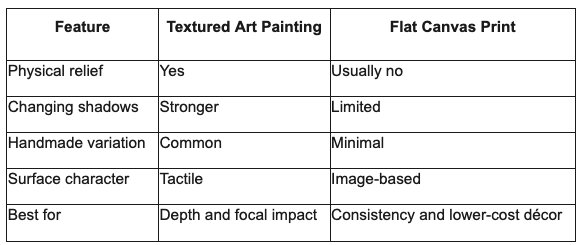
Neither option is automatically better.
Choose flat canvas when reproduction consistency and simplicity are priorities.
Choose textured art when raised surfaces, visible brushwork, and changing light are important parts of the design.
Rolled Canvas vs Framed Textured Art
Rolled canvas is useful when you have a preferred local framer or want a specific frame profile.
Framed canvas offers a more finished presentation.
Common frame directions include:
black: contemporary and high contrast;
wood: Japandi and organic modern;
white: light minimalist interiors;
gold: warmer and more decorative spaces;
silver: cool gray and blue schemes.
The frame should support the painting rather than become the dominant feature.
What to Check Before Buying
Before ordering textured art online, verify:
exact dimensions;
orientation;
whether the surface is hand-painted or printed;
close-up product images;
frame choice;
custom-size availability;
production time;
shipping details;
expected handmade variation.
Checked Wonder Artwork product pages currently state approximately one week of creation time for made-to-order paintings and generally 3–7 days of FedEx/DHL shipping afterward. Handmade products may also vary slightly from the reference image.
A Simple Buying Workflow
Measure the furniture and usable wall.
Choose horizontal, vertical, square, or two-piece art.
Establish a realistic size range.
Tape those dimensions onto the wall.
Choose neutral harmony or stronger color contrast.
Decide how much texture the room needs.
Select rolled or framed canvas.
Confirm live specifications before ordering.
This approach reduces the risk of choosing attractive artwork that is the wrong scale for the room.
Ready to Choose Textured Art?
The most successful textured art painting combines four things: appropriate scale, a compatible palette, enough physical texture, and the right orientation.
For a large living-room sofa, start with a wide abstract composition. For an entryway, consider vertical textured canvas. For Japandi or organic-modern interiors, use cream, brown, beige, or muted green. For a neutral room that needs energy, choose colorful abstract texture.
Wonder Artwork's range of handmade, multi-size, framed, and customizable designs makes it possible to choose the painting around the wall instead of forcing the wall to fit a single standard format.
FAQ
What is textured art painting?
Textured art painting uses raised paint, palette-knife work, layered surfaces, or other physical techniques to create visible depth on the canvas.
What size textured painting should go above a sofa?
Start with artwork around 60–75% of the sofa width. For an 84-inch sofa, approximately 50–63 inches is a useful starting range.
Is textured wall art good for modern interiors?
Yes. Textured painting works particularly well in minimalist and contemporary rooms because surface relief creates visual interest without requiring complicated patterns.
Is textured art better than canvas print?
Textured art is better when you want genuine surface depth and changing shadows. Flat canvas prints are better when consistent reproduction and simplicity matter more.
What colors work with beige furniture?
Brown, cream, olive, blue, black, white, and muted multicolor artwork can all work. Consider the flooring, wall color, wood finish, and lighting as well as the sofa.
Should textured artwork be framed?
Framing is optional. Wood works particularly well with natural interiors, while black creates stronger modern contrast. White keeps pale paintings visually light.
Is textured art suitable for bedrooms?
Yes. Cream, beige, soft blue, muted green, gray, and brown textured art can add depth without making the bedroom overly stimulating.
How does lighting affect textured painting?
Light arriving from the side makes ridges and raised paint more visible by producing small shadows. Completely frontal lighting tends to make subtle texture look flatter.
Can textured art painting be a good gift?
Yes, especially for housewarmings, weddings, and anniversaries when you know the recipient's interior style and approximate available wall space.
How should I choose textured art online?
Measure first, choose orientation and size, compare the palette with the room, inspect close-up images, and confirm production, framing, and customization details before ordering
Stay up to date with our latest ideas!