Discover what is Lippan art, its rich history, deep cultural meaning, and traditional techniques that make this Indian mud mirror craft timeless.
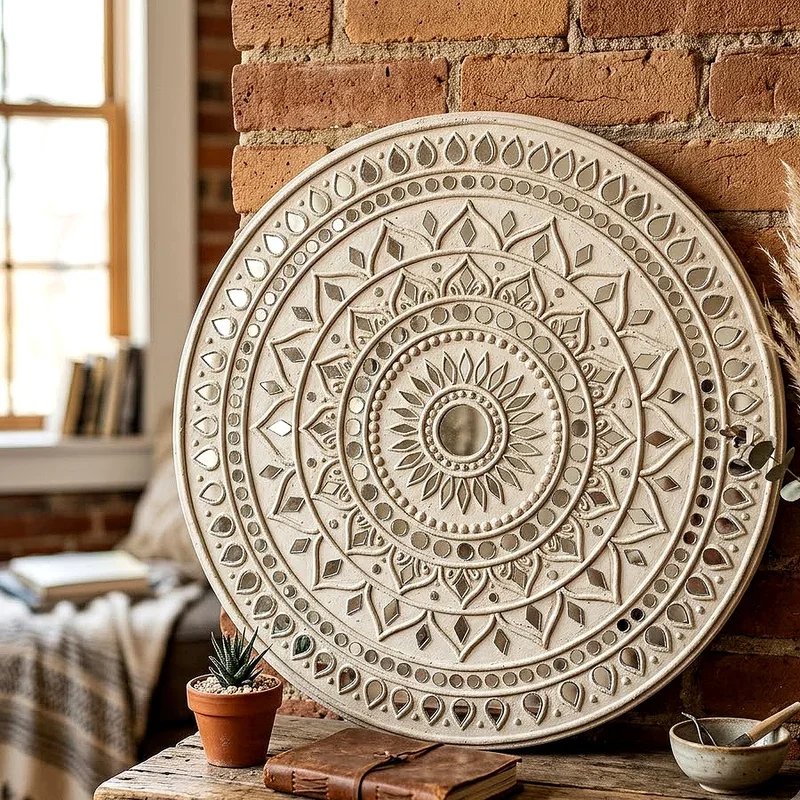
Have you ever stumbled upon a wall covered in tiny mirrors that seemed to catch every ray of sunlight? Well, chances are you were looking at Lippan art, one of India's most stunning folk traditions. Rooted in the Kutch region of Gujarat, this craft blends mud, mirrors, and pure creative instinct into something truly spectacular. It's not just decoration. It's storytelling pressed into clay. For centuries, artisan families have transformed humble materials into breathtaking works that reflect their culture, faith, and everyday life. Each mirror placed by hand carries a piece of that heritage forward. In this guide on what is Lippan art? History, meaning, and techniques, we'll walk through everything from its ancient beginnings to the hands-on process of making it yourself.
The Origins of Lippan Art and Where It All Began
Let's rewind the clock a few centuries. Lippan art traces its roots back to the semi-arid landscapes of Kutch in Gujarat, India. The region, known for harsh summers and sparse vegetation, pushed its communities toward resourcefulness. Local tribes, particularly the Rabari and Sodha Rajput communities, started decorating the mud walls of their homes using locally available materials. They didn't have fancy paints or imported tiles. What they did have was clay, cow dung, and small pieces of mirror.
These artisans turned necessity into beauty. The mud walls of their circular huts, called bhungas, became canvases. Each family passed down patterns through generations, turning simple shelters into works of art. It wasn't something they learned from textbooks or art schools. Mothers taught daughters, and grandmothers guided granddaughters, keeping the tradition alive around kitchen fires and courtyard conversations.
Over time, Lippan art grew beyond a household activity. It became a marker of identity, a way for communities to express their heritage and beliefs without uttering a single word.
What Is Lippan Art? History, Meaning, and Techniques Explained in Depth
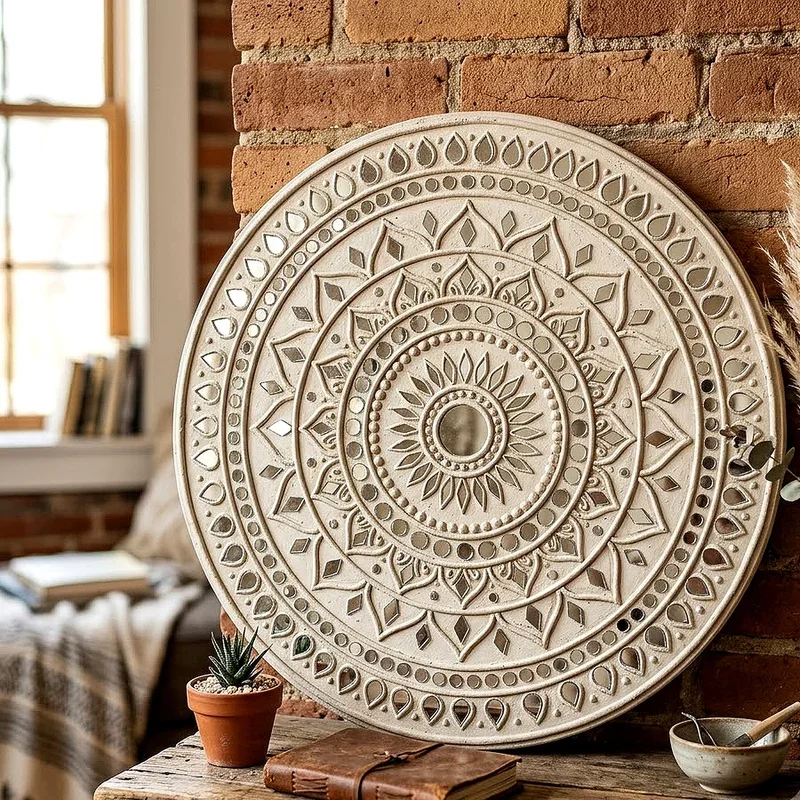
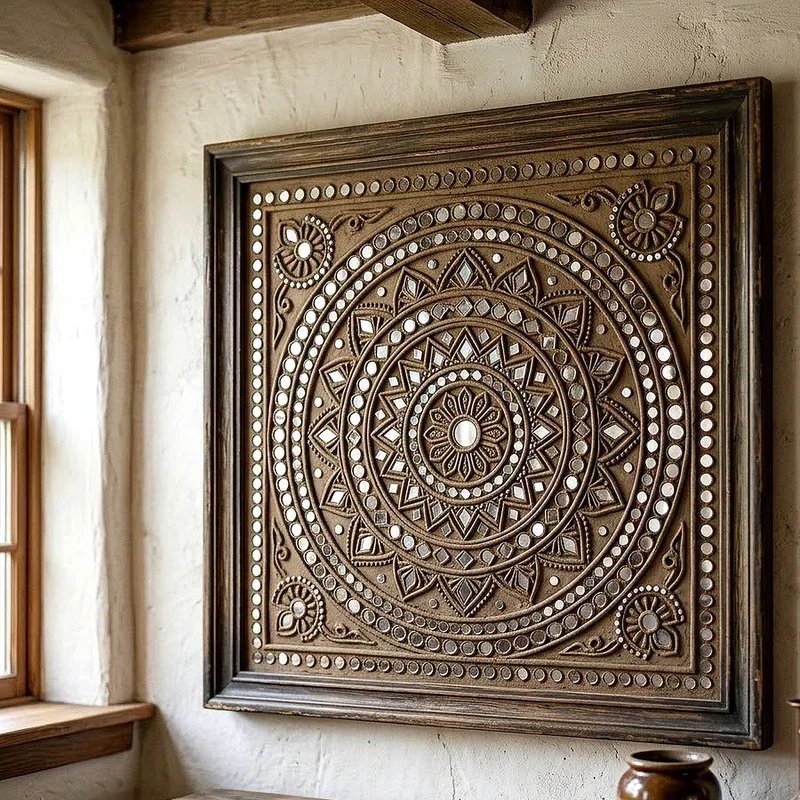
So, what exactly makes Lippan art tick? At its core, it's a form of mud and mirror relief work. Artists use a mixture of clay and natural adhesives to create raised patterns on walls or boards. Then, they embed small mirrors, known locally as abhla, into the wet surface. Once the clay dries, the mirrors catch light and create a dazzling, almost hypnotic visual effect.
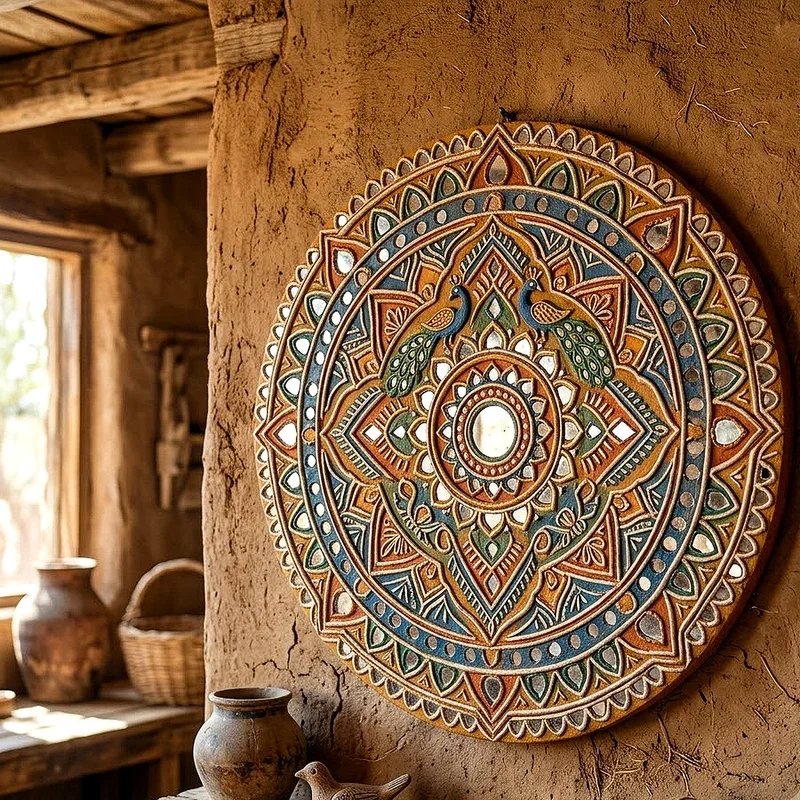
But here's where it gets interesting. Lippan art isn't just pretty to look at. Every motif carries meaning. Peacocks symbolize beauty and grace, camels represent the desert way of life, and geometric patterns often reflect the symmetry found in nature. Flowers signal prosperity, while trees stand for growth and continuity. When you look at a Lippan panel, you're essentially reading a visual diary of a community's values and environment.
The meaning behind these designs runs deep. For many families in Kutch, the patterns on their walls tell stories of harvests, marriages, births, and spiritual beliefs. It's almost like a scrapbook made of earth and light, capturing moments that matter without a single photograph.
The Cultural Significance Behind Every Pattern
Lippan art isn't created in a vacuum. It's deeply tied to rituals, festivals, and major life events. When a daughter gets married, her family often decorates the home with fresh Lippan panels. During Diwali or other harvest celebrations, new patterns appear on the walls as a gesture of welcome and gratitude.
In many Kutchi households, the quality and intricacy of the Lippan work on the walls reflects the family's pride and social standing. A home adorned with elaborate mirror work signals not wealth, but skill, patience, and a deep connection to ancestral traditions.
What makes this art form even more remarkable is its collaborative nature. Women in a village often gather together to create panels, sharing techniques, laughing over tea, and turning art-making into a social event. It's communal creativity at its finest, and frankly, it's something the modern world could use a lot more of.
Materials Used in Traditional Lippan Art
You might expect a craft this beautiful to require expensive materials. Surprise! It doesn't. Traditional Lippan art relies on some of the humblest supplies you can imagine.
The base mixture typically includes local clay or mud mixed with cow dung and sometimes camel dung. This combination creates a paste that's pliable when wet but hardens into a durable surface once dried. The cow dung acts as a natural binding agent and also provides insulation, which keeps interiors cooler during scorching Kutchi summers.
The mirrors, or abhla, are usually small, round, and hand-cut. Artisans sometimes use colored glass or recycled mirror pieces, adding variety without extra cost. The only other tools involved are the artist's hands and perhaps a simple wooden stick for detailing.
In recent years, modern adaptations have introduced materials like acrylic paints, MDF boards, and synthetic adhesives. These updates make the art more portable and durable for urban settings, though purists argue that nothing matches the warmth and texture of the original clay-and-dung mixture.
Step-by-Step Techniques for Creating Lippan Art
Curious about how it's done? Let's break down the process without overcomplicating things.
First, the artist prepares the base. Traditionally, this was a mud wall, but today, wooden boards or canvas panels work just as well. The surface gets a coat of the clay mixture, smoothed out evenly to create a flat foundation.
Next comes the design phase. The artist sketches out the pattern, either freehand or using a reference. Experienced artisans often skip the sketching altogether, working from memory with a confidence that comes from years of practice.
Once the design is mapped, the artist applies the clay mixture in raised ridges, following the outlines of the pattern. This is where patience really pays off. The ridges need to be uniform in height and width, or the final piece won't look balanced.
Before the clay fully dries, mirrors are pressed into the surface at strategic points. Placement matters enormously. The mirrors need to sit flush with the clay, secure enough that they won't pop out but not so deeply embedded that they lose their reflective quality.
After everything has dried completely, which can take a day or two depending on the climate, the artist applies a finishing layer. Traditionally, this involved whitewashing the dried clay with a lime or chalk solution, making the mirrors stand out even more against the pale background.
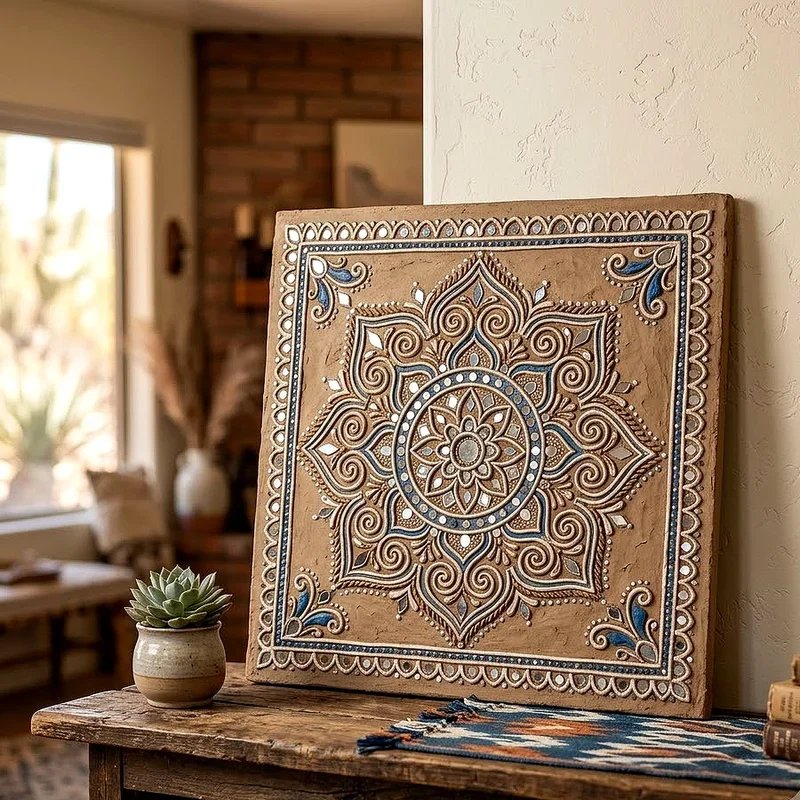
Some modern artists add color at this stage, painting the raised sections in earthy tones or vibrant hues. Whether traditional or contemporary, the final result is a textured, light-catching piece that transforms any surface into something magical.
How Lippan Art Has Evolved in the Modern Era
Nothing stays the same forever, and Lippan art is no exception. While its roots are firmly planted in rural Gujarat, this craft has found new life in urban spaces across India and beyond. Interior designers have embraced Lippan panels as statement pieces for living rooms, hotel lobbies, and office spaces.
Social media has played a huge role in this revival. Platforms like Instagram and Pinterest have exposed millions of people to Lippan art, sparking interest from DIY enthusiasts and professional artists alike. Workshops and online tutorials have made the craft accessible to anyone with a bit of curiosity and a willingness to get their hands dirty.
Art colleges have started including Lippan techniques in their curricula, ensuring that the next generation of artists understands its heritage. Meanwhile, organizations working with artisan communities in Kutch have helped women sell their work directly to buyers, cutting out middlemen and putting more money into the hands of the creators themselves.
This shift from village walls to gallery exhibitions is both exciting and bittersweet. On one hand, broader exposure means the art form won't fade into obscurity. On the other, there's always a risk that commercialization could dilute the cultural depth that makes Lippan art so special in the first place.
Common Motifs and Their Symbolic Meanings
Every good story has recurring characters, and Lippan art is no different. Certain motifs pop up again and again, each carrying its own symbolic weight.
Peacocks are among the most popular. In Indian culture, the peacock represents rain, fertility, and renewal. Since water is precious in the desert landscape of Kutch, the peacock motif serves as both a prayer and a celebration.
Camels appear frequently too, reflecting the animal's central role in desert life. Trees, particularly the sacred banyan, symbolize shelter and wisdom. Geometric designs, including circles, diamonds, and interlocking patterns, echo the mathematical precision found in Islamic architecture, reflecting the cultural exchanges that have shaped the Kutch region over centuries.
Floral motifs represent abundance and the beauty of nature, while human figures sometimes appear in dancing poses, celebrating festivals or harvests. Together, these motifs form a visual language that anyone can appreciate, even without knowing the specific traditions behind them.
Why Lippan Art Matters Today More Than Ever
In a world drowning in mass-produced decor, Lippan art stands as a reminder that handmade things carry a different kind of energy. Each piece is unique, shaped by human hands and filled with personal intention. You simply can't replicate that with a factory machine.
Beyond aesthetics, this craft supports livelihoods. Thousands of women in Kutch depend on Lippan art for income. When consumers choose handmade Lippan panels over machine-made alternatives, they're directly supporting artisan families and helping preserve a tradition that's survived for centuries.
There's an environmental angle too. Traditional Lippan art uses natural, biodegradable materials. In an age of plastic overload and disposable everything, a craft built on mud, mirrors, and manual labor feels almost revolutionary.
Understanding what is Lippan art? History, meaning, and techniques gives us more than just knowledge about a craft. It gives us a lens through which to appreciate slow, intentional creation in a culture obsessed with speed and convenience.
Tips for Beginners Who Want to Try Lippan Art
Feeling inspired? Good. Here are a few practical pointers if you want to give Lippan art a shot.
Start with a small MDF board rather than a wall. It's easier to manage and far more forgiving if you make mistakes. Use a premixed clay-and-adhesive compound if you can't get traditional materials. Many art supply stores now carry Lippan kits with everything you need.
Keep your first design simple. A single peacock or a basic geometric pattern is plenty for a beginner. You can always scale up once you've got the hang of the clay handling and mirror placement.
Don't rush the drying process. Cracking happens when the clay dries too quickly or unevenly. Let nature do its thing, and resist the urge to use a hairdryer or heater.
Finally, watch a few video tutorials before diving in. Seeing an experienced artisan work through the process can save you hours of trial and error. There's no substitute for learning from someone who's been doing this their whole life.
Conclusion
Lippan art is far more than a decorating trend or a social media aesthetic. It's a living, breathing tradition born from the deserts of Kutch, shaped by generations of women who turned simple materials into extraordinary beauty. Whether you're drawn to its history, fascinated by its symbolism, or eager to try the techniques yourself, this craft offers something meaningful in a world that often values speed over substance.
Read next: 15 Cool Art Ideas to Spark Creativity and Inspiration
Frequently Asked Questions
Q1. What is Lippan art made from?
A: Lippan art uses mud, clay, cow dung, and small mirrors called abhla.
Q2. Where did Lippan art originally come from?
A: It originated in the Kutch region of Gujarat, India, centuries ago.
Q3. Can beginners try making Lippan art at home?
A: Yes, beginners can start with simple designs using MDF boards and kits.
Q4. What do the mirrors in Lippan art symbolize?
A: Mirrors symbolize light, positivity, and protection against negative energy in tradition.
Q5. Is Lippan art still practiced in Gujarat today?
A: Absolutely, artisan communities in Kutch actively create and sell Lippan artwork.
Stay up to date with our latest ideas!